Heart blockage is one of the most common reasons people are advised to undergo bypass surgery. For many patients, the word “surgery” itself brings fear, long recovery concerns, and questions about risk. This is where EECP treatment for heart blockage enters the conversation as a non-surgical option that may help some patients delay or even avoid bypass surgery.
At Cordis Heart Institute, patients often ask a direct question: Is EECP an alternative to bypass surgery, or just a temporary solution? This article answers that question clearly by comparing EECP vs bypass surgery, explaining who it works for, and when surgery is still the right call.
Understanding Heart Blockage and Treatment Options
What Is Heart Blockage?
Heart blockage happens when fatty deposits, called plaque, build up inside the coronary arteries. This reduces blood flow to the heart muscle and limits oxygen supply.
Common symptoms include:
- Chest pain or heaviness
- Breathlessness on exertion
- Fatigue
- Reduced stamina during daily activities
Left untreated, severe blockage can increase the risk of heart attack.
Standard Treatments for Heart Blockage
Treatment depends on how severe the blockage is and how the patient feels day to day.
- Medicines to control pain, blood pressure, and cholesterol
- Angioplasty and stents to open narrowed arteries
- Bypass surgery to reroute blood flow around blocked arteries
- EECP therapy, usually suggested when symptoms persist or surgery is risky
EECP does not replace all treatments but fits into a specific group of patients who need symptom relief without surgery.
What Is EECP Treatment?
How EECP Works
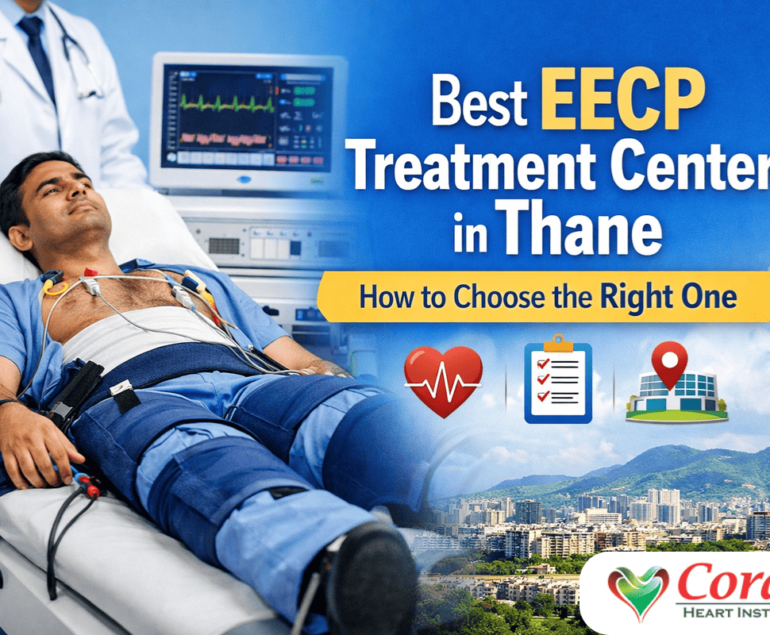
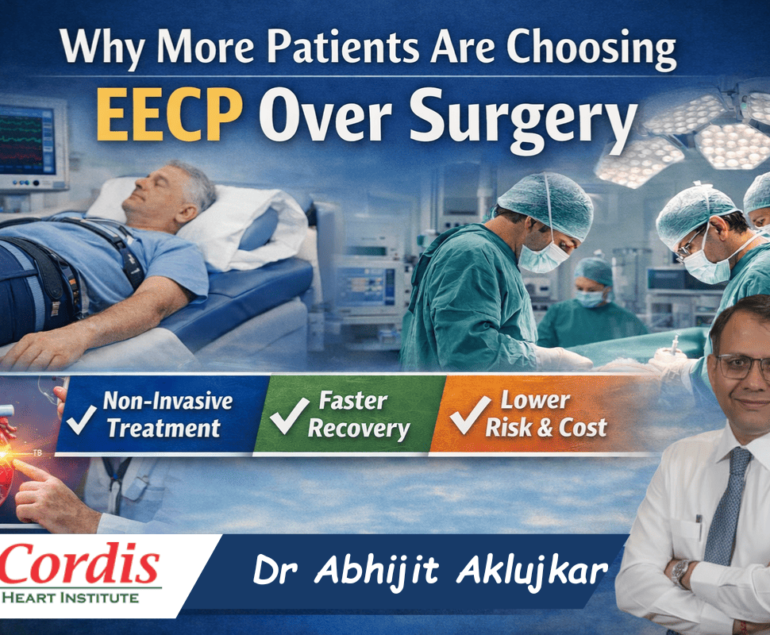
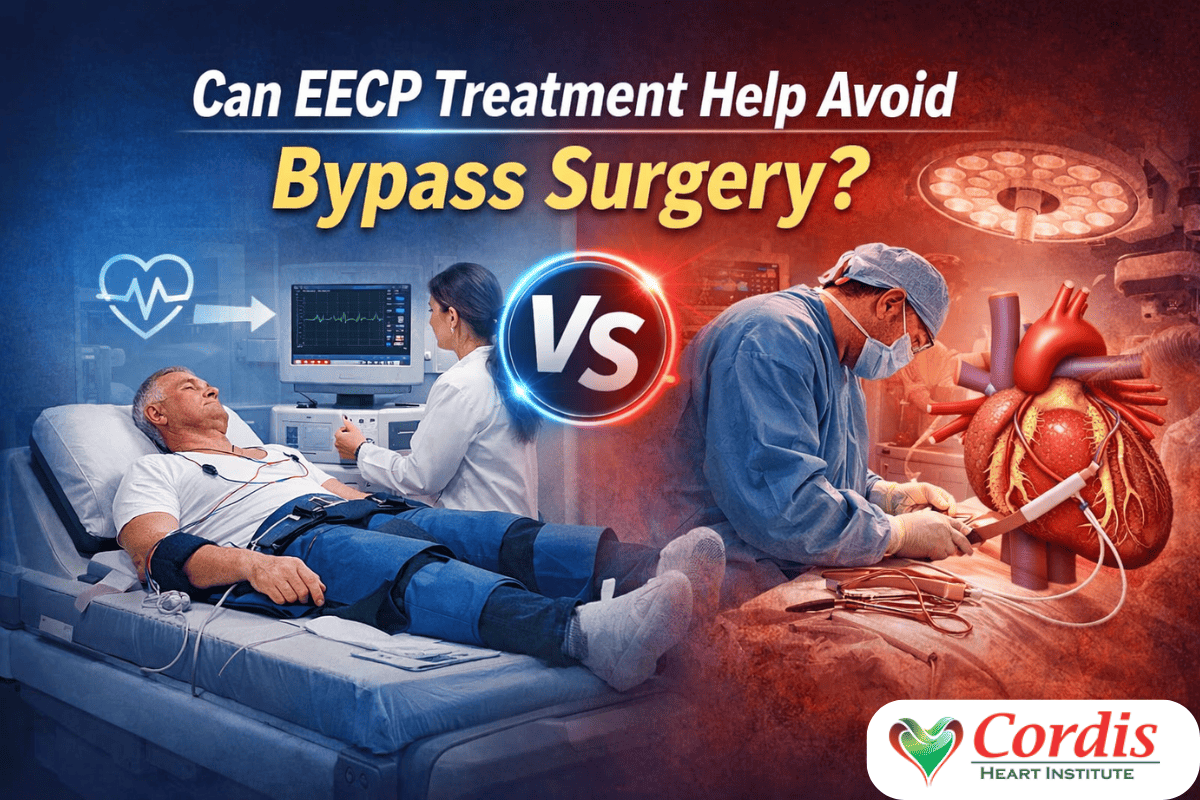
EECP, or Enhanced External Counterpulsation, is a non-surgical outpatient therapy. During treatment, cuffs are placed around the legs and inflate in sync with the heartbeat.
This process:
- Pushes blood back toward the heart
- Improves circulation to heart muscles
- Encourages formation of natural bypass channels over time
Unlike surgery, there are no cuts, no anesthesia, and no hospital admission.
Who Is EECP Recommended For?
EECP is commonly advised for:
- Patients with stable angina
- Individuals with mild to moderate heart blockage
- Elderly patients where surgery carries higher risk
- People looking to delay bypass surgery after medical advice
EECP Treatment for Heart Blockage
How EECP Improves Blood Flow in Blocked Arteries
EECP does not remove plaque or physically open arteries. Instead, it improves how blood reaches the heart muscle by strengthening circulation and improving oxygen delivery.
This can:
- Reduce strain on the heart
- Improve heart efficiency
- Support better blood flow even in narrowed vessels
Can EECP Reduce Symptoms Without Surgery?
Many patients report:
- Reduced chest pain frequency
- Better exercise tolerance
- Improved breathing
- Higher energy levels in daily life
For symptom control, EECP treatment for heart blockage can be effective when medicines alone are not enough.
EECP vs Bypass Surgery
Key Differences Between EECP and Bypass
|
Factor |
EECP Therapy |
Bypass Surgery |
|
Invasiveness |
Non-invasive |
Major surgery |
|
Hospital stay |
Not required |
7–10 days |
|
Recovery time |
No downtime |
Several weeks |
|
Risk level |
Low |
Higher |
Effectiveness Comparison
- Bypass surgery is essential in severe, multi-vessel blockages or emergencies.
- EECP works best for symptom relief and improved quality of life in selected patients.
This makes the EECP vs bypass surgery comparison more about suitability than superiority.
Cost and Recovery Comparison
EECP is typically outpatient-based with minimal disruption to daily routine, while bypass surgery involves hospital care, rest, and long recovery.
Can EECP Help Avoid Bypass Surgery?
Situations Where EECP May Delay or Avoid Surgery
EECP may help when:
- Blockages are mild to moderate
- Symptoms are stable
- Surgery risk is high due to age or health conditions
- The patient prefers conservative treatment first
In such cases, EECP can act as an alternative to bypass surgery under medical supervision.
When Bypass Surgery Is Still Required
Bypass remains necessary when:
- Multiple arteries are severely blocked
- There is poor heart function
- Symptoms worsen despite EECP
- Emergency intervention is required
EECP should never replace surgery when surgery is clearly indicated.
Benefits and Limitations of EECP Treatment
Benefits of EECP
- No surgery or anesthesia
- Safe for elderly patients
- Gradual improvement over weeks
- Can be combined with medicines
Limitations to Be Aware Of
- Does not remove plaque
- Results vary by patient
- Requires multiple sessions over several weeks
Clear expectations help patients make better decisions.
What Do Doctors Say About EECP vs Bypass?
Cardiologists rely on:
- Angiography results
- Stress test reports
- Symptom history
- Overall patient health
Treatment is never one-size-fits-all. At Cordis Heart Institute, EECP is offered only after a detailed heart evaluation.
FAQs on EECP Treatment and Bypass Surgery
Can EECP replace bypass surgery completely?
No. It may help selected patients but cannot replace surgery in severe cases.
Is EECP safe for elderly patients?
Yes, it is widely used for older patients who are not ideal surgical candidates.
How long does EECP treatment take?
Typically 35 sessions over 6 to 7 weeks.
What is the success rate of EECP for heart blockage?
Many patients experience symptom relief, though results differ.
Is EECP approved by cardiologists?
Yes, it is accepted worldwide for specific heart conditions.
How soon can patients feel relief after EECP?
Some notice improvement within a few weeks.
Choosing the Right Treatment for Heart Blockage
The best treatment depends on:
- Severity of blockage
- Symptoms
- Lifestyle
- Long-term heart health goals
A second opinion and detailed discussion with a cardiologist are always wise before deciding.
Is EECP the Right Alternative to Bypass Surgery for You?
EECP treatment for heart blockage may help some patients delay or avoid bypass surgery, especially when symptoms are stable and surgery carries risk. However, it is not a replacement for surgery in all cases.
The right choice comes from medical guidance, not fear of surgery or assumptions.
If you or a loved one is exploring non-surgical options for heart blockage, consult a heart specialist at Cordis Heart Institute. A proper evaluation can help determine whether EECP therapy or bypass surgery is the safer path forward.
Book a heart consultation today and discuss EECP suitability with a cardiac expert.