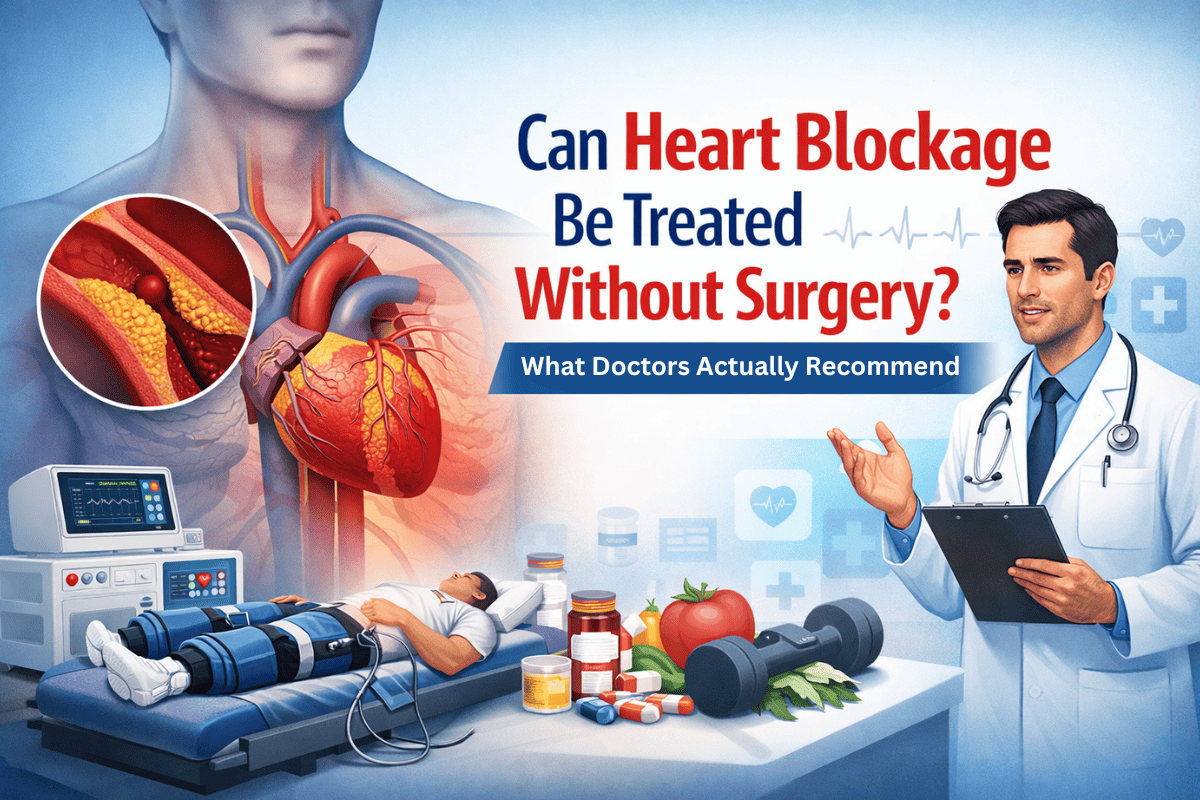
Can heart blockage be treated without surgery? This is one of the most common questions doctors hear from heart patients and their families. The fear of surgery, long recovery time, and possible risks often push people to look for safer, non-invasive options.
The good news is that heart blockage treatment without surgery is possible in many cases. Modern cardiology now focuses on patient-specific care, where medicines, lifestyle changes, and advanced non-surgical therapies can help manage heart blockages effectively. However, these options are not suitable for everyone, and knowing when they work is just as important as knowing when they do not.
This article explains what heart blockage really is, how doctors diagnose it, and what treatments are actually recommended, including non-surgical options available at Cordis Heart Institute.
Understanding Heart Blockage
What Is Heart Blockage?
Heart blockage, medically called coronary artery disease, happens when fatty deposits known as plaque build up inside the arteries that supply blood to the heart. Over time, these deposits narrow the arteries and reduce blood flow. When the heart muscle does not receive enough oxygen-rich blood, it can lead to chest pain, shortness of breath, or even a heart attack.
Plaque buildup usually develops slowly over years, which is why many people do not realize they have a problem until symptoms appear.
Common Symptoms of Heart Blockage
Symptoms vary from person to person. Some people experience warning signs early, while others notice symptoms only when the blockage becomes severe.
Common symptoms include:
- Chest pain or tightness, especially during exertion
- Breathlessness while walking or climbing stairs
- Fatigue and reduced stamina
- Pain in the arm, jaw, neck, or back
In some cases, symptoms appear very late, which is why regular heart check-ups are important for people with risk factors.
What Causes Heart Blockage?
Several factors contribute to heart blockage:
- Unhealthy diet and lack of physical activity
- Smoking and excessive alcohol use
- Diabetes, high blood pressure, and high cholesterol
- Family history of heart disease
Managing these causes early plays a major role in preventing progression.
How Doctors Diagnose Heart Blockage
Tests Used to Detect Heart Blockage
Doctors use a combination of tests to confirm heart blockage and assess its severity.
Common tests include:
- ECG and echocardiography to check heart rhythm and function
- Treadmill test to observe how the heart responds to stress
- CT coronary angiography to visualize artery narrowing
- Conventional angiography for detailed assessment
Why Blockage Percentage Matters
Blockage is often measured in percentage terms. Mild and moderate blockages may respond well to medicines and non-surgical care. Severe or multiple blockages usually require invasive treatment. This percentage plays a key role in deciding the treatment plan.
Can Heart Blockage Be Treated Without Surgery?
When Non-Surgical Heart Blockage Treatment Is Possible
Doctors may recommend non-surgical care when:
- Blockages are mild to moderate
- The patient is stable and not in an emergency
- Surgery carries higher risk due to age or other conditions
In such cases, treatment focuses on improving blood flow, reducing symptoms, and preventing further blockage.
When Surgery or Angioplasty Becomes Necessary
Surgical procedures are advised when:
- There is critical blockage affecting major arteries
- Multiple vessels are involved
- The patient has frequent chest pain or heart attack risk
Doctors always weigh risks and benefits before making this call.
Heart Blockage Treatment Without Surgery: Options Doctors Recommend
Medicines for Heart Blockage Treatment
Medicines form the foundation of non-surgical care. These include:
- Blood thinners to reduce clot risk
- Cholesterol-lowering drugs to slow plaque growth
- Medicines to control blood pressure and blood sugar
Regular follow-up ensures these medicines work safely and effectively.
Lifestyle Changes That Support Heart Blockage Treatment
Lifestyle changes are not optional; they are essential:
- A heart-friendly diet low in salt and unhealthy fats
- Guided physical activity based on doctor advice
- Proper sleep and stress management
Patients who follow these changes often see better results.
EECP Therapy for Heart Blockage
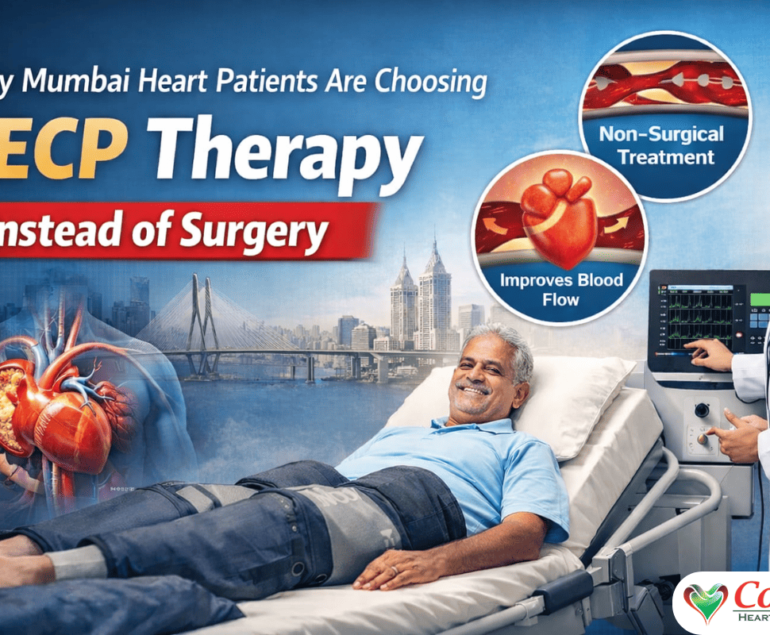
EECP therapy is a non-invasive treatment that improves blood circulation to the heart. Special cuffs are placed on the legs and inflated in a timed manner to help push blood back toward the heart. Over multiple sessions, this helps form new pathways for blood flow.
EECP therapy is often suggested for patients with stable heart disease who want to avoid surgery or are not suitable candidates for invasive procedures.
Benefits of Treating Heart Blockage Without Surgery
Non-surgical treatment offers several advantages:
- No hospital stay or surgical wounds
- Lower overall risk compared to invasive procedures
- Suitable for elderly patients or those with other medical conditions
These benefits make it an attractive option for the right patients.
Limitations of Non-Surgical Heart Blockage Treatment
Despite its benefits, non-surgical care has limits:
- Not effective for severe or emergency cases
- Requires long-term commitment to treatment and follow-up
- Results depend heavily on patient discipline
Understanding these limits helps set realistic expectations.
Heart Blockage Treatment in Mira Bhayandar
Patients in Mira Bhayandar now have access to modern non-surgical heart care. From advanced diagnostics to EECP therapy, early consultation with a heart specialist can make a meaningful difference in outcomes.
Heart Blockage Treatment in Thane
Thane has seen a growing demand for non-invasive heart treatments. Patients should look for centers that offer complete evaluation, experienced doctors, and follow-up care under one roof.
What Doctors Actually Recommend
A Doctor-Led Approach to Heart Blockage Treatment
There is no single solution for every patient. Doctors recommend a plan based on test results, symptoms, and overall health. Combining medicines, therapy, and lifestyle changes often delivers the best results.
Why Early Treatment Matters
Early action helps stop blockages from getting worse and lowers the risk of heart attack. Waiting too long can limit treatment choices.
FAQs: Heart Blockage Treatment Without Surgery
Can 100% heart blockage be treated without surgery?
In most cases, complete blockage requires invasive treatment, but some stable patients may still benefit from supportive non-surgical care.
Is EECP therapy safe for heart patients?
Yes, when done under medical supervision, EECP therapy is considered safe for eligible patients.
How long does non-surgical heart blockage treatment take?
Treatment duration varies and often requires months of consistent care.
Can medicines remove heart blockage naturally?
Medicines help control and slow blockage progression but usually do not remove plaque entirely.
Is heart blockage treatment without surgery permanent?
It requires ongoing care and lifestyle discipline to maintain results.
Conclusion: Choosing the Right Heart Blockage Treatment
Heart blockage does not always mean surgery. With early diagnosis and the right plan, many patients benefit from heart blockage treatment without surgery. The key is timely consultation, honest assessment, and following medical advice closely.
If you or a loved one is looking for safe and effective heart blockage treatment in Mira Bhayandar or Thane, consult the heart specialists at Cordis Heart Institute. A proper evaluation can help you choose the right path for your heart health.