
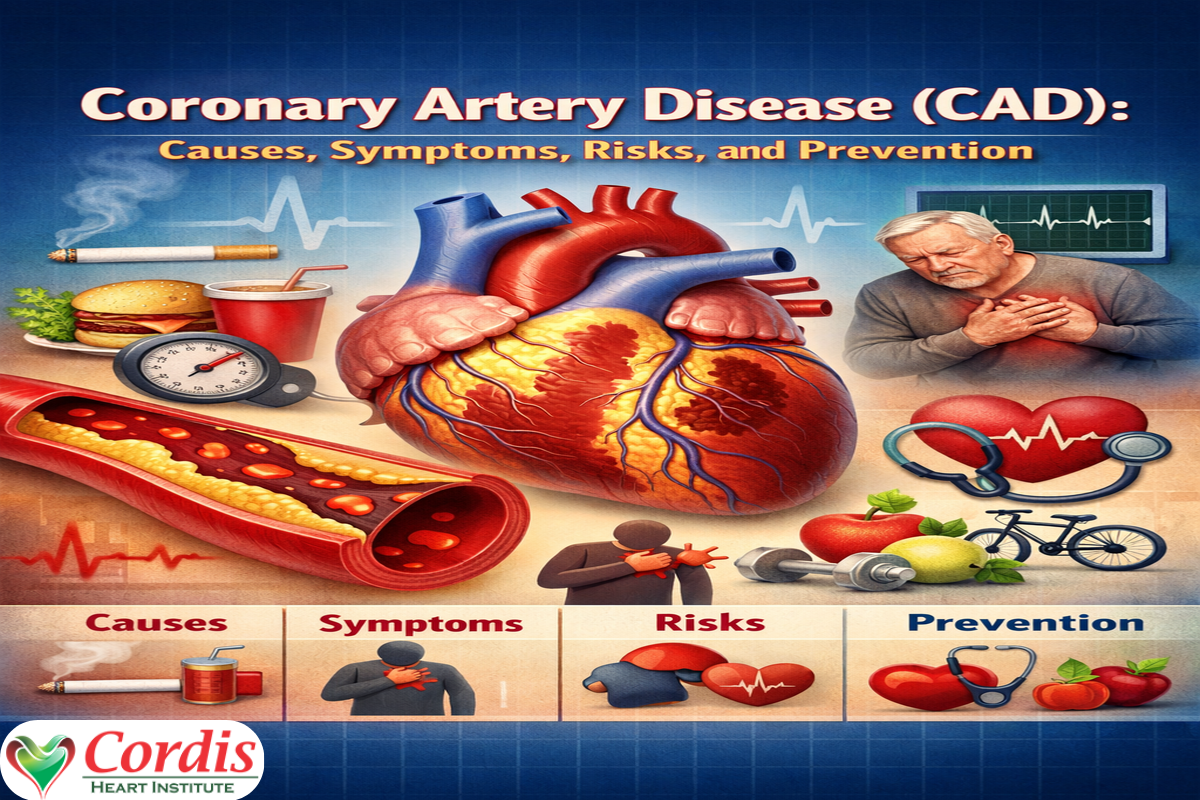
Coronary artery disease is one of the most common heart conditions worldwide. It occurs when the coronary arteries, which supply blood, oxygen, and nutrients to the heart muscle, become narrowed or blocked. This usually happens due to cholesterol buildup (plaques) and inflammation inside the arteries.
When blood flow to the heart is reduced, it can cause chest pain, shortness of breath, and fatigue. A complete blockage can result in a heart attack. Coronary artery disease often develops slowly over many years and may not show clear symptoms until the condition becomes serious.
Coronary artery disease is also known as coronary heart disease (CHD).
Symptoms of Coronary Artery Disease
In the early stages, symptoms may not be noticeable. They often appear when the heart works harder, such as during physical activity or emotional stress.
Common symptoms include:
Chest Pain (Angina)
- Pressure, tightness, or heaviness in the chest
- Often felt in the center or left side of the chest
- Can spread to the arm, neck, jaw, back, or shoulder
- Usually triggered by activity or stress and eases with rest
Women may experience sharp or brief pain rather than pressure.
Shortness of Breath
- Feeling breathless during routine activity or exercise
Fatigue
- Ongoing tiredness due to reduced blood flow to the heart
Heart Attack
A heart attack occurs when a coronary artery becomes fully blocked.
Typical signs include:
- Severe chest pain or pressure
- Pain in the arm or shoulder
- Sweating
- Shortness of breath
In women, symptoms may include nausea, jaw pain, neck pain, or extreme fatigue. Some heart attacks may occur without obvious warning signs.
When to See a Doctor
If you suspect a heart attack, seek emergency medical help immediately.
You should also consult a doctor if you have risk factors such as:
- Smoking
- High blood pressure
- High cholesterol
- Diabetes
- Obesity
- Family history of heart disease
Early testing can help detect narrowed arteries before serious complications develop.
Causes of Coronary Artery Disease
The main cause is atherosclerosis, a condition where fats, cholesterol, and other substances build up on artery walls, forming plaques.
These plaques:
- Narrow the arteries
- Reduce blood flow
- May rupture and form blood clots
Other causes of artery damage include:
- Diabetes or insulin resistance
- High blood pressure
- Smoking
- Physical inactivity
Risk Factors for Coronary Artery Disease
Several factors increase the chance of developing CAD.
Common risk factors:
- Increasing age
- Male sex (risk rises in women after menopause)
- Family history of early heart disease
- Smoking or exposure to secondhand smoke
- High blood pressure
- High LDL cholesterol or low HDL cholesterol
- Diabetes
- Overweight or obesity
- Lack of physical activity
- Chronic stress
- Unhealthy diet
- Excess alcohol intake
- Poor sleep patterns
Additional risk factors:
- Chronic kidney disease
- Obstructive sleep apnea
- High triglycerides
- Elevated C-reactive protein (CRP)
- High homocysteine levels
- Pregnancy-related conditions such as preeclampsia
- Autoimmune diseases like rheumatoid arthritis or lupus
Risk factors often occur together, increasing overall heart risk.
Complications of Coronary Artery Disease
If left untreated, coronary artery disease can lead to:
- Angina: Chest pain during activity
- Heart attack: Due to blocked blood flow
- Heart failure: Weakened or stiff heart muscle
- Arrhythmias: Irregular heart rhythms
How to Reduce the Risk of Coronary Heart Disease
Eat a Healthy Diet
- Focus on fresh fruits, vegetables, whole grains, nuts, and seeds
- Avoid non-vegetarian foods and dairy products
- Limit salt intake to less than 5g per day
- Avoid saturated fats found in:
- Butter, ghee, cream, cheese
- Processed meats
- Cakes, biscuits
- Foods with coconut or palm oil
- Butter, ghee, cream, cheese
Choose Healthy Fats
Include unsaturated fats such as:
- Olive, sunflower, and vegetable oils
- Avocados
- Nuts and seeds
Stay Physically Active
- Aim for regular aerobic exercise like walking, swimming, or cycling
- Exercise helps control weight, blood pressure, and cholesterol
- A stronger heart pumps blood more efficiently
Maintain a Healthy Weight
- Keep BMI below 25 kg/m²
- Weight control lowers the risk of diabetes and high blood pressure
Quit Smoking
- Smoking greatly increases artery damage
- Quitting reduces heart disease risk at any age
- Support programs and nicotine replacement can improve success rates
Limit Alcohol Intake
- Do not exceed 14 units per week
- Avoid binge drinking
- Spread alcohol intake across several days
Manage Blood Pressure
- Target blood pressure below 140/90 mmHg
- If diabetic, aim for 130/80 mmHg
- Regular monitoring is important
Control Diabetes
- Maintain healthy blood sugar levels
- Stay active and manage weight
- Follow medical advice consistently
Take Prescribed Medication
If diagnosed with coronary artery disease or related conditions:
- Take medications exactly as prescribed
- Do not stop medication without medical advice
- Proper treatment helps prevent complications
Final
Coronary artery disease develops gradually, but early lifestyle changes and medical care can lower risk and improve heart health. Regular checkups, healthy habits, and timely treatment play a major role in prevention and long-term care.