
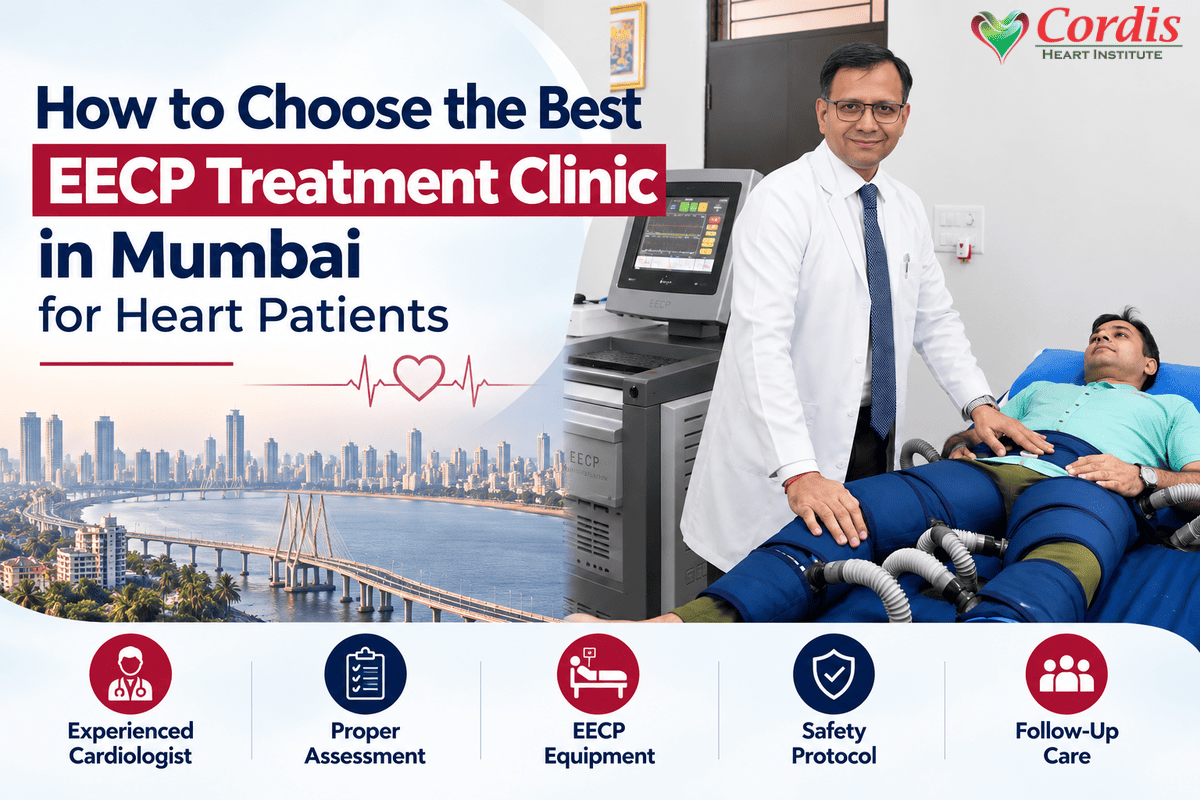
Choosing the best EECP treatment clinic in Mumbai involves checking the cardiologist’s experience, patient assessment, treatment protocols, safety measures, and overall costs. Read how to compare EECP centres and understand whether EECP therapy may be suitable for your heart condition at Cordis Heart Institute, with consultation options from Dr Abhijit Aklujkar.
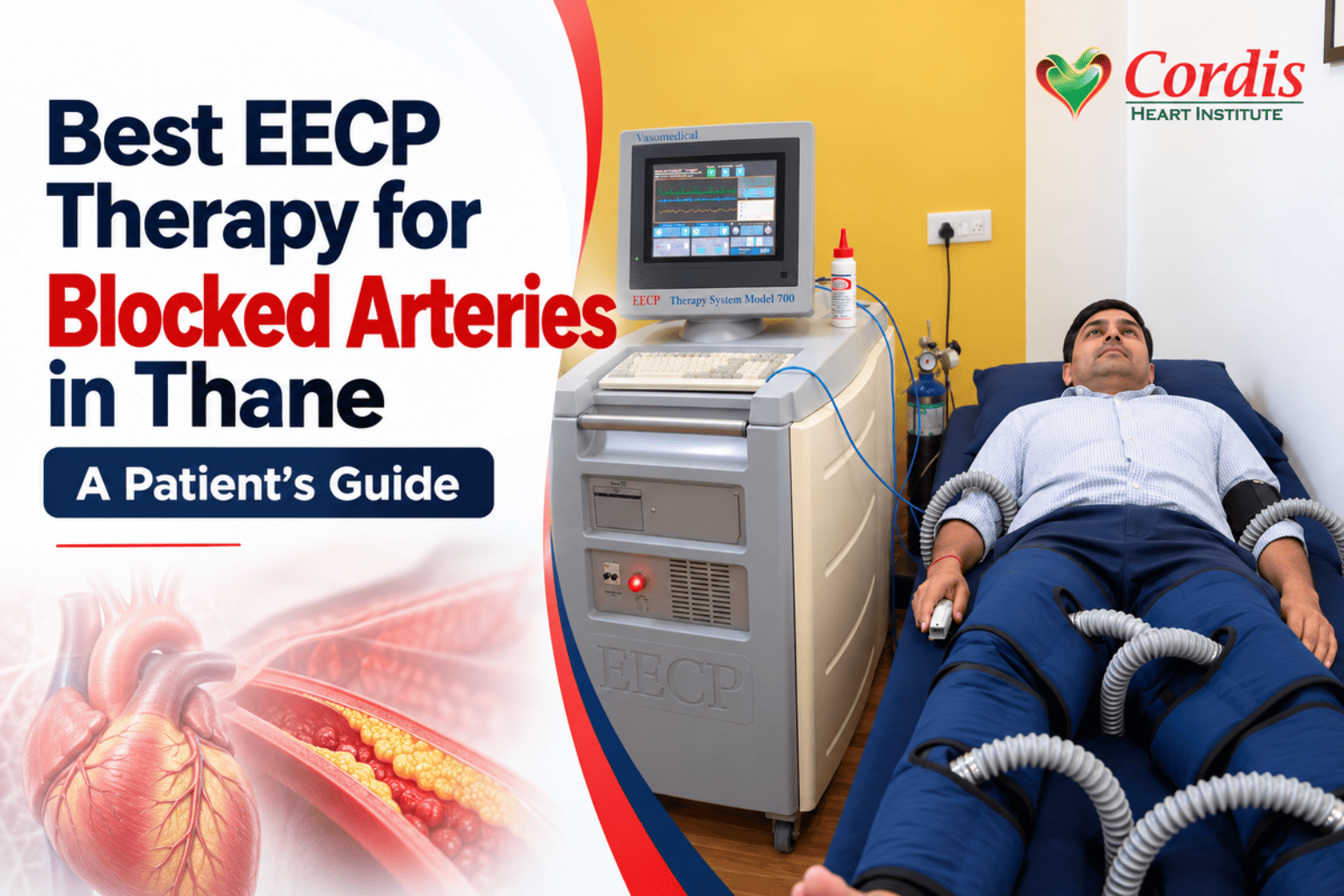
Best EECP Therapy for Blocked Arteries in Thane: A Patient’s Guide
Looking for EECP therapy for blocked arteries in Thane? Learn how EECP treatment works, its potential benefits, eligibility, cost factors, and how to consult Dr Abhijit Aklujkar at Cordis Heart Institute.
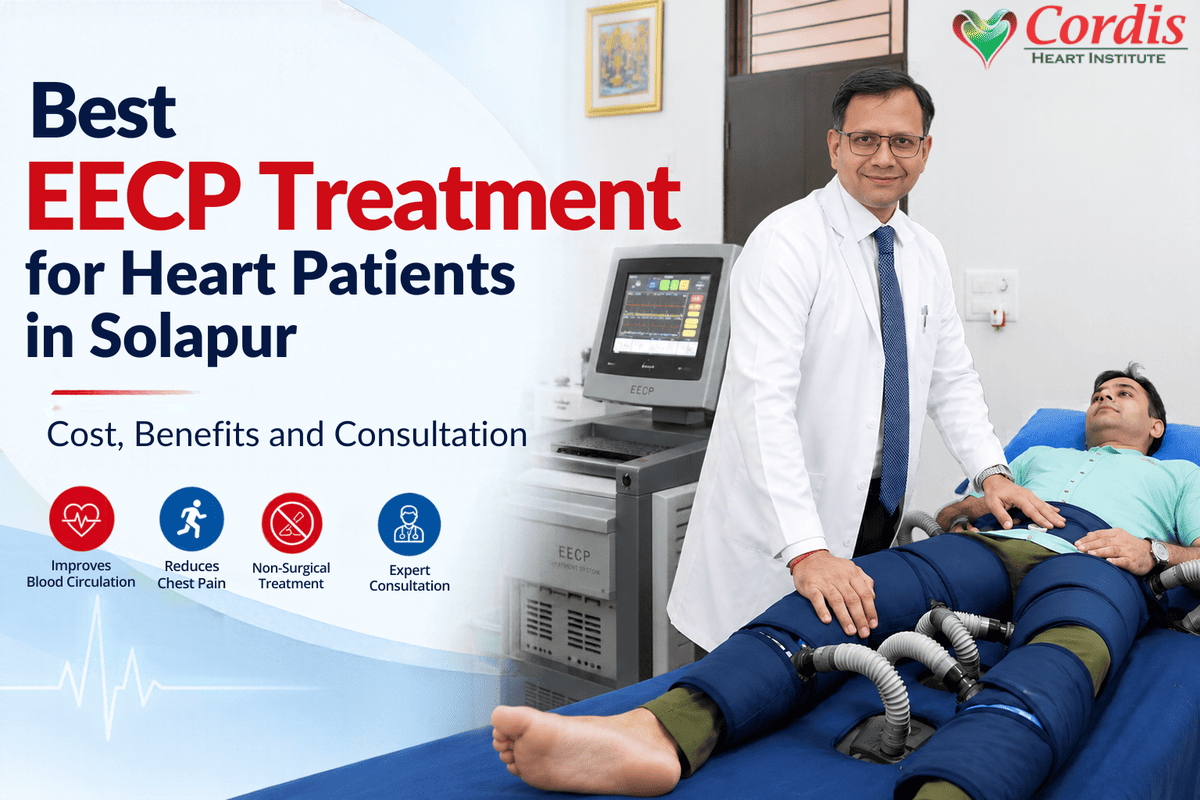
Best EECP Treatment for Heart Patients in Solapur: Cost, Benefits and Consultation
Learn about the best EECP treatment for heart patients in Solapur, including its benefits, treatment cost, eligibility, and consultation process. Find out how EECP therapy may help manage angina symptoms and support heart health without surgery, and when to consult a heart specialist to discuss suitable treatment options.
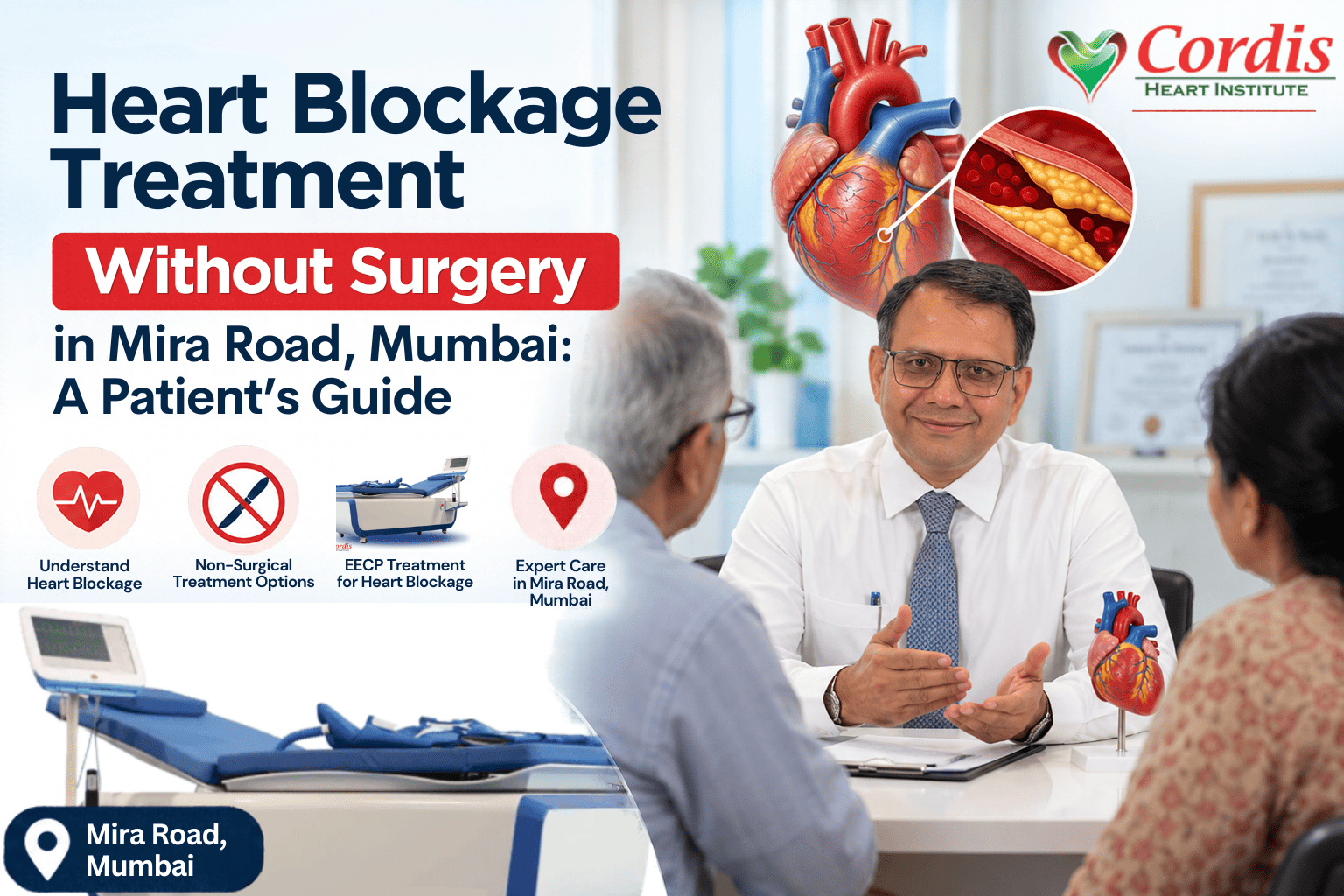
Heart Blockage Treatment Without Surgery in Mira Road, Mumbai: A Patient’s Guide
Looking for heart blockage treatment without surgery in Mira Road, Mumbai? Learn about non-surgical treatment options such as EECP therapy, their potential benefits, who may be eligible, and why consulting an experienced cardiologist is important for choosing the right treatment.
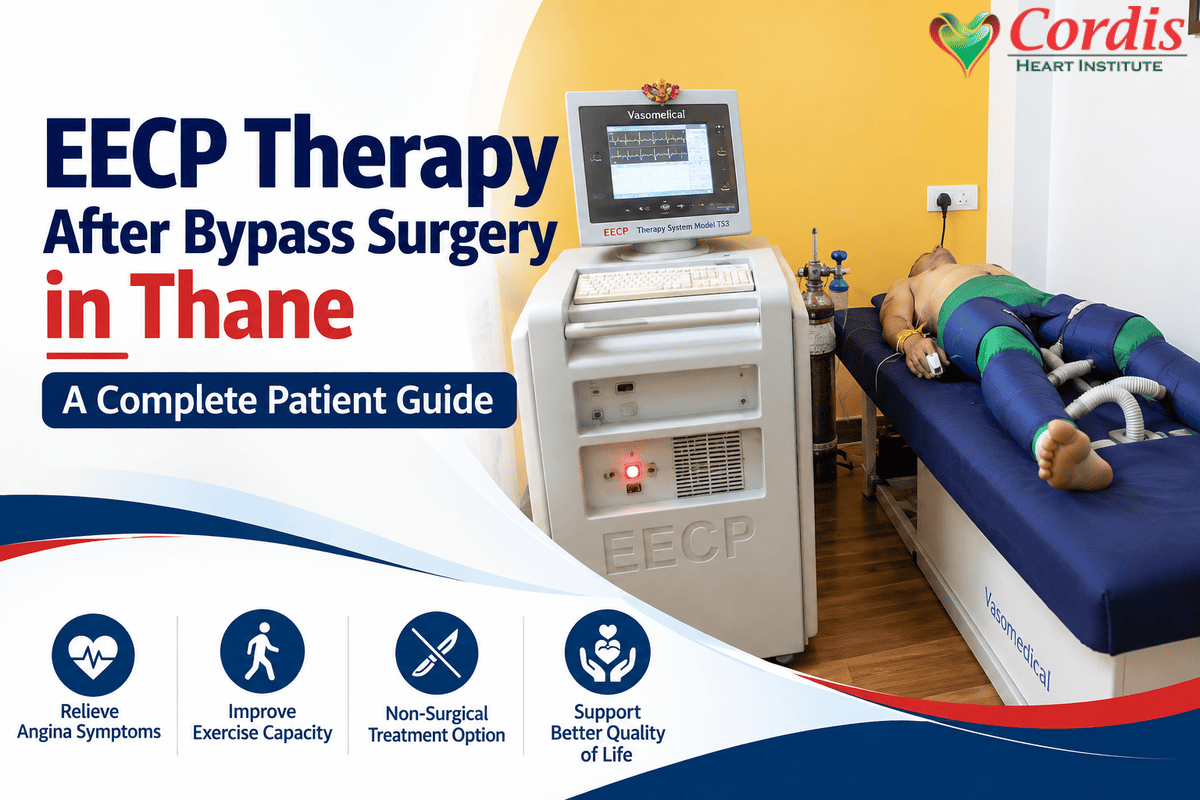
EECP Therapy After Bypass Surgery in Thane: A Complete Patient Guide
EECP therapy after bypass surgery in Thane may help selected patients manage chronic angina and improve daily activities. Explore its benefits, treatment process, safety considerations, and suitability with Dr Abhijit Aklujkar at Cordis Heart Institute.
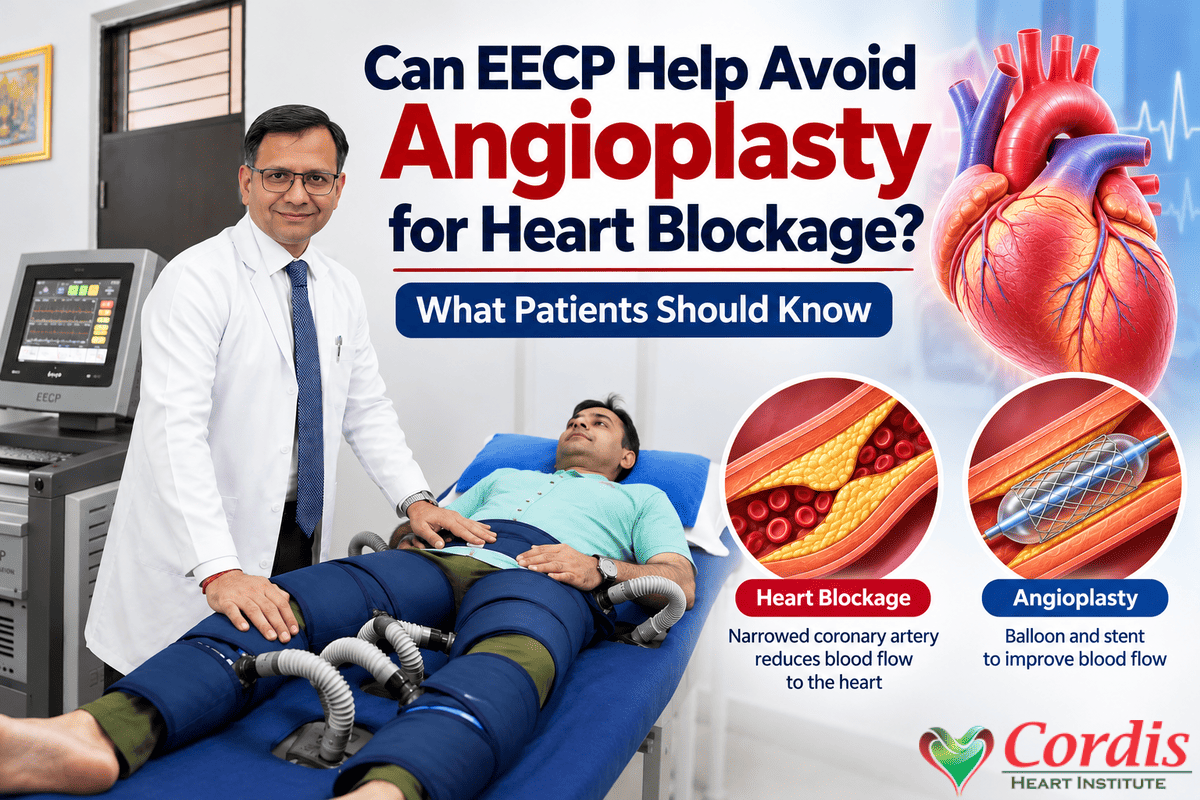
Can EECP Help Avoid Angioplasty for Heart Blockage? What Patients Should Know
Can EECP help you avoid angioplasty for heart blockage? Understand how EECP therapy may help relieve chest pain, who may benefit from this non-surgical treatment, and when angioplasty or other medical procedures may still be necessary.
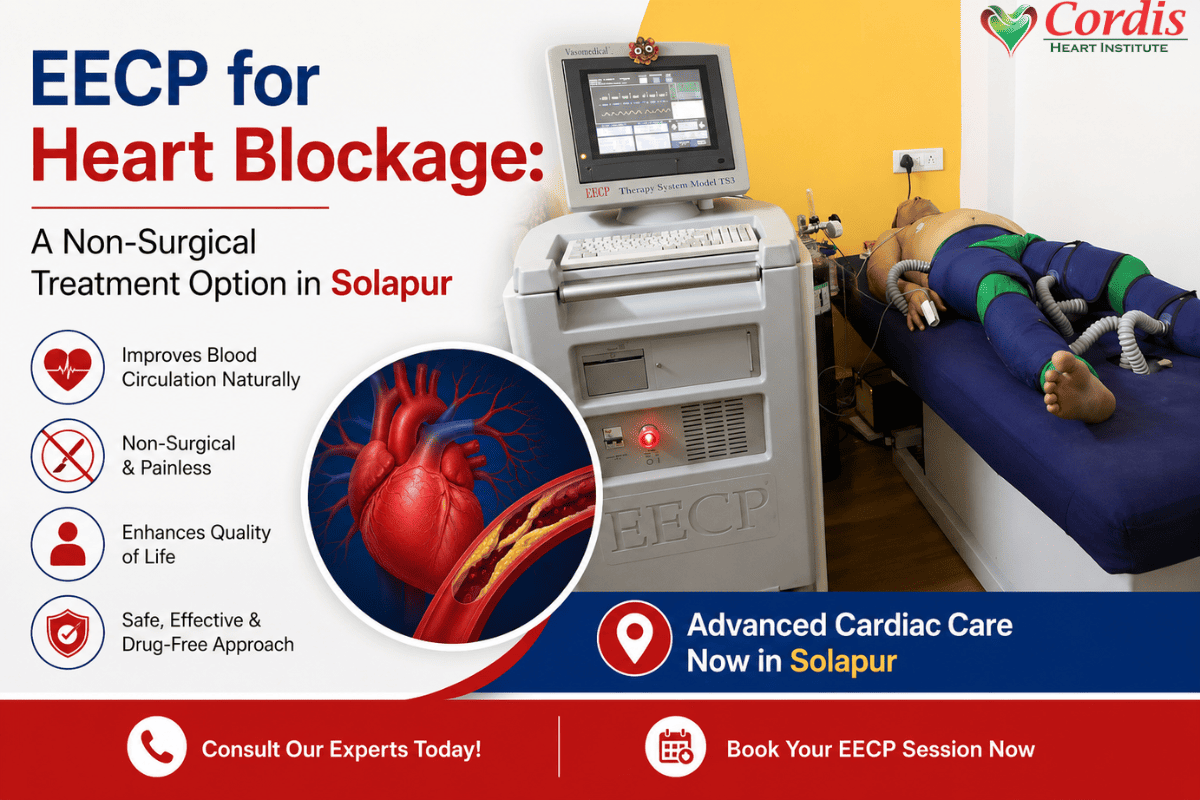
EECP for Heart Blockage: A Non-Surgical Treatment Option in Solapur
EECP for heart blockage is a non-surgical treatment option that may help selected patients manage angina symptoms and improve exercise tolerance. In this guide, learn how EECP works, who may benefit, how long treatment takes, and whether it can be considered as an alternative to invasive procedures. We also explain EECP treatment in Solapur at Cordis Heart Institute and the role of Dr Abhijit Aklujkar in evaluating patients for suitable treatment options.
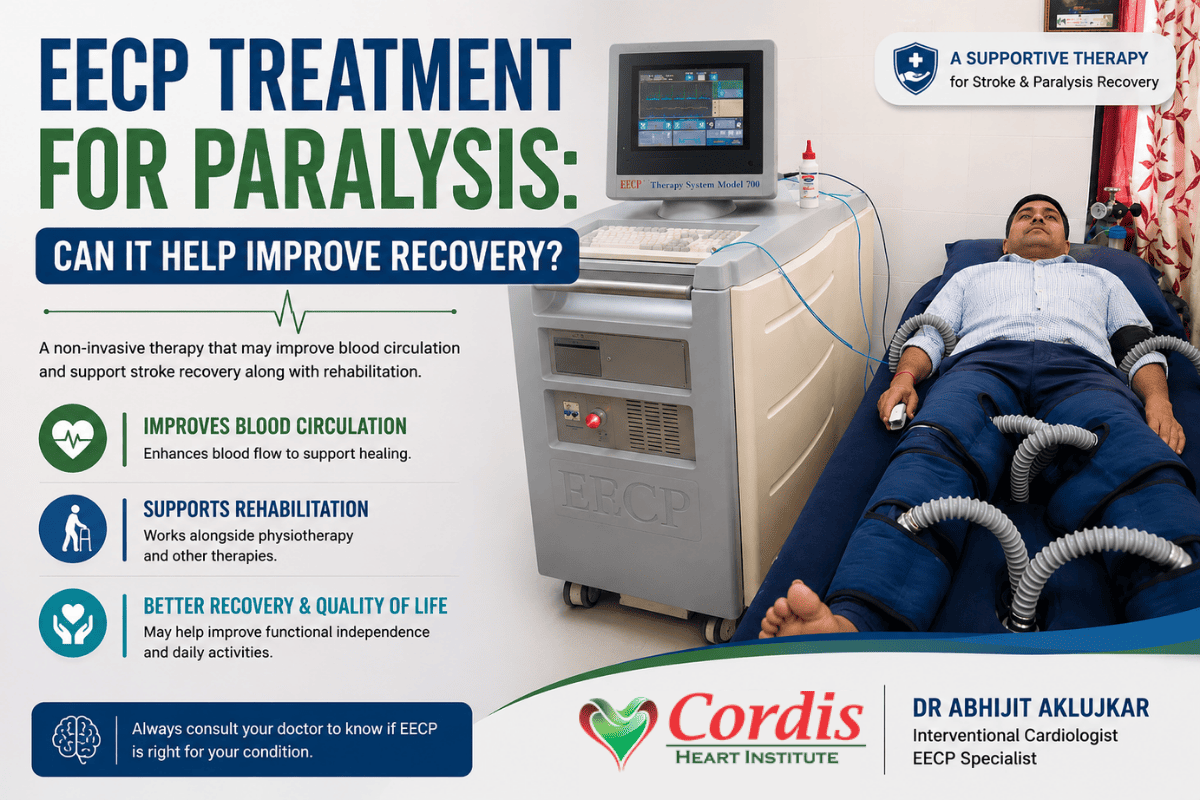
EECP Treatment for Paralysis: Can It Help Improve Recovery?
Can EECP treatment help with paralysis recovery? EECP, or Enhanced External Counterpulsation, is a non-invasive therapy designed to support blood circulation and is primarily used in cardiovascular care. Its possible role in stroke recovery and paralysis rehabilitation is still being studied, so it should not be considered a cure or replacement for physiotherapy and other rehabilitation therapies. In this article, learn how EECP works, who may be considered for treatment, its possible benefits and limitations, and what patients should know before considering EECP treatment at Cordis Heart Institute under the care of Dr Abhijit Aklujkar.
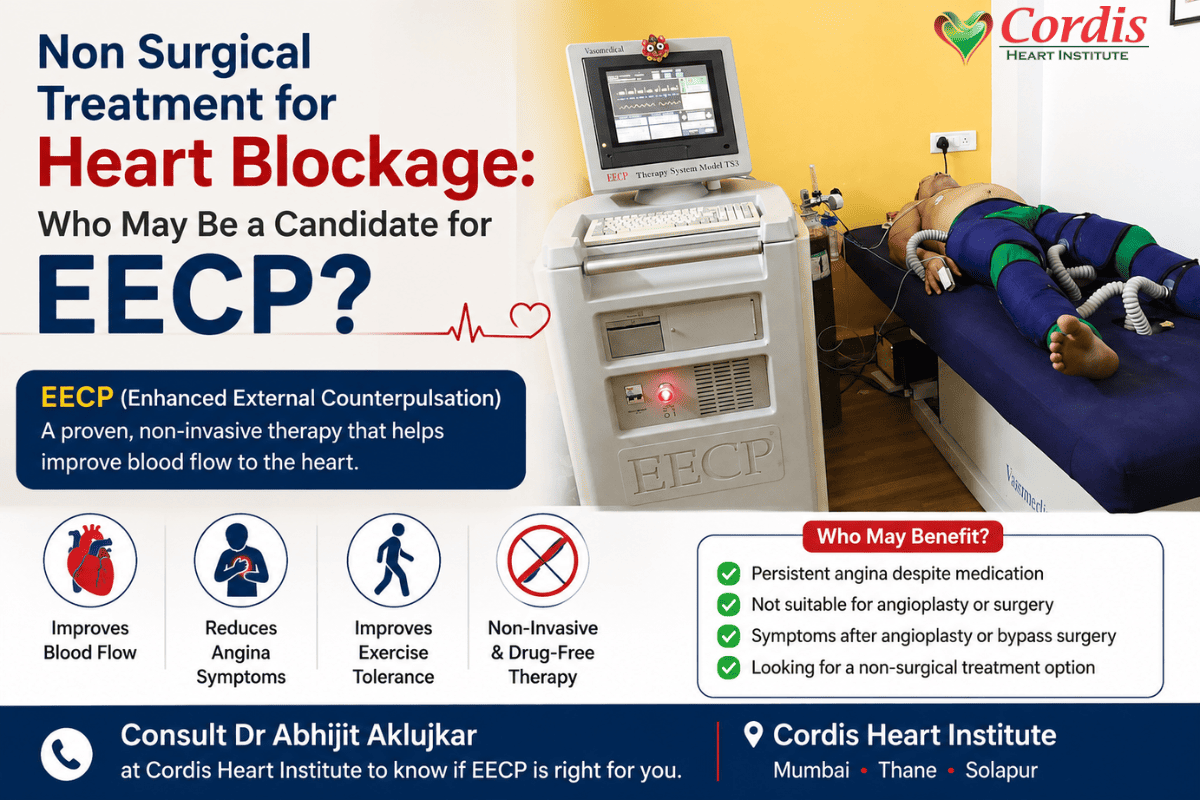
Non-Surgical Treatment for Heart Blockage: Who May Be a Candidate for EECP?
If you’re looking for non-surgical treatment for heart blockage, EECP (Enhanced External Counterpulsation) may be an option worth discussing with a cardiologist. EECP is a non-invasive therapy that uses inflatable cuffs around the legs to support blood flow to the heart and may help reduce angina symptoms in selected patients. In this guide, learn how EECP works, who may be a candidate, how it compares with angioplasty and bypass surgery, and what to consider before starting treatment at Cordis Heart Institute.
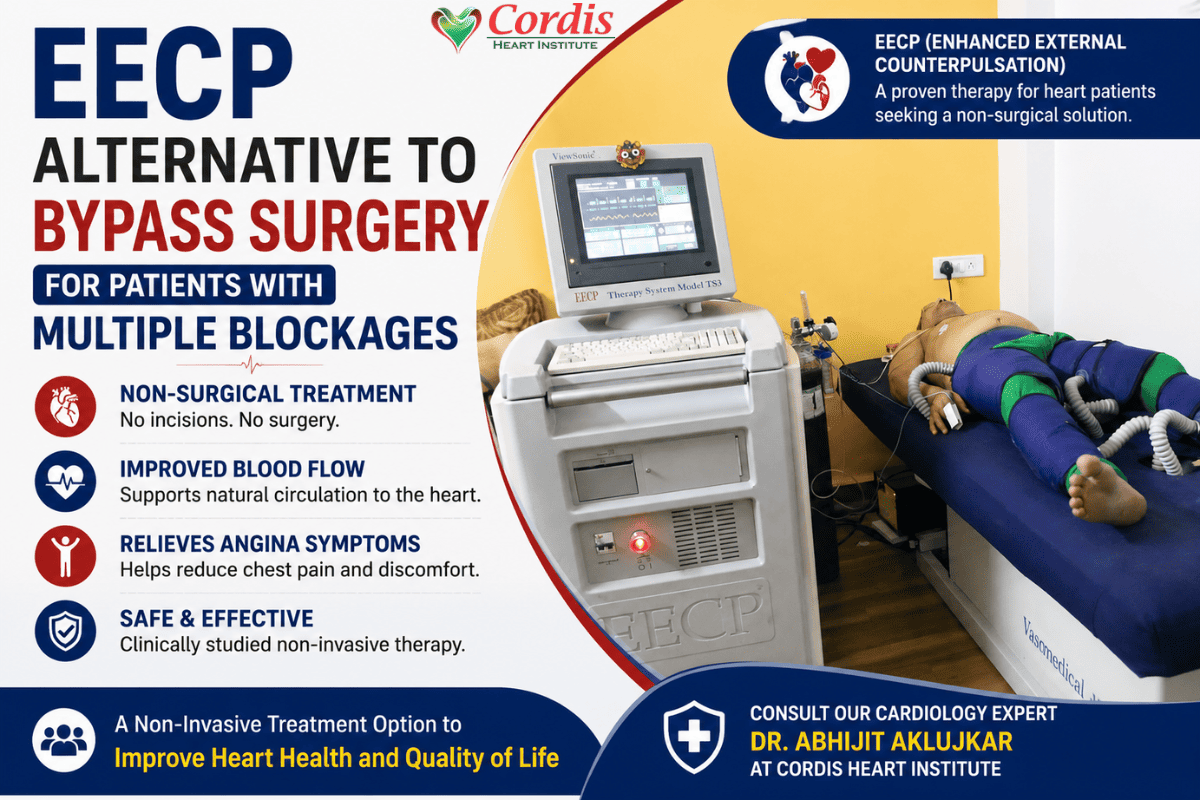
EECP Alternative to Bypass Surgery for Patients With Multiple Blockages
If you have been told that you have multiple heart blockages and may need bypass surgery, you may be wondering whether there is a non-surgical option. EECP (Enhanced External Counterpulsation) is a treatment that may help selected patients with chronic stable angina by supporting blood flow to the heart and reducing symptoms. However, EECP does not remove coronary blockages or replace bypass surgery in every patient. In this guide, learn how EECP works, who may be suitable for treatment, how it compares with bypass surgery, and why a cardiologist’s evaluation is important before choosing an EECP alternative to bypass surgery.