
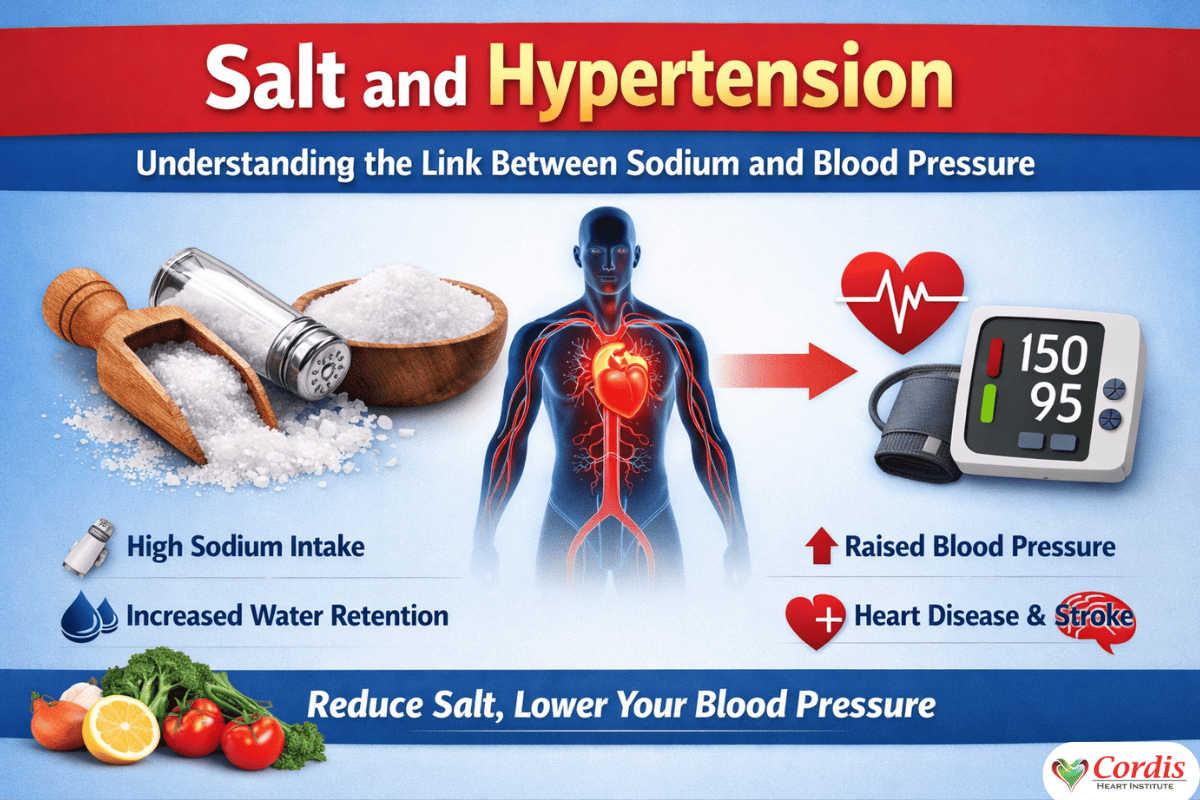
Salt and hypertension are closely connected. Excess salt intake is one of the most common dietary reasons for high blood pressure. In many people, especially those with heart conditions or a family history of hypertension, consuming too much salt directly raises blood pressure levels.
When salt intake increases, the body retains more water. This extra fluid increases the pressure inside blood vessels, making the heart work harder. Over time, this leads to persistent high blood pressure and raises the risk of heart attack, stroke, and kidney disease.
Reducing salt intake is one of the most effective lifestyle changes for managing hypertension.
How Salt and Hypertension Are Related
Salt contains sodium, which affects how the body controls fluids. High sodium intake causes:
- Water retention in the bloodstream
- Increased blood volume
- Higher pressure on artery walls
This is why people who consume high-salt diets often develop hypertension. Studies consistently show that lowering sodium intake helps reduce blood pressure in both hypertensive and non-hypertensive individuals.
What Is Common Salt?
Common salt is known as sodium chloride (NaCl). It is made up of:
- 40% sodium
- 60% chloride
Sodium is necessary for normal body functions such as nerve signaling, muscle movement, and fluid balance. However, the body requires only a small amount. Excess sodium disturbs this balance and contributes directly to salt and hypertension-related problems.
Why Excess Salt Is Harmful for Blood Pressure
High salt intake affects blood pressure in several ways:
- It increases fluid retention
- It stiffens blood vessels
- It reduces kidney efficiency in removing excess sodium
- It increases strain on the heart
People with hypertension are often salt-sensitive, meaning even small increases in sodium intake can raise blood pressure quickly.
How Much Salt Should You Consume Daily?
To reduce the risk of salt and hypertension-related complications, experts recommend:
- Less than 2300 mg of sodium per day
- This equals about 5.8 grams of salt (one teaspoon)
For people with high blood pressure, heart disease, diabetes, or kidney problems, doctors may advise reducing sodium intake further to around 1500 mg per day.
Hidden Sources of Salt That Increase Hypertension Risk
Many people consume excess salt without realizing it. Common hidden sources include:
- Packaged snacks and namkeen
- Bakery items like bread and biscuits
- Ready-to-eat meals
- Sauces, ketchup, and chutneys
- Instant noodles and soups
- Restaurant and fast foods
Even foods that do not taste salty may contain high sodium levels, contributing to salt and hypertension over time.
What Can You Use Instead of Salt for Hypertension?
Reducing salt does not mean giving up taste. Healthier alternatives include:
- Garlic or onion powder
- Fresh herbs like coriander, parsley, or rosemary
- Celery seeds
- Lemon juice or vinegar
- Spices such as black pepper, cumin, and turmeric
These options add flavor without increasing sodium intake.
How to Flush Excess Salt From the Body
If you have consumed too much salt, these steps can help balance sodium levels:
- Drink more water to support kidney function
- Eat potassium-rich foods such as fruits, vegetables, legumes, seeds, and nuts
- Go for a walk or light physical activity to improve circulation
Potassium helps counter the effects of sodium and supports blood pressure control.
How to Reduce Salt Intake and Control Hypertension
Simple daily habits can reduce salt and hypertension risk:
- Use less salt while cooking
- Avoid adding salt after meals are served
- Remove the salt shaker from the dining table
- Choose fresh foods over processed ones
- Read nutrition labels for sodium content
- Avoid high-sodium foods such as:
- Papad and pickles
- Ready-to-eat soups and noodles
- Sauces and packaged gravies
- Bakery products
- Pizza and pasta
Home-cooked meals are the best way to control salt intake.
Who Should Be Most Careful About Salt and Hypertension?
Extra caution is needed for:
- People with high blood pressure
- Heart disease patients
- Diabetics
- Kidney disease patients
- Older adults
In these groups, excess salt can worsen symptoms and increase complications.
Final Thoughts on Salt and Hypertension
Salt is essential, but excess intake is harmful. Managing salt consumption is one of the simplest and most effective ways to control hypertension and protect heart health. Small, consistent changes in daily diet can lead to long-term benefits.
If you have high blood pressure, consult a specialist for a personalized plan book an appointment