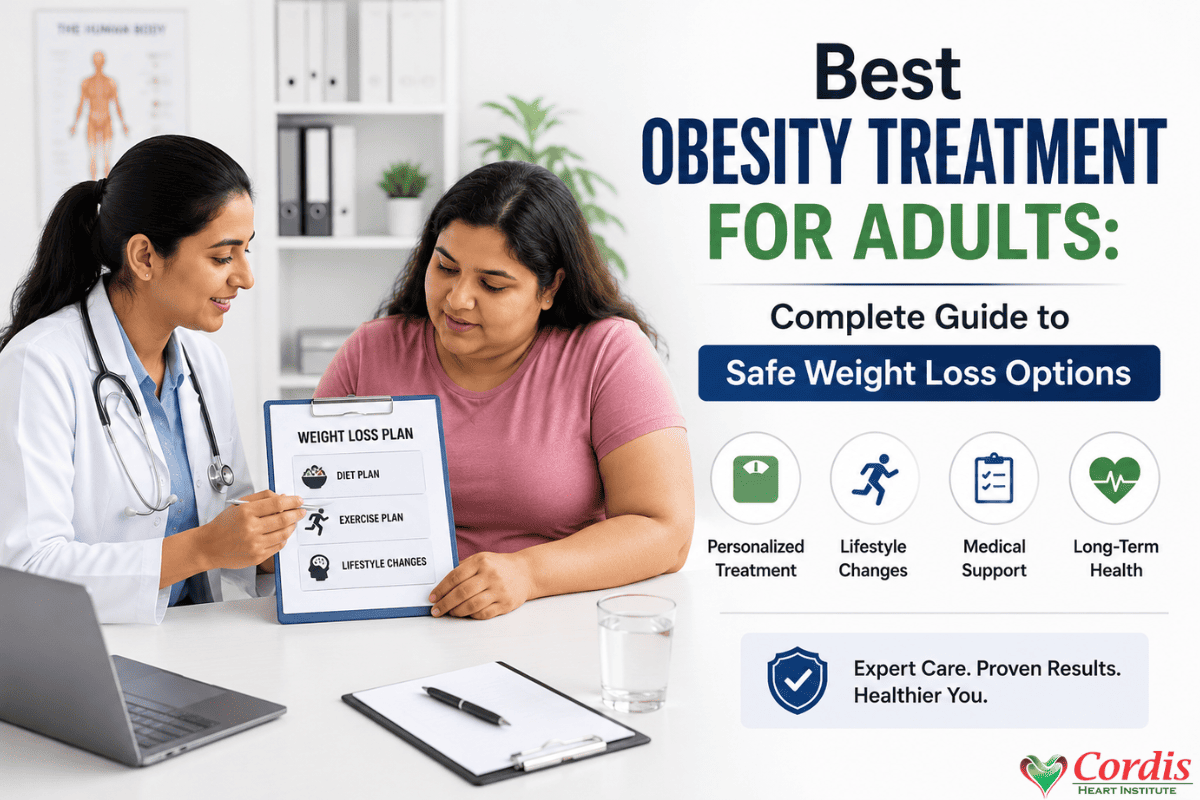
Obesity is no longer just about appearance or body weight. It is a serious medical condition that increases the risk of heart disease, diabetes, high blood pressure, sleep apnea, and many other health problems. Millions of adults struggle with weight gain every year, but the good news is that safe and effective treatments are available.
Finding the best obesity treatment for adults depends on several factors including body mass index (BMI), lifestyle habits, existing medical conditions, and long-term health goals. Some people may benefit from lifestyle changes and diet plans, while others may need medical weight loss programs or bariatric surgery.
At Cordis Heart Institute, obesity management is approached with a focus on safe weight loss, improved heart health, and long-term wellness. This guide covers everything you need to know about obesity treatment options, healthy weight loss strategies, and when to seek professional medical help.
What Is Obesity?
Obesity is a condition where excess body fat affects overall health and daily functioning. It develops when calorie intake consistently exceeds the calories burned through physical activity and metabolism.
How Is Obesity Measured?
Doctors commonly use Body Mass Index (BMI) to determine obesity levels.
- BMI 18.5–24.9: Healthy weight
- BMI 25–29.9: Overweight
- BMI 30 and above: Obesity
Other measurements may include:
- Waist circumference
- Body fat percentage
- Metabolic health markers
Common Causes of Obesity in Adults
Obesity is usually caused by a combination of lifestyle, environmental, and genetic factors.
Poor Eating Habits
Frequent consumption of processed foods, sugary drinks, and fast food can lead to rapid weight gain.
Sedentary Lifestyle
Long working hours, limited physical activity, and excessive screen time reduce calorie burning.
Hormonal Imbalances
Conditions such as hypothyroidism and PCOS can contribute to obesity.
Genetics
Family history can affect metabolism and fat storage.
Stress and Sleep Problems
Lack of sleep and chronic stress increase hunger hormones and unhealthy eating patterns.
Health Risks Associated With Obesity
Many adults ignore obesity until serious health issues begin to appear. Excess body fat can affect nearly every organ in the body.
Heart Disease
Obesity increases cholesterol levels and blood pressure, putting strain on the heart.
Type 2 Diabetes
Excess fat reduces insulin sensitivity, leading to high blood sugar levels.
Joint Pain
Extra body weight increases pressure on knees and joints.
Sleep Apnea
Obesity can narrow airways and disrupt breathing during sleep.
Fatty Liver Disease
Fat accumulation in the liver can cause inflammation and long-term damage.
According to the World Health Organization (WHO), obesity rates continue to rise globally and are linked to several chronic diseases.
Best Obesity Treatment for Adults: Top Safe Weight Loss Options
There is no single treatment that works for everyone. The best obesity treatment for adults usually combines medical care, healthy eating, exercise, and behavioral support.
Lifestyle Changes for Long-Term Weight Loss
For many adults, lifestyle modification is the first step toward healthy weight management.
Healthy Eating Plans
Focus on:
- High-protein meals
- Fresh vegetables
- Whole grains
- Healthy fats
Avoid:
- Sugary beverages
- Deep-fried foods
- Packaged snacks
Portion Control
Eating smaller portions helps reduce calorie intake without extreme dieting.
Physical Activity
Simple activities like walking, cycling, or swimming can improve metabolism and cardiovascular health.
Sleep Improvement
Adults should aim for 7–8 hours of quality sleep every night.
Medical Weight Loss Programs
Adults with moderate to severe obesity may require supervised medical treatment.
What Is a Medical Weight Loss Program?
A structured program designed by healthcare professionals that includes:
- Personalized diet plans
- Exercise guidance
- Behavioral counseling
- Regular monitoring
At Cordis Heart Institute, doctors evaluate individual health conditions before recommending a treatment plan.
Benefits of Medical Weight Loss
- Safer than crash dieting
- Improves long-term results
- Helps manage diabetes and hypertension
- Reduces heart disease risk
Obesity Medications for Adults
Some adults may benefit from prescription medications when diet and exercise alone are not enough.
When Are Weight Loss Medicines Recommended?
Doctors may prescribe medications for adults with:
- BMI above 30
- BMI above 27 with medical conditions such as diabetes or high blood pressure
Important Note
Weight loss medicines should only be taken under medical supervision because side effects and health risks vary between individuals.
The National Institutes of Health (NIH) recommends combining medication with healthy lifestyle changes for better results.
Bariatric Surgery for Severe Obesity
For adults with severe obesity, bariatric surgery may provide life-changing results.
Types of Bariatric Surgery
Gastric Sleeve Surgery
Reduces stomach size to limit food intake.
Gastric Bypass Surgery
Changes the digestive system to reduce calorie absorption.
Gastric Balloon Procedure
A temporary balloon placed inside the stomach to create fullness.
Who May Need Surgery?
Doctors may recommend bariatric surgery for adults with:
- BMI above 40
- BMI above 35 with obesity-related diseases
Benefits of Bariatric Surgery
- Significant weight loss
- Better blood sugar control
- Reduced blood pressure
- Improved mobility
Non-Surgical Obesity Treatments
Not everyone requires surgery. Many adults achieve healthy weight loss through non-surgical methods.
Nutrition Therapy
Registered dietitians create personalized meal plans based on calorie needs and medical conditions.
Fitness Coaching
Structured exercise routines improve fat loss and muscle strength.
Behavioral Therapy
Emotional eating and stress-related eating habits are addressed through counseling.
How to Choose the Best Obesity Treatment for Adults
Every patient is different. Choosing the right obesity treatment depends on medical history and personal goals.
Factors Doctors Consider
- BMI level
- Existing diseases
- Lifestyle habits
- Age
- Mental health
- Previous weight loss attempts
Personalized Care at Cordis Heart Institute
Patients receive:
- Detailed health evaluations
- Cardiac assessments
- Customized obesity management plans
- Long-term follow-up care
Diet Plans That Support Safe Weight Loss
Diet plays a major role in obesity management.
Foods to Include
- Eggs
- Paneer
- Lentils
- Leafy vegetables
- Fruits
- Oats
- Nuts
Foods to Avoid
- Sugary drinks
- White bread
- Fast food
- Excessive desserts
Importance of Hydration
Drinking enough water helps digestion and appetite control.
Meal Timing Matters
Skipping meals often leads to overeating later in the day.
Exercise and Physical Activity for Obesity Management
Exercise improves both physical and mental health.
Best Exercises for Beginners
- Walking
- Cycling
- Swimming
- Yoga
- Strength training
How Much Exercise Is Recommended?
The Centers for Disease Control and Prevention (CDC) recommends at least 150 minutes of moderate physical activity per week.
Tips to Stay Consistent
- Set realistic goals
- Exercise with a friend
- Track progress weekly
- Choose enjoyable activities
Role of Heart Health in Obesity Treatment
Obesity and heart disease are closely connected.
How Obesity Affects the Heart
Excess body fat can lead to:
- High cholesterol
- Hypertension
- Reduced blood circulation
- Increased heart attack risk
Why Cardiac Monitoring Matters
Rapid weight loss without supervision may affect heart health. Medical monitoring ensures safer treatment outcomes.
At Cordis Heart Institute, obesity management also includes heart health evaluations to reduce cardiovascular risks.
Benefits of Early Obesity Treatment
Treating obesity early can improve quality of life significantly.
Improved Energy Levels
Weight loss helps reduce fatigue and improve mobility.
Better Heart Health
Blood pressure and cholesterol levels often improve after weight reduction.
Reduced Diabetes Risk
Healthy weight loss improves insulin sensitivity.
Improved Mental Health
Many adults experience improved confidence and reduced stress after achieving healthier weight levels.
When Should Adults See a Doctor for Obesity?
You should seek medical advice if you experience:
- Rapid weight gain
- Breathlessness
- Constant fatigue
- Difficulty sleeping
- Joint pain
- High blood pressure
Professional guidance helps identify underlying causes and prevents serious complications.
FAQs About the Best Obesity Treatment for Adults
What is the best obesity treatment for adults?
The best treatment depends on BMI, health conditions, and weight loss goals. Treatment may include diet changes, exercise, medications, or surgery.
Can obesity be treated without surgery?
Yes. Many adults lose weight successfully through lifestyle changes and supervised medical programs.
Is bariatric surgery safe?
Bariatric surgery is generally safe when performed by experienced specialists and after proper evaluation.
How long does obesity treatment take?
Healthy and sustainable weight loss usually takes several months to years depending on the treatment plan.
What foods help with obesity management?
Protein-rich foods, vegetables, fruits, and whole grains support healthy weight loss.
Why Choose Cordis Heart Institute for Obesity Treatment?
Experienced Medical Team
Patients receive guidance from experienced healthcare professionals.
Personalized Treatment Plans
Every patient receives a customized obesity management strategy.
Advanced Diagnostic Support
Comprehensive evaluations help identify health risks early.
Focus on Safe Weight Loss
The goal is sustainable health improvement rather than quick fixes.
Heart Health and Obesity Care Together
Integrated obesity and cardiac care help reduce long-term complications.
Start Your Journey Toward Safe Weight Loss Today
Obesity is a medical condition that deserves professional attention and long-term care. The best obesity treatment for adults is one that focuses on safe weight loss, improved heart health, and sustainable lifestyle changes.
Whether you need dietary guidance, medical weight loss programs, or bariatric surgery support, early action can make a major difference in your health and quality of life.
If you are looking for expert obesity care and safe weight loss options, consult the specialists at Cordis Heart Institute.
Book a consultation today to discuss the best obesity treatment plan for your health needs.
Get expert guidance for safe, sustainable, and medically supervised weight loss.