A stroke can change a person’s life in a matter of minutes. Simple activities such as walking, speaking, remembering things, or even maintaining balance may suddenly become difficult. While conventional stroke rehabilitation remains the cornerstone of recovery, many patients and families continue searching for additional ways to improve outcomes and regain independence.
One treatment that has gained attention in recent years is EECP therapy for stroke patients. Originally developed for heart disease, EECP is now being studied for its potential role in improving blood circulation and supporting neurological recovery.
At Cordis Heart Institute, under the guidance of Dr Abhijit Aklujkar, patients often ask whether EECP can help after a stroke, what results they can expect, and whether the treatment is safe. In this article, we’ll answer those questions and explain the benefits, risks, and current evidence behind EECP therapy.
What Is EECP Therapy?
EECP stands for Enhanced External Counterpulsation. It is a non-invasive treatment designed to improve blood circulation throughout the body.
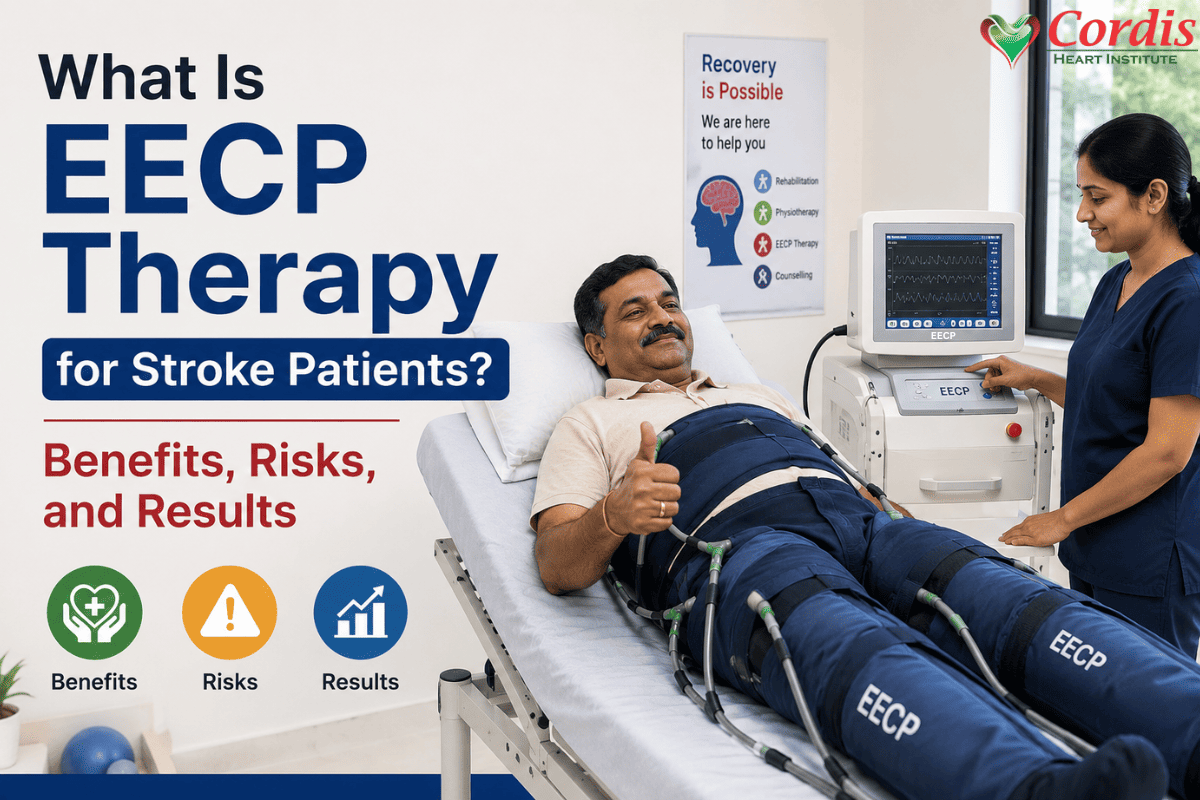
During treatment, large inflatable cuffs are wrapped around the calves, thighs, and buttocks. These cuffs inflate and deflate in synchronization with the patient’s heartbeat. The process helps increase blood flow back to the heart and may improve circulation to various organs, including the brain.
Unlike surgery or invasive procedures, EECP does not require anesthesia, hospitalization, or recovery time.
Originally Developed for Heart Patients
EECP was initially introduced to help patients suffering from:
- Coronary artery disease
- Chronic angina
- Heart blockage
- Reduced blood flow to the heart
Over time, researchers observed that improved circulation could potentially benefit other conditions linked to poor blood flow, including stroke recovery and vascular disorders.
How EECP Differs from Traditional Stroke Rehabilitation
Stroke rehabilitation usually focuses on:
- Physiotherapy
- Occupational therapy
- Speech therapy
- Cognitive rehabilitation
EECP does not replace these treatments. Instead, it may serve as a supportive therapy by helping improve circulation and oxygen delivery throughout the body.
Think of rehabilitation as rebuilding skills, while EECP aims to create a healthier environment for recovery through improved blood flow.
Can EECP Therapy Help Stroke Patients?
The brain depends on a continuous supply of oxygen and nutrients delivered through blood circulation. When a stroke occurs, blood flow to part of the brain is interrupted, causing damage to brain tissue.
Even after emergency treatment, some areas surrounding the damaged tissue may continue receiving less-than-optimal blood supply.
The Importance of Blood Flow in Stroke Recovery
Recovery after stroke depends on several factors, including:
- Location of the stroke
- Severity of damage
- Age of the patient
- Overall health
- Rehabilitation efforts
Good circulation plays an important role because brain cells require oxygen and nutrients to function properly.
How EECP May Improve Brain Blood Supply
One of the proposed benefits of EECP is its ability to encourage collateral circulation.
Collateral circulation refers to small blood vessels that develop alternative pathways around blocked or damaged arteries. These natural bypass routes may improve blood flow to tissues that previously received inadequate circulation.
Some researchers believe EECP may help stimulate these pathways, potentially supporting recovery in selected stroke patients.
What Research Says
Current studies suggest that EECP may:
- Improve cerebral blood flow
- Increase oxygen delivery
- Enhance vascular function
- Support neurological rehabilitation
However, it is important to understand that research is still evolving. EECP should not be viewed as a cure for stroke or a replacement for standard medical treatment.
Benefits of EECP Therapy for Stroke Patients
Improved Blood Circulation
The primary goal of EECP is to improve circulation throughout the body.
Better blood flow may help ensure that tissues receive adequate oxygen and nutrients, which can be particularly important during recovery.
Potential Improvement in Physical Function
Some patients report improvements in:
- Walking ability
- Endurance
- Balance
- Daily activities
These benefits are often most noticeable when EECP is combined with structured rehabilitation programs.
Increased Energy Levels
Fatigue is one of the most common complaints among stroke survivors.
By improving circulation, EECP may help some patients experience:
- Better stamina
- Reduced tiredness
- Increased activity levels
Enhanced Quality of Life
Many patients seek treatment not just to recover physically but to regain independence.
Potential improvements in mobility, confidence, and daily functioning can positively affect overall quality of life.
Non-Surgical Treatment Option
One of the biggest advantages of EECP is that it is:
- Non-invasive
- Drug-free
- Painless for most patients
- Performed on an outpatient basis
This makes it appealing for individuals who may not be suitable candidates for invasive procedures.
Support for Long-Term Rehabilitation
Recovery after stroke often continues for months or even years.
EECP may complement long-term rehabilitation efforts by supporting healthy circulation and vascular function.
What Happens During an EECP Session?
Many first-time patients are surprised by how simple the procedure is.
During Treatment
Patients lie comfortably on a treatment bed while inflatable cuffs are secured around the legs.
The machine synchronizes cuff inflation and deflation with the patient’s heartbeat using ECG monitoring.
The treatment creates a rhythmic squeezing sensation in the legs.
Session Duration
A typical session lasts approximately one hour.
Many treatment programs involve:
- 35 sessions
- Five to six sessions per week
- A treatment duration of six to seven weeks
The exact protocol varies based on individual needs.
What Does It Feel Like?
Most patients describe the experience as:
- Comfortable
- Relaxing
- Similar to a massage-like pressure
Many people read, listen to music, or watch television during treatment.
Recovery Time
There is typically no recovery period.
Patients can usually resume normal activities immediately after each session.
Who Is a Good Candidate for EECP Therapy After Stroke?
Not every stroke survivor is an ideal candidate.
A proper medical evaluation is essential before beginning treatment.
Patients who may benefit include those who:
- Have stable medical conditions
- Experience reduced circulation
- Are participating in rehabilitation programs
- Have completed acute stroke treatment
Evaluation at Cordis Heart Institute
At Cordis Heart Institute, Dr Abhijit Aklujkar conducts a detailed assessment before recommending EECP.
This evaluation may include:
- Medical history review
- Physical examination
- Cardiac assessment
- Diagnostic testing
- Review of stroke history
The goal is to determine whether EECP can safely complement the patient’s recovery plan.
Risks and Side Effects of EECP Therapy
A common question patients ask is: “Is EECP safe for stroke patients?”
For appropriately selected individuals, EECP is generally considered safe.
Common Side Effects
Some patients may experience:
- Mild leg discomfort
- Temporary skin irritation
- Muscle soreness
- Bruising in sensitive areas
These effects are usually temporary.
Who Should Avoid EECP?
EECP may not be appropriate for patients with:
- Severe valve disease
- Active blood clots
- Uncontrolled high blood pressure
- Significant arrhythmias
- Certain vascular conditions
A medical evaluation is necessary to identify potential risks.
Important Precautions
Always inform your healthcare provider about:
- Medications
- Previous surgeries
- Cardiac conditions
- Existing circulation problems
Proper screening helps maximize safety and effectiveness.
What Results Can Stroke Patients Expect?
Results vary from person to person.
Factors that influence outcomes include:
- Severity of stroke
- Overall health
- Age
- Rehabilitation participation
- Consistency of treatment
Potential Improvements
Some patients report:
- Better endurance
- Improved mobility
- Reduced fatigue
- Enhanced daily functioning
When Do Results Appear?
Some individuals notice changes within a few weeks.
Others may require completion of the full treatment course before experiencing measurable improvements.
Real-World Experiences
Many patients appreciate EECP because it offers a non-invasive option that can be combined with existing rehabilitation strategies.
At Cordis Heart Institute, patient experiences are carefully monitored to assess progress and treatment response.
EECP Therapy vs Other Stroke Recovery Treatments
EECP vs Physiotherapy
Physiotherapy focuses on rebuilding movement and strength.
EECP focuses on improving circulation.
Both therapies can work together.
EECP vs Medication
Medications help manage risk factors such as:
- Blood pressure
- Cholesterol
- Blood clot prevention
EECP does not replace prescribed medications.
EECP vs Hyperbaric Oxygen Therapy
Hyperbaric oxygen therapy delivers concentrated oxygen under pressure.
EECP improves circulation through mechanical enhancement of blood flow.
Each treatment serves different purposes.
Can Treatments Be Combined?
Yes. Many patients benefit from a multidisciplinary approach that combines:
- Medical management
- Physiotherapy
- Lifestyle changes
- EECP therapy
What Does Research Say About EECP for Stroke Recovery?
Interest in EECP for neurological rehabilitation continues to grow.
Several studies suggest improvements in cerebral blood flow and vascular function following treatment.
Researchers are currently investigating:
- Long-term neurological outcomes
- Cognitive improvements
- Functional recovery
- Brain perfusion changes
Although findings are encouraging, larger clinical studies are still needed.
EECP should currently be viewed as a supportive therapy rather than a standalone stroke treatment.
Why Choose Cordis Heart Institute for EECP Therapy?
Choosing the right treatment center can make a meaningful difference in patient care.
At Cordis Heart Institute, patients receive:
Expert Evaluation
Comprehensive assessment by Dr Abhijit Aklujkar.
Advanced EECP Technology
Modern equipment designed for safe and effective treatment delivery.
Personalized Care
Treatment plans tailored to individual patient needs.
Ongoing Monitoring
Regular assessment of progress and response to therapy.
Patient-Centered Approach
A focus on comfort, safety, and long-term recovery goals.
Frequently Asked Questions
Can EECP reverse stroke damage?
No. EECP cannot reverse existing brain damage. However, it may support recovery by improving circulation.
Is EECP approved for stroke patients?
EECP is primarily approved for specific cardiovascular conditions. Its use in stroke recovery is generally considered supportive and should be guided by a qualified physician.
How many sessions are required?
Many patients complete approximately 35 sessions, though treatment plans vary.
Is EECP painful?
Most patients find the treatment comfortable and well tolerated.
Can elderly patients undergo EECP?
Yes, many elderly patients may be eligible after appropriate medical evaluation.
Does EECP improve memory?
Some studies suggest improved cerebral circulation may support cognitive function, but more research is needed.
What is the cost of EECP therapy in India?
Costs vary depending on the center, location, and number of sessions required.
Final Thoughts
Stroke recovery is often a long journey that requires patience, commitment, and the right combination of therapies. While traditional rehabilitation remains the foundation of recovery, EECP therapy for stroke patients has emerged as a promising supportive treatment that may help improve circulation, energy levels, and overall quality of life.
The key is selecting the right patients and integrating EECP into a broader rehabilitation plan.
If you or a loved one is recovering from stroke and would like to learn whether EECP therapy may be appropriate, consult Dr Abhijit Aklujkar at Cordis Heart Institute for a detailed evaluation and personalized treatment guidance.