If a doctor tells you that you have multiple heart blockages and may need bypass surgery, it is natural to ask whether there is a way to treat the condition without a major operation. One option that often comes up is EECP, or Enhanced External Counterpulsation.
So, can EECP really be an EECP alternative to bypass surgery?
The answer is not the same for every patient. EECP is a non-surgical treatment that may help selected people with chronic, stable angina, particularly when symptoms continue despite medical treatment. However, it does not physically remove coronary blockages or create a surgical bypass around them. The decision depends on the location and severity of blockages, symptoms, heart function, previous treatment and overall health. The 2023 AHA/ACC chronic coronary disease guideline says EECP may be considered for symptom relief in patients with refractory angina who have no other treatment options.
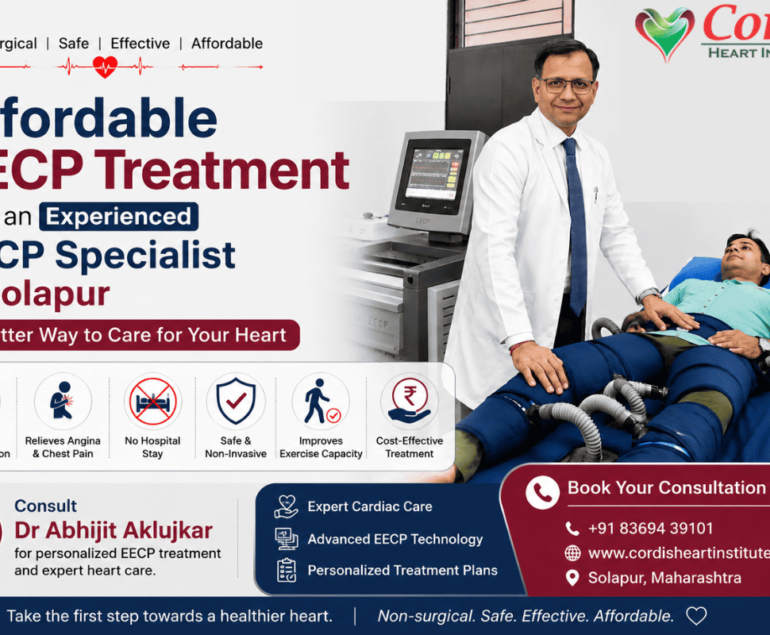
This distinction is important when considering EECP at Cordis Heart Institute under the care of Dr Abhijit Aklujkar.
What Is EECP Treatment?
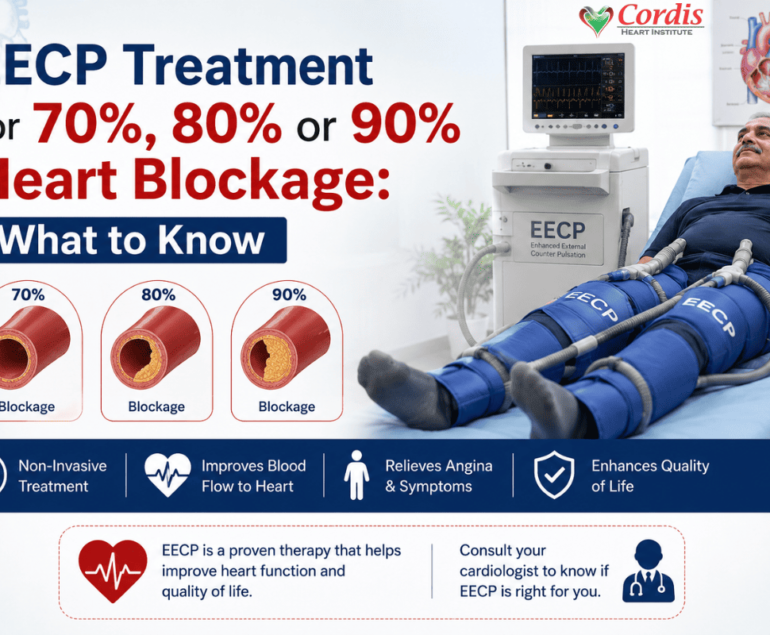
EECP is a non-invasive treatment designed to improve blood flow to the heart and reduce symptoms of angina in selected patients.
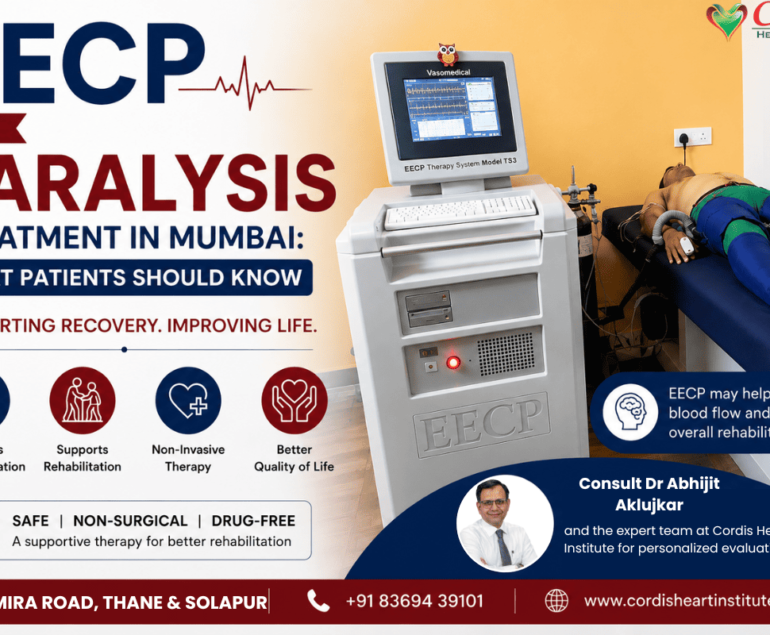
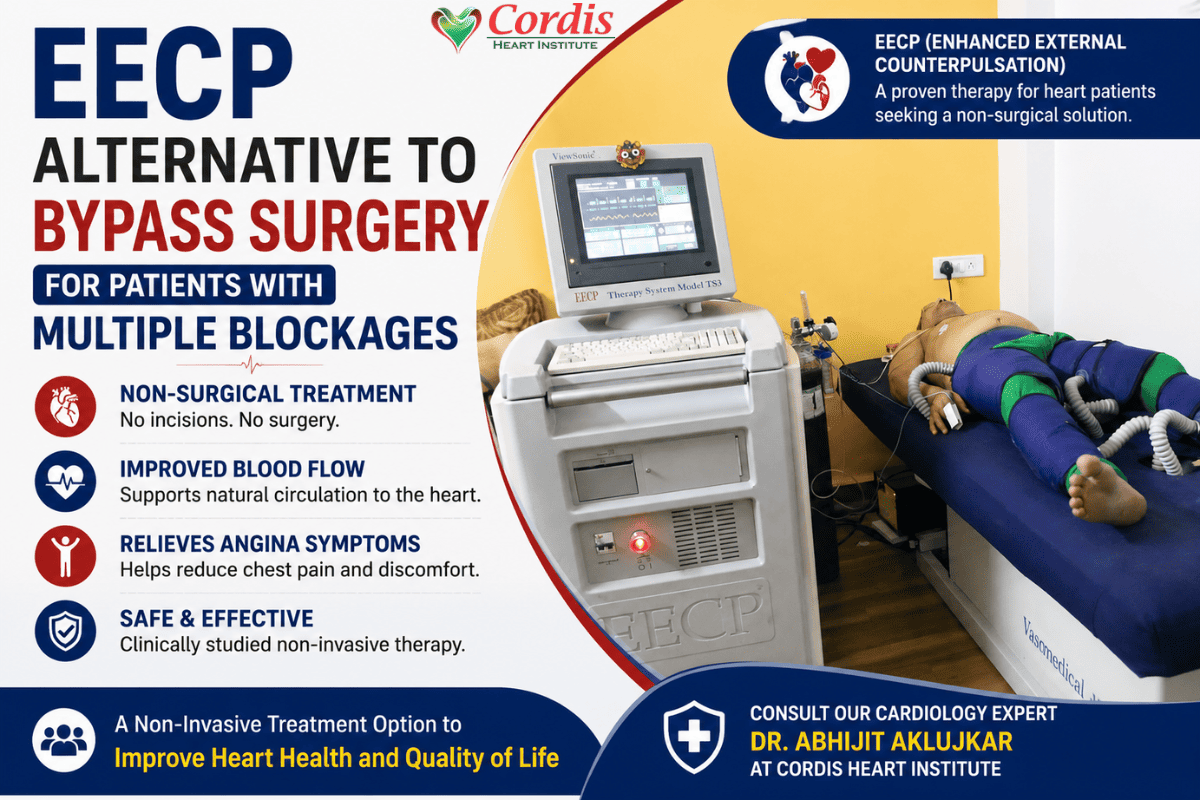
During EECP therapy, the patient lies on a treatment bed while inflatable cuffs are placed around the calves, thighs and buttocks. The cuffs inflate and deflate in coordination with the heartbeat.
The aim is to increase blood flow toward the heart during the relaxation phase of the heartbeat while reducing the heart’s workload during contraction.
Unlike bypass surgery, EECP does not require an incision, general anaesthesia or the opening of the chest.
How Does EECP Therapy Work?
The cuffs inflate sequentially from the lower legs upward and then release pressure rapidly. This creates changes in blood flow that can support circulation to the heart.
It is important to understand what EECP does not do.
EECP does not physically remove plaque from a coronary artery. It does not directly open a blocked artery.
Instead, its role is mainly related to symptom relief and improving circulation in appropriately selected patients.
What Is Bypass Surgery for Multiple Heart Blockages?
Coronary artery bypass grafting, commonly called CABG or bypass surgery, is a surgical procedure used to create a new route for blood to flow around blocked or narrowed coronary arteries.
A surgeon uses a healthy blood vessel from another part of the body to create this new route.
Bypass surgery can be considered when coronary artery disease is extensive, particularly when the coronary anatomy and the patient’s clinical condition make revascularization appropriate. The decision is not based simply on the number of blockages. Doctors also consider symptoms, the location and severity of disease, heart function, diabetes and other health factors.
Therefore, having three or four blockages does not automatically mean that every patient should undergo bypass surgery, but it also does not mean that bypass surgery can safely be avoided.
Can EECP Be an Alternative to Bypass Surgery?
This is the question many patients want answered.
EECP may be considered for selected patients, but it is not a universal replacement for bypass surgery.
For someone with chronic stable angina whose symptoms continue despite appropriate medical treatment, a cardiologist may consider EECP as part of the treatment options.
However, patients with complex or high-risk coronary artery disease may still need revascularization. Current guidelines note that patients with complex multivessel disease, particularly certain patients with diabetes, may have better long-term outcomes with CABG than PCI when both procedures are suitable.
That is why the phrase “EECP alternative to bypass surgery for patients with multiple blockages” needs to be understood carefully. EECP can be an option for some patients, but the suitability of treatment must be decided after a cardiac assessment.
Can EECP Remove or Open Heart Blockages?
No.
EECP is not a procedure for physically clearing a blocked coronary artery.
If an artery is significantly narrowed or blocked, EECP does not mechanically remove the plaque. Its purpose is different: it may help relieve angina symptoms and support circulation in selected patients.
If a cardiologist believes that revascularization is needed because of the patient’s coronary anatomy or risk, EECP should not be used as a reason to delay that treatment.
EECP vs Bypass Surgery: What Is the Difference?
Factor | EECP | Bypass Surgery |
Treatment type | Non-surgical | Major cardiac surgery |
Incisions | No major surgical incision | Surgical procedure |
Anaesthesia | Generally not required as for major surgery | Required |
Main purpose | Relief of symptoms in selected patients | Creates new blood-flow routes around blocked arteries |
Recovery | Usually outpatient treatment | Requires surgical recovery |
Suitability | Selected patients | Patients who meet surgical criteria |
EECP or Bypass Surgery: Which Is Better?
There is no simple “better” treatment for everyone.
The right choice depends on the patient’s condition.
A cardiologist may review the angiography, symptoms, heart function, previous angioplasty or bypass, medications and other medical conditions before deciding whether EECP, medical therapy, PCI or CABG should be considered.
For patients being considered for coronary revascularization where the best treatment is unclear, a multidisciplinary Heart Team approach is recommended by ACC/AHA/SCAI guidance.
Who May Benefit From EECP With Multiple Blockages?
EECP may be considered in selected patients who have:
Chronic Stable Angina
Patients with persistent, stable angina may be evaluated for EECP when symptoms continue despite appropriate medical treatment.
Persistent Symptoms Despite Medication
Medication remains an important part of coronary artery disease management. If symptoms remain difficult to control, additional treatment options may be discussed.
A Need for a Non-Surgical Treatment Option
Some patients may not be suitable candidates for certain invasive procedures because of their overall health or other factors. EECP may be discussed in appropriate cases.
Recurrent Angina After Angioplasty or Bypass
Some patients continue to experience angina even after previous coronary procedures. EECP may be considered for selected patients with recurrent chronic stable symptoms.
However, eligibility must be determined by a cardiologist. EECP should not be selected simply because it does not involve surgery.
When EECP May Not Be an Alternative to Bypass Surgery
There are situations where bypass surgery or another form of revascularization may be more appropriate.
These can include:
- High-risk or complex coronary artery disease
- Significant left main coronary artery disease
- Certain patterns of multivessel disease
- Symptoms or disease requiring revascularization
- Acute or unstable cardiac symptoms
- Certain uncontrolled medical conditions
- Other clinical factors that make EECP unsuitable
The 2024 ESC chronic coronary syndrome guidance states that coronary revascularization is considered when symptoms remain uncontrolled despite medical treatment or when high-risk coronary disease is present.
If you have sudden or severe chest pain, breathlessness, sweating, fainting or other symptoms suggestive of a heart attack, do not wait for an EECP consultation. Seek emergency medical care immediately.
Benefits of EECP Treatment
For appropriate patients, possible benefits of EECP include:
Non-Surgical Treatment Approach
EECP does not involve opening the chest or creating surgical grafts.
No Major Surgical Incision
The treatment uses external cuffs rather than surgical instruments inside the body.
Outpatient Treatment
EECP is generally delivered as a course of treatment rather than as a major operation requiring a surgical recovery period.
May Help Reduce Angina Symptoms
The main reason EECP is considered in guidelines is symptom relief for selected patients with refractory angina.
May Improve Exercise Tolerance
Some patients may experience better tolerance for physical activity when their angina symptoms improve.
Results vary from person to person, so patients should discuss expected outcomes with their cardiologist.
How Many EECP Sessions Are Usually Needed?
EECP is normally given as a course of repeated treatment sessions rather than as a single procedure.
The exact number and frequency of sessions depend on the treatment protocol and the patient’s condition.
Your doctor may adjust the treatment plan based on symptoms, response to treatment and overall health.
What to Expect During EECP Treatment at Cordis Heart Institute
At Cordis Heart Institute, the process can begin with a detailed review of the patient’s cardiac history and previous reports.
A typical evaluation may include:
- Medical assessment
- Review of angiography and cardiac reports
- Assessment of symptoms and medical history
- Evaluation of whether EECP is appropriate
- Placement of pneumatic cuffs
- Monitoring during treatment
- Follow-up assessment
Dr Abhijit Aklujkar can assess the patient’s cardiac condition and determine whether EECP is an appropriate option or whether another treatment should be considered.
EECP After Angioplasty or Bypass Surgery
Having a previous angioplasty or bypass does not necessarily mean that a patient cannot receive EECP.
Some patients can continue to experience angina after a cardiac procedure. In selected cases of recurrent chronic stable angina, EECP may be considered for symptom relief.
However, new or worsening symptoms should always be evaluated by a cardiologist first. Do not assume that recurring chest pain is simply a reason to start EECP.
EECP for Heart Blockage: What Patients Should Know
If you are searching for EECP for heart blockage, remember three points:
First, EECP does not physically remove the blockage.
Second, it may help selected patients with angina symptoms.
Third, it cannot replace revascularization when bypass surgery or another procedure is medically indicated.
Treatment decisions should be based on the complete cardiac picture rather than the number of blockages alone.
Patients should also continue prescribed medicines unless their doctor advises otherwise.
What Tests May Be Reviewed Before EECP?
Before recommending EECP, a cardiologist may review:
- Coronary angiography: Shows the location and severity of coronary artery disease.
- ECG: Records the heart’s electrical activity.
- Echocardiogram: Provides information about heart structure and pumping function.
- Stress testing: May help assess symptoms and blood flow under exertion.
- Blood tests: Can help assess risk factors and overall health.
- Previous angioplasty or bypass reports: Help the doctor understand previous treatment and current disease.
The exact tests required vary from patient to patient.
EECP Cost and Treatment in Mumbai
If you are searching for EECP treatment in Mumbai, the total cost can depend on several factors.
These may include:
- Number of treatment sessions
- Diagnostic evaluation
- Patient’s medical condition
- Treatment setup
- Follow-up requirements
Rather than choosing a centre based only on price, patients should first confirm whether EECP is medically appropriate for their condition.
Why Consult a Cardiologist Before Choosing EECP Instead of Bypass?
The decision between EECP, bypass surgery, angioplasty and medical treatment is not something a patient should make based on an online article alone.
A cardiologist needs to look at the actual coronary anatomy and the patient’s clinical condition.
This is particularly important when multiple blockages are present.
At Cordis Heart Institute, patients can consult Dr Abhijit Aklujkar to review their cardiac reports and discuss whether EECP may be appropriate.
Bring your angiography report, ECG, echocardiogram, medication list and previous cardiac treatment records to your appointment.
Frequently Asked Questions About EECP as an Alternative to Bypass Surgery
Can EECP replace bypass surgery for multiple blockages?
Not in every patient. EECP may be considered for symptom relief in selected patients with refractory angina, but it does not physically bypass blocked arteries. Some patients with high-risk or complex coronary disease may still require revascularization.
Is EECP safe for patients with multiple heart blockages?
Suitability depends on the individual’s medical condition, symptoms, coronary anatomy and other health factors. A cardiologist should assess the patient before treatment.
Can EECP clear multiple heart blockages?
No. EECP does not physically remove plaque or open blocked coronary arteries.
Is EECP better than bypass surgery?
Neither treatment is automatically better for everyone. They have different purposes. Bypass surgery creates new routes around blocked arteries, while EECP is a non-surgical treatment that may provide symptom relief in selected patients.
Who is a good candidate for EECP?
EECP may be considered for selected patients with chronic or refractory angina, particularly when symptoms continue despite medical treatment and there are no other suitable treatment options.
How long does EECP treatment take?
EECP is usually delivered through a planned course of repeated sessions. The exact schedule depends on the patient’s treatment plan.
Can EECP be done after bypass surgery?
Selected patients with recurrent chronic stable angina after bypass surgery may be evaluated for EECP. A cardiologist should first determine the cause of the symptoms and whether EECP is appropriate.
Can EECP help avoid bypass surgery?
It may be an option for some patients, but it should not be presented as a guaranteed way to avoid bypass surgery. If the patient’s coronary anatomy or clinical risk calls for revascularization, bypass surgery may still be necessary.
What happens if I have 3 or 4 heart blockages?
The number of blockages is only one part of the decision. Doctors also consider where the blockages are located, how severe they are, the amount of heart muscle at risk, symptoms, heart function and other medical conditions.
Where can I get EECP treatment in Mumbai?
Patients looking for EECP therapy in Mumbai can contact Cordis Heart Institute for an evaluation with Dr Abhijit Aklujkar and discuss whether EECP is suitable for their condition.
Is EECP the Right Alternative to Bypass Surgery for You?
Being told that you have multiple coronary artery blockages can be frightening, especially when bypass surgery is discussed.
But the right next step is not necessarily the same for every patient.
EECP can be a non-surgical treatment option for selected patients with chronic refractory angina, but it is not a direct replacement for bypass surgery and does not remove coronary blockages.
If you have been advised to undergo bypass surgery, consider getting your reports reviewed by a qualified cardiologist before making a treatment decision.
At Cordis Heart Institute, Dr Abhijit Aklujkar can review your cardiac history, angiography and other reports and discuss whether EECP or another treatment approach may be appropriate for you.
Book an EECP Consultation
Have you been advised to undergo bypass surgery because of multiple heart blockages?
Speak with Dr Abhijit Aklujkar at Cordis Heart Institute to discuss your condition and find out whether EECP may be suitable for you.
Bring your angiography, ECG, echocardiogram and previous cardiac treatment reports to your consultation.