If you have been told that you have a heart blockage, angioplasty may be one of the first treatments you hear about. But what if you are looking for a non-surgical treatment for heart blockage or have already undergone angioplasty and still experience angina?
This is where EECP, or Enhanced External Counterpulsation, may be considered for selected patients.
EECP is a non-invasive treatment that uses inflatable cuffs around the legs to help improve blood flow to the heart. However, there is an important distinction: EECP does not physically remove plaque or open a blocked coronary artery like angioplasty does. Its role is mainly to help relieve symptoms in selected patients, particularly those with chronic refractory angina. The 2023 AHA/ACC guideline states that EECP may be considered for symptom relief in patients with chronic coronary disease and refractory angina who have no other treatment options.
So, can EECP be an alternative to angioplasty? The answer depends on the type of blockage, symptoms, previous treatment and overall cardiac condition.
What Is EECP Treatment for Heart Blockage?
EECP stands for Enhanced External Counterpulsation. It is performed without inserting a catheter into an artery and without placing a stent.
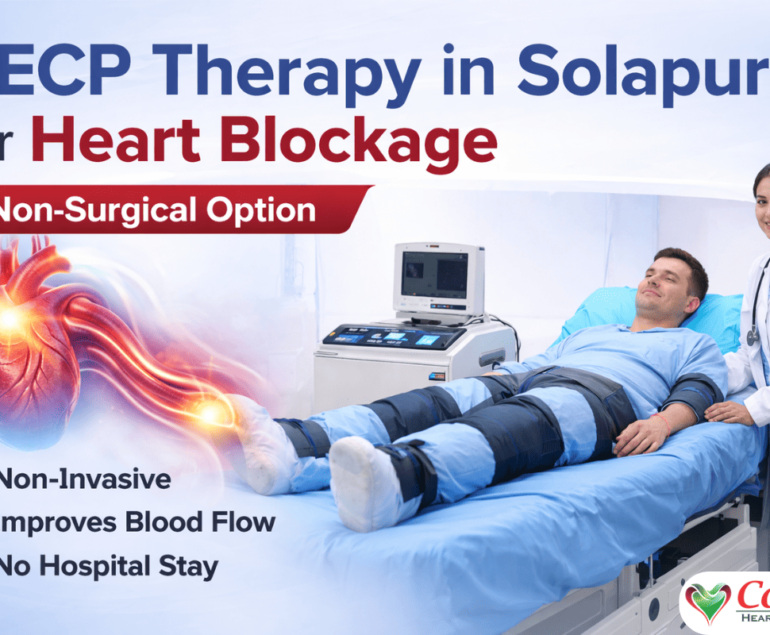
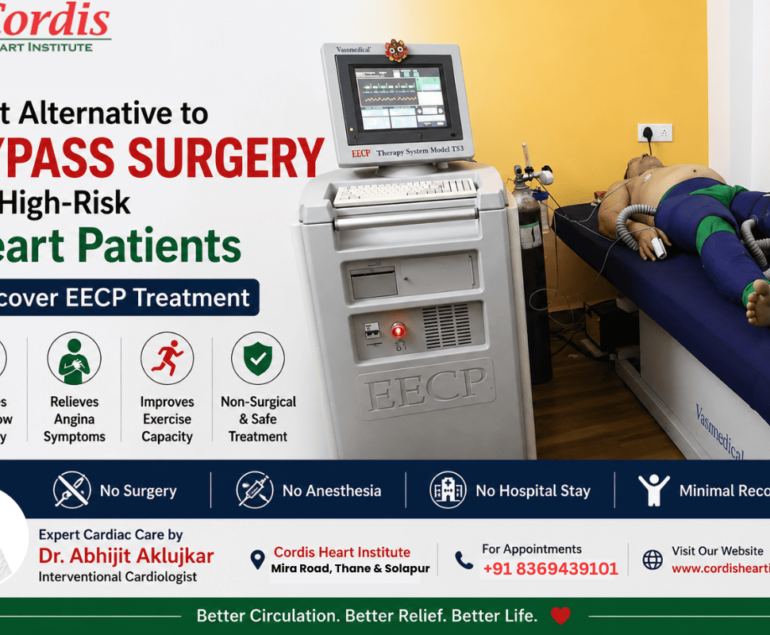
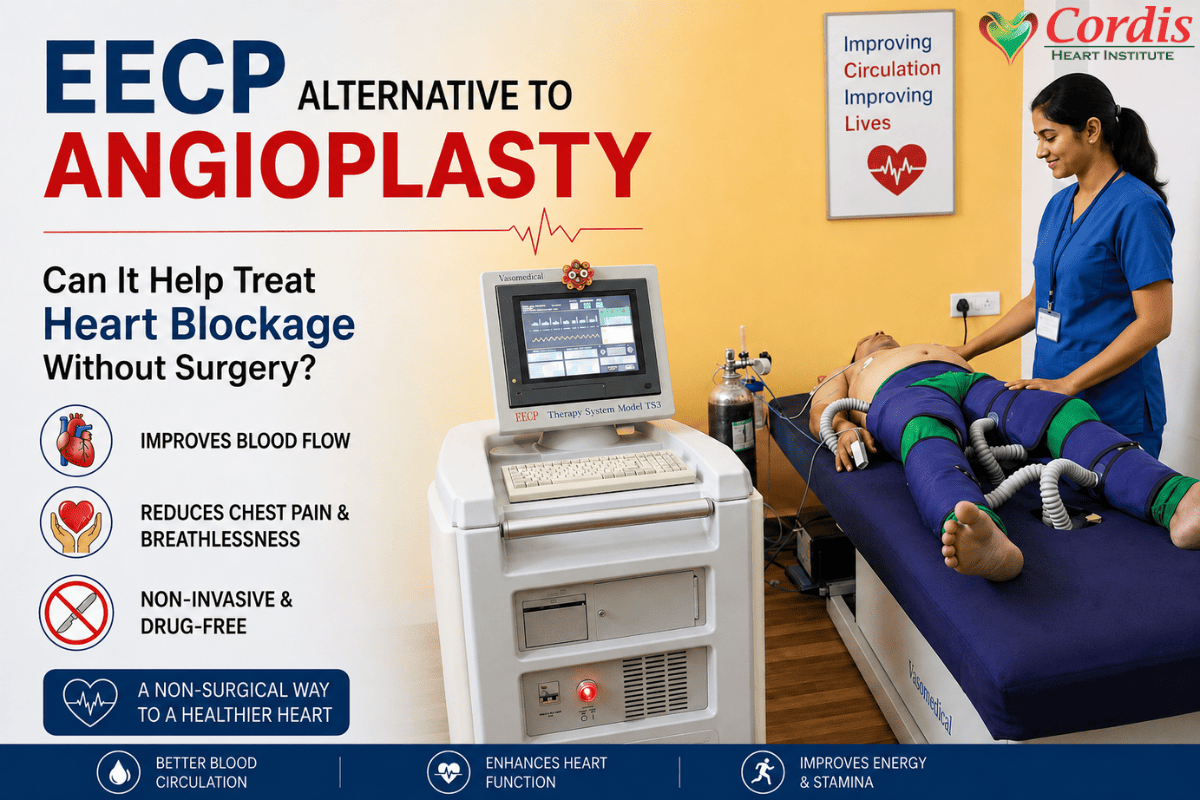
During treatment, pneumatic cuffs are wrapped around the patient’s calves, thighs and buttocks. The cuffs inflate and deflate in coordination with the heartbeat. This creates changes in blood flow that can increase blood flow toward the heart during diastole and reduce the workload on the heart.
The aim is not to mechanically clear a blockage. Instead, EECP may help improve circulation and reduce symptoms such as angina in appropriately selected patients.
The FDA maintains records for external counterpulsation devices, including devices cleared for treatment of chronic stable angina in specific circumstances.
How Does EECP Therapy Work?
The treatment generally follows the cardiac cycle:
- The cuffs inflate sequentially from the calves upward.
- This helps push blood toward the upper body.
- The cuffs rapidly deflate around the start of systole.
- This reduces resistance against which the heart pumps.
- Repeated treatment sessions may improve symptoms and exercise tolerance in selected patients.
A commonly used EECP course involves multiple treatment sessions over several weeks. The exact schedule should be decided by the treating medical team.
What Is Angioplasty and When Is It Recommended?
Coronary angioplasty, also called PCI or percutaneous coronary intervention, is a minimally invasive procedure used to open a narrowed or blocked coronary artery.
A cardiologist guides a catheter through a blood vessel to the affected coronary artery. A balloon may then be inflated to widen the narrowed area, and a stent may be placed to help keep the artery open.
Angioplasty can be particularly important when a patient has a blockage that requires revascularisation or when urgent treatment is needed during certain heart attacks.
This makes angioplasty very different from EECP.
EECP vs Angioplasty: What Is the Difference?
EECP | Angioplasty |
Non-invasive treatment | Minimally invasive procedure |
No catheter or stent | Catheter-based procedure |
Usually requires multiple sessions | Usually performed as a procedure |
Does not physically open the artery | Opens a narrowed coronary artery |
May help relieve angina in selected patients | Used to restore blood flow in appropriate coronary blockages |
The right choice is not simply a matter of choosing the treatment that sounds less invasive. The patient’s coronary anatomy, symptoms and medical history have to be assessed first.
Can EECP Treat Heart Blockage Without Surgery?
This is one of the most common questions surrounding EECP.
EECP does not remove or dissolve a coronary artery blockage. If an artery has significant plaque narrowing its internal passage, EECP does not physically take that plaque away.
Instead, EECP may help selected patients manage symptoms associated with chronic coronary disease, particularly refractory angina.
The 2023 AHA/ACC chronic coronary disease guideline gives EECP a Class 2b recommendation for patients with refractory angina and no other treatment options, meaning it may be considered for symptom relief in this specific group.
Therefore, describing EECP as a treatment that “clears heart blockage” would be misleading.
A more accurate description is:
EECP is a non-invasive therapy that may help selected patients with chronic angina by improving blood-flow dynamics and reducing symptoms.
Can EECP Remove or Clear a Heart Blockage?
No. EECP should not be presented as a procedure that removes plaque or physically clears a blocked coronary artery.
This distinction is important for patients searching for heart blockage treatment without surgery. A treatment that improves symptoms is not necessarily the same as a treatment that opens a blocked artery.
Your cardiologist can determine whether your condition requires revascularisation, medical management, EECP or another treatment approach.
Who May Be a Candidate for EECP Instead of Angioplasty?
EECP may be considered in selected patients, particularly those with chronic coronary disease and refractory angina.
Patients With Chronic Stable Angina
Some patients continue to experience chest discomfort despite appropriate medication and lifestyle measures. If symptoms remain troublesome and other treatment options are limited, EECP may be considered.
Patients Who Have Already Had Angioplasty
Some people experience angina even after undergoing angioplasty. The reason needs to be investigated rather than assuming that another procedure is always necessary.
Depending on the cause, a cardiologist may consider medication adjustments, further testing, another intervention or options such as EECP.
Patients With Complex Coronary Disease
Patients with multiple or complex coronary blockages may have treatment decisions that require careful assessment.
EECP is not automatically suitable for these patients. The decision depends on coronary anatomy, heart function, symptoms, previous procedures and other medical factors.
EECP vs Angioplasty for Heart Blockage: Which Is Better?
There is no universal answer to whether EECP or angioplasty is better.
Angioplasty is designed to restore blood flow through a specific narrowed or blocked coronary artery. EECP has a different role and is mainly considered for symptom relief in selected patients with refractory angina.
Your cardiologist may consider:
- Severity and location of the blockage
- Number of affected arteries
- Severity of symptoms
- Heart function
- Previous angioplasty or bypass surgery
- Response to medication
- Whether revascularisation is appropriate
- Whether the situation is stable or requires urgent treatment
This is why patients should not decide to avoid angioplasty simply because EECP is non-invasive.
Is EECP Safer Than Angioplasty?
EECP does not involve inserting a catheter or placing a coronary stent, so its procedure-related risks differ from those associated with angioplasty.
However, non-invasive does not mean risk-free.
Patients still require medical assessment before treatment. EECP may not be appropriate for everyone, and certain cardiovascular or other medical conditions can affect whether it is suitable.
Benefits of EECP Treatment for Selected Heart Patients
When appropriately prescribed, EECP may provide several potential benefits:
- Reduction in angina symptoms
- Improved exercise tolerance
- Better ability to perform daily activities
- Potential improvement in quality of life
- No coronary stent placement
- No catheter-based coronary procedure
The AHA/ACC guideline specifically discusses EECP as an option for symptom relief in selected patients with refractory angina when other treatment options are unavailable.
How Long Does EECP Treatment Take?
EECP is generally delivered as a course of repeated treatment sessions rather than a single procedure.
The exact number and frequency of sessions can vary according to the treatment centre and patient’s condition. Your doctor should explain the recommended treatment plan before starting.
What Are the Limitations of EECP Treatment?
Understanding the limitations is just as important as understanding the potential benefits.
EECP:
- Does not physically open a blocked coronary artery.
- Does not remove plaque from an artery.
- Is not appropriate for every patient with coronary artery disease.
- Is not a substitute for emergency cardiac treatment.
- May produce different results in different patients.
- Requires assessment and supervision by an appropriate healthcare professional.
The FDA documentation for certain ECP devices specifically describes use under healthcare-professional oversight and in patients with chronic stable angina who are refractory to optimal anti-anginal medical therapy and without revascularisation options.
EECP Treatment After Angioplasty
EECP may also be discussed in patients who continue to experience angina after angioplasty.
Persistent symptoms after a stent can have several causes. The patient may have disease in another artery, recurrent narrowing, microvascular problems or another condition producing chest discomfort.
Therefore, recurring chest pain after angioplasty should be evaluated rather than automatically treated with EECP.
Can EECP Be Used Instead of a Second Angioplasty?
Sometimes patients ask whether EECP can help them avoid another angioplasty.
There is no one-size-fits-all answer. First, the cause of the symptoms needs to be identified. If a new or recurrent blockage requires revascularisation, EECP should not be used to delay necessary treatment.
If the patient has chronic refractory symptoms and there are no suitable revascularisation options, EECP may be considered for symptom relief.
EECP Treatment at Cordis Heart Institute
Patients considering an EECP alternative to angioplasty should first undergo a proper cardiac assessment.
At Cordis Heart Institute, patients can discuss their symptoms, previous cardiac procedures, medical history and available treatment options with Dr Abhijit Aklujkar.
Before considering EECP, the doctor may review previous angiography or angioplasty reports, medications, ECG findings, echocardiography and other relevant cardiac investigations.
The aim is to determine whether EECP is appropriate for the individual patient rather than treating every case of heart blockage in the same way.
If you have been advised to undergo angioplasty or continue to experience angina after a cardiac procedure, consult Dr Abhijit Aklujkar at Cordis Heart Institute to discuss whether EECP or another treatment approach may be suitable for you.
What Tests May Be Needed Before EECP?
The evaluation depends on the patient’s symptoms and medical history. A cardiologist may review or recommend tests such as:
- ECG
- Echocardiogram
- Stress testing when appropriate
- Previous coronary angiography reports
- Previous angioplasty or stent records
- Other cardiac tests based on symptoms
Not every patient needs every test. The treating doctor decides which investigations are appropriate.
How Much Does EECP Treatment Cost?
The cost of EECP treatment can vary between patients and treatment centres.
Factors that may affect the total cost include:
- Number of treatment sessions
- Initial cardiac evaluation
- Additional diagnostic tests
- Hospital or treatment-centre charges
- Patient-specific medical requirements
Patients should ask the treatment centre for the current cost after their medical evaluation rather than relying on a generic online estimate.
EECP Alternative to Angioplasty: What Does the Research Say?
Clinical guidelines do not describe EECP as a general replacement for coronary revascularisation.
The current AHA/ACC recommendation focuses on selected patients with chronic coronary disease, refractory angina and no other treatment options, where EECP may be considered for symptom relief.
The FDA has also cleared specific external counterpulsation devices for defined uses, with indications varying by device. This is another reason to avoid making broad claims about EECP.
EECP vs Bypass Surgery
Coronary artery bypass grafting, or CABG, is a surgical procedure that creates a new route for blood to flow around blocked coronary arteries.
EECP is completely different. It does not create a surgical bypass and does not physically restore the inside of a blocked artery.
For some patients with complex coronary artery disease, bypass surgery may be recommended based on the location and extent of disease and other clinical factors.
Therefore, EECP should not be marketed as a replacement for bypass surgery in every patient.
When Should You Not Delay Angioplasty or Emergency Cardiac Care?
If you have severe or persistent chest pain, pressure or tightness, shortness of breath, fainting, cold sweating or pain spreading to the arm, jaw, back or shoulder, seek urgent medical attention.
Do not delay emergency cardiac care while researching EECP or any other alternative treatment.
EECP is not an emergency treatment for an acute heart attack. A patient with potentially serious cardiac symptoms needs prompt medical assessment.
Frequently Asked Questions About EECP as an Alternative to Angioplasty
Is EECP an alternative to angioplasty?
EECP may be considered for symptom relief in selected patients with refractory angina, particularly when other treatment options are unavailable. It is not a direct replacement for angioplasty because it does not open a blocked coronary artery.
Can EECP treat heart blockage without surgery?
EECP may help manage symptoms in selected patients, but it does not physically remove or open a coronary blockage.
Can EECP clear blocked arteries?
No. EECP does not mechanically remove plaque from coronary arteries.
Is EECP better than angioplasty?
Neither treatment is universally better. They serve different purposes and the appropriate option depends on the patient’s condition.
Can EECP be done after angioplasty?
EECP may be considered for selected patients who continue to experience angina after angioplasty, but recurring symptoms should first be evaluated by a cardiologist.
Can EECP prevent angioplasty?
It should not be presented as a way to prevent a medically necessary angioplasty. In selected patients with refractory symptoms and no suitable revascularisation option, it may be considered for symptom relief.
How many EECP sessions are needed?
EECP is generally delivered through a course of repeated sessions. The exact schedule depends on the treatment plan recommended by the healthcare team.
Is EECP treatment safe?
EECP is non-invasive but is not risk-free. Proper medical screening and professional supervision are important before and during treatment.
What is the success rate of EECP treatment?
There is no single success rate that applies to every patient. Outcomes depend on the underlying heart condition, symptoms, treatment goals and individual response.
What is the cost of EECP treatment?
The cost varies according to the number of sessions, evaluation, investigations and treatment centre. Contact Cordis Heart Institute for current treatment information.
Who should consider EECP treatment?
EECP may be considered for selected patients with chronic coronary disease and refractory angina, particularly when other treatment options are not available. A cardiologist must determine suitability.
Where can I get EECP treatment for heart blockage?
Patients can contact Cordis Heart Institute to discuss EECP and other treatment options with Dr Abhijit Aklujkar.
Conclusion: Is EECP the Right Alternative to Angioplasty for You?
So, is EECP an alternative to angioplasty?
For some carefully selected patients, EECP may offer a non-invasive way to manage chronic angina symptoms. However, it is important to understand what the treatment does and does not do.
EECP does not clear plaque or physically open a blocked coronary artery. Angioplasty and bypass surgery have different roles because they are designed to restore blood flow through or around blocked arteries.
If you have been diagnosed with heart blockage, have persistent angina or have already undergone angioplasty, do not choose a treatment based only on an online article.
A proper cardiac evaluation can help determine whether medication, angioplasty, bypass surgery, EECP or another approach is appropriate for your condition.
If you are considering EECP as an alternative to angioplasty, speak with Dr Abhijit Aklujkar at Cordis Heart Institute for an individual cardiac assessment.