Having angioplasty can bring a lot of relief, but it does not mean that coronary artery disease has been permanently cured. Some people may later experience chest pain, breathlessness, or discover another narrowing in a coronary artery. This often leads to an important question: Is there a non surgical treatment for heart blockage after angioplasty?
The answer depends on the type, location, and severity of the blockage, along with your symptoms and overall heart health. Medicines, lifestyle changes, cardiac rehabilitation and, for selected patients with persistent angina, therapies such as EECP may be part of the treatment plan. However, no single treatment is right for everyone.
At Cordis Heart Institute, Dr Abhijit Aklujkar evaluates patients individually to determine which treatment approach may be appropriate.
Can Heart Blockage Come Back After Angioplasty?
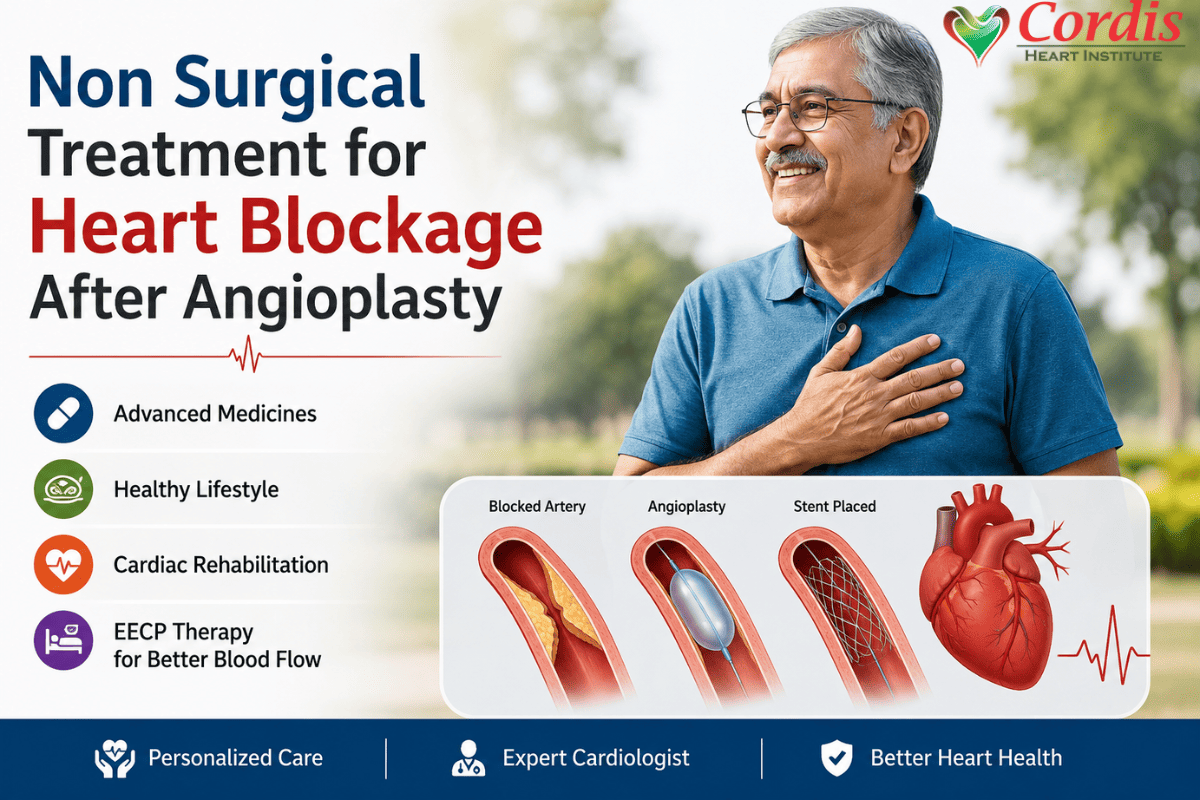
Yes. Angioplasty opens a specific narrowed section of a coronary artery, usually with the help of a stent. It does not remove the underlying tendency to develop coronary artery disease in other parts of the blood vessels.
A patient may therefore develop:
- New blockage in another artery
- Narrowing around a previously treated area
- Restenosis, which means narrowing occurring again within a treated artery
- Persistent or recurrent angina despite previous treatment
This is why follow-up after angioplasty matters. New or worsening chest pain should not simply be assumed to be a normal part of recovery.
What Are the Non Surgical Treatment Options for Heart Blockage After Angioplasty?
There is no single heart blockage treatment without surgery after angioplasty that works for every patient. Treatment is generally based on the patient’s symptoms, test results, risk factors and coronary anatomy.
1. Medicines for Coronary Artery Disease
Medicines are an important part of long-term heart care after angioplasty. Depending on the patient’s condition, a cardiologist may prescribe antiplatelet medicines, cholesterol-lowering medicines, anti-anginal medicines, blood pressure medicines or medicines for diabetes.
Statins remain a first-line option for cholesterol management in chronic coronary disease.
One important rule is simple: never stop heart medicines on your own, particularly medicines prescribed after stent placement. Always discuss changes with your cardiologist.
2. Lifestyle Changes After Angioplasty
Treatment does not end after a procedure. Daily habits have a direct role in managing cardiovascular risk.
Some practical steps include:
- Eat more vegetables, fruits, whole grains and pulses
- Reduce foods high in saturated and trans fats
- Limit excess salt and highly processed foods
- Stay physically active according to your doctor’s advice
- Avoid tobacco
- Maintain a healthy weight
- Get adequate sleep
- Manage stress
- Keep blood pressure, cholesterol and blood sugar under control
The American Heart Association recommends healthy eating and regular physical activity for people with chronic coronary disease. Cardiac rehabilitation can also provide cardiovascular benefits for eligible patients.
3. Cardiac Rehabilitation
Cardiac rehabilitation is a supervised program that can include exercise guidance, nutrition advice, education and risk-factor management.
For someone recovering after angioplasty, it can provide a structured way to return to physical activity safely. Your doctor can tell you whether cardiac rehabilitation is appropriate for your condition.
4. EECP Treatment After Angioplasty
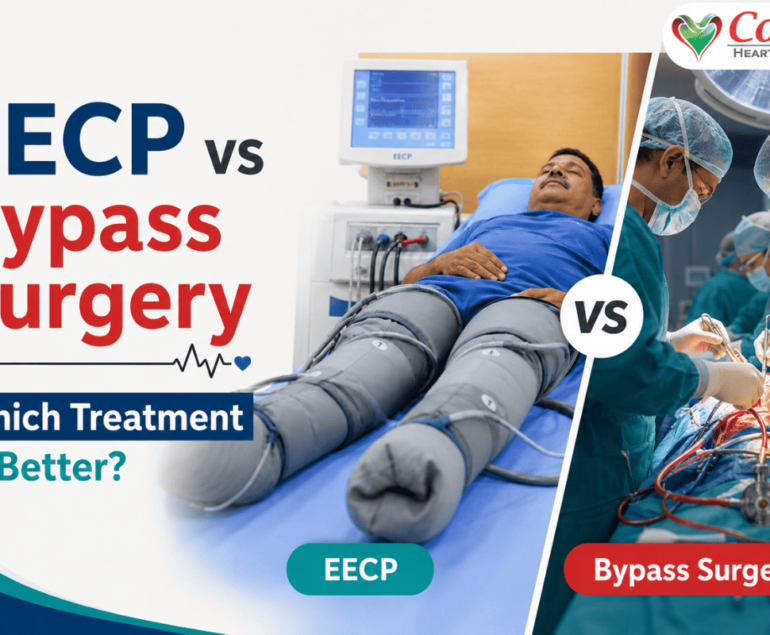
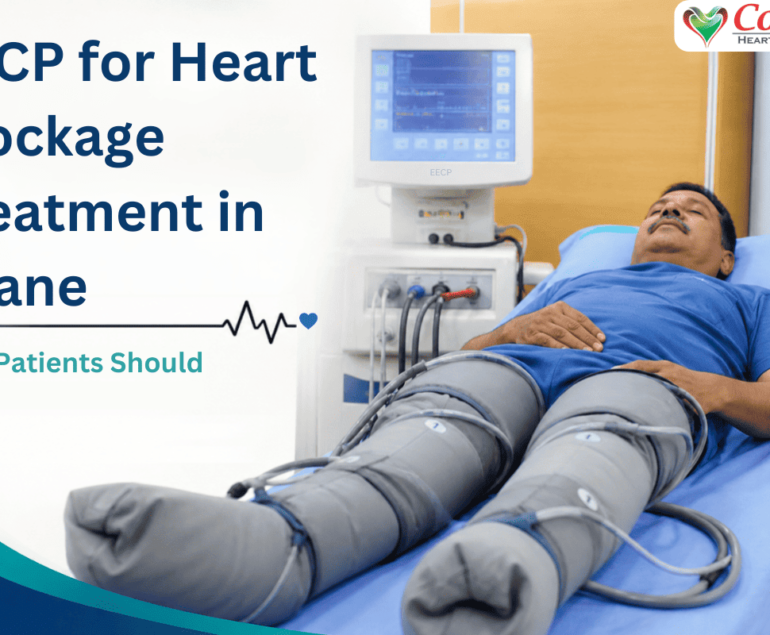
EECP, or Enhanced External Counterpulsation, is a non-invasive therapy that uses inflatable cuffs around the legs. The cuffs inflate and deflate in coordination with the heartbeat to help increase blood flow toward the heart.
EECP may be considered for selected patients who continue to experience angina despite appropriate medical treatment. It is not a substitute for emergency cardiac care and should not be presented as a way to physically remove a coronary blockage.
At Cordis Heart Institute, EECP is offered following cardiac assessment under the care of Dr Abhijit Aklujkar.
Can EECP Remove a Heart Blockage?
No. EECP does not physically remove plaque from a blocked coronary artery.
Its role is different. It is used as a non-invasive therapy that may help improve blood flow and reduce symptoms such as angina in selected patients.
This distinction is important because someone searching for non surgical heart blockage treatment may assume that a non-invasive treatment can simply dissolve or remove an existing blockage. That is not how EECP works.
Whether EECP is appropriate depends on your medical history, symptoms and cardiac evaluation.
Who May Be Considered for EECP After Angioplasty?
A cardiologist may consider EECP for selected patients with persistent or recurrent angina, particularly when symptoms continue despite appropriate medical management.
However, the decision should be made after reviewing the patient’s:
- Previous angioplasty and stent history
- Current symptoms
- ECG and other test results
- Blood pressure
- Heart function
- Other medical conditions
- Overall cardiovascular risk
The 2024 European Society of Cardiology guidelines also discuss long-term management, recurrent or refractory angina and treatment selection based on the individual patient’s condition.
When Is Another Procedure Needed After Angioplasty?
Non-surgical treatment is not appropriate for every blockage.
If a patient has severe symptoms, a high-risk coronary blockage or evidence that the heart muscle is not receiving enough blood, the cardiologist may recommend another intervention.
Depending on the situation, this could involve repeat angioplasty or bypass surgery.
The 2024 ESC guidelines recommend selecting testing and revascularization based on clinical symptoms, disease findings and risk rather than using the same approach for every patient.
Do Not Ignore These Symptoms
Seek urgent medical attention for sudden or severe:
- Chest pressure or pain
- Breathlessness
- Sweating
- Fainting
- Severe dizziness
- Pain spreading to the arm, shoulder, jaw or back
Do not try to manage potentially serious chest symptoms at home with EECP, exercise or other non-surgical therapies.
How to Prevent Blockage After Angioplasty
You cannot completely eliminate the possibility of future coronary artery disease, but you can work on the factors that increase cardiovascular risk.
Take Your Prescribed Medicines
Follow the treatment plan given by your cardiologist and attend scheduled follow-ups.
Control Cholesterol
High LDL cholesterol can contribute to plaque formation. Your doctor can determine your target and whether your current medication is working effectively.
Control Blood Pressure and Blood Sugar
Uncontrolled hypertension and diabetes can increase cardiovascular risk. Regular monitoring and treatment are important.
Stop Smoking
If you smoke, quitting is one of the most useful steps you can take for your heart.
Stay Physically Active
Once your doctor says exercise is safe, regular movement can help improve cardiovascular fitness. The AHA recommends reducing sedentary time and increasing appropriate aerobic and resistance activity in patients without contraindications.
What Should You Eat After Angioplasty?
A heart-friendly diet can include:
- Vegetables and fruits
- Whole grains
- Pulses and beans
- Nuts and seeds
- Appropriate sources of unsaturated fats
- Fish, where suitable
Try to reduce highly processed foods, excess salt, sugary drinks, foods high in saturated fat and foods containing trans fats.
Diet should support medical treatment, not replace it.
What Tests Can Check for Blockage After Angioplasty?
The right test depends on your symptoms and medical history. Depending on the situation, your cardiologist may consider:
- ECG
- Echocardiogram
- Stress testing
- CT coronary angiography
- Coronary angiography
- Other cardiac investigations
The ESC’s 2024 guidelines describe a stepwise approach to evaluating suspected chronic coronary syndromes, with the choice of testing based on the patient’s likelihood of disease and clinical situation.
A patient should not assume that every person who has undergone angioplasty needs the same tests at the same intervals.
Non Surgical Treatment for Heart Blockage After Angioplasty at Cordis Heart Institute
If you are experiencing recurring chest discomfort after angioplasty, the first step should be proper cardiac evaluation rather than choosing a treatment based only on the desire to avoid another procedure.
At Cordis Heart Institute, Dr Abhijit Aklujkar is a Consultant Interventional Cardiologist with qualifications including M.D. (Medicine), DNB (Cardiology) and MNAMS. The hospital’s published profile states that he has experience with more than 10,000 angiographies and 2,000 angioplasties.
The evaluation can help determine whether the patient’s symptoms are related to coronary disease and whether medical management, lifestyle changes, cardiac rehabilitation, EECP or another cardiac procedure should be considered.
Frequently Asked Questions
Can heart blockage be treated without surgery after angioplasty?
Some patients may be managed with medicines, lifestyle changes, cardiac rehabilitation and selected non-invasive therapies. However, severe or high-risk blockages may require another procedure.
Can blockage come back after angioplasty?
Yes. Coronary artery disease can progress after angioplasty, and narrowing can also develop in or around a previously treated area.
Can EECP help after angioplasty?
EECP may be considered for selected patients with persistent or recurrent angina after appropriate medical evaluation.
Can EECP remove heart blockage?
No. EECP does not physically remove plaque from a coronary artery. Its purpose is to improve blood flow and help manage symptoms in appropriate patients.
What is the best treatment for blockage after angioplasty?
There is no single best treatment for everyone. The right option depends on symptoms, blockage severity and location, previous treatment, test results and overall health.
Is chest pain normal after angioplasty?
Chest pain should not automatically be considered normal. New, severe or worsening chest pain requires medical assessment, particularly when accompanied by breathlessness, sweating, dizziness or fainting.
How can I prevent blockage after angioplasty?
Take prescribed medicines, control cholesterol, blood pressure and blood sugar, avoid tobacco, maintain a heart-healthy diet, stay physically active as advised and attend regular cardiology follow-ups.
Conclusion: Choosing the Right Treatment After Angioplasty
Finding a non surgical treatment for heart blockage after angioplasty starts with understanding what is actually causing the symptoms.
Medicines, healthy lifestyle habits and cardiac rehabilitation remain important parts of long-term coronary disease management. For selected patients with persistent angina, EECP may also be considered after a proper cardiac assessment. Current guidelines support an individual approach based on symptoms, testing, risk and coronary anatomy.
Most importantly, do not choose a treatment simply because it avoids surgery. The safer question is: “Which treatment is appropriate for my heart condition?”
If you have recurring chest pain or other symptoms after angioplasty, consult a cardiologist for an evaluation. At Cordis Heart Institute, Dr Abhijit Aklujkar can assess your condition and discuss appropriate medical and non-surgical treatment options.
Book a cardiac consultation at Cordis Heart Institute to find out whether non-surgical treatment or EECP may be appropriate for you.