If you have been told that you have a heart blockage, one of the first questions that may come to mind is, “Can heart blockage be treated without surgery?” The answer is not the same for everyone. Treatment depends on the location and severity of the blockage, your symptoms, overall heart health, and whether procedures such as angioplasty or bypass surgery are appropriate.
For some patients with chronic angina, EECP (Enhanced External Counterpulsation) may be considered as a non-invasive treatment option. However, EECP does not physically remove plaque from a blocked artery. Its role is mainly to improve blood flow and help relieve symptoms in carefully selected patients. The 2023 AHA/ACC guideline says EECP may be considered for relief of symptoms in patients with refractory angina who have no other treatment options.
The following guide explains what EECP is, who may be a candidate, and why a cardiologist’s assessment matters. The article outline also specifically calls for a patient-focused discussion of EECP eligibility at Cordis Heart Institute with Dr Abhijit Aklujkar.
What Is Heart Blockage?
“Heart blockage” commonly refers to narrowing or blockage in the coronary arteries. This is usually related to plaque buildup, which can restrict the supply of oxygen-rich blood reaching the heart muscle.
Common risk factors include:
- High cholesterol
- High blood pressure
- Diabetes
- Smoking
- Obesity
- Physical inactivity
- Family history of heart disease
What Are the Symptoms of Heart Blockage?
Symptoms can vary from person to person. Common signs include chest pressure or discomfort, shortness of breath, unusual tiredness and reduced exercise tolerance. Pain may also spread to the arm, shoulder, neck, jaw or back.
Do not assume that every episode of chest discomfort is simply acidity or gas. New, severe or worsening chest pain needs prompt medical attention.
Is Non-Surgical Treatment for Heart Blockage Possible?
Yes, but the phrase “non-surgical treatment for heart blockage” needs some clarification.
Treatment for coronary artery disease can include medicines, lifestyle changes, angioplasty or bypass surgery, depending on the patient’s condition. Medicines may help control blood pressure, cholesterol, blood clots and angina symptoms. Lifestyle measures such as a healthy diet, physical activity and smoking cessation also form part of long-term heart care.
EECP is another option that may be considered for selected patients, particularly those with persistent angina despite appropriate treatment.
It is important not to think of EECP as a replacement for angioplasty or bypass surgery in every case. Some blockages require revascularisation, and the appropriate treatment should be decided after a proper cardiac evaluation.
What Is EECP Treatment?
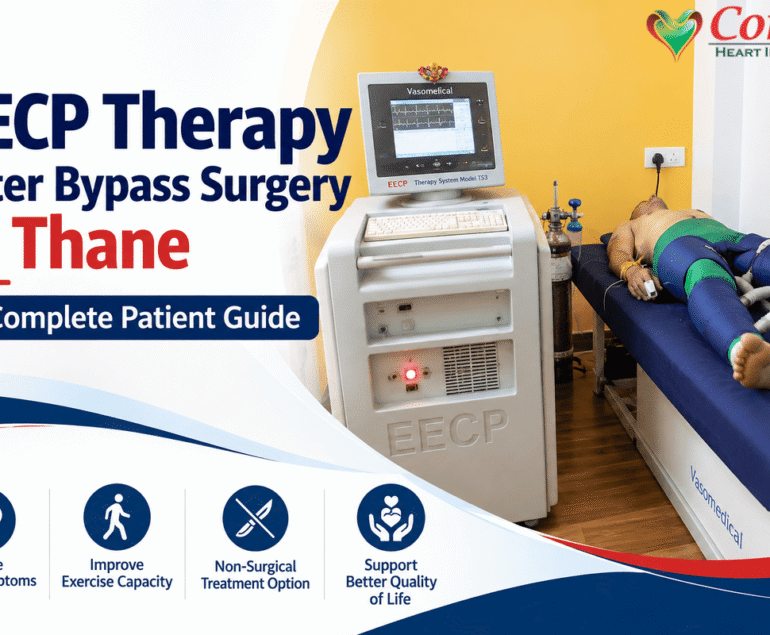
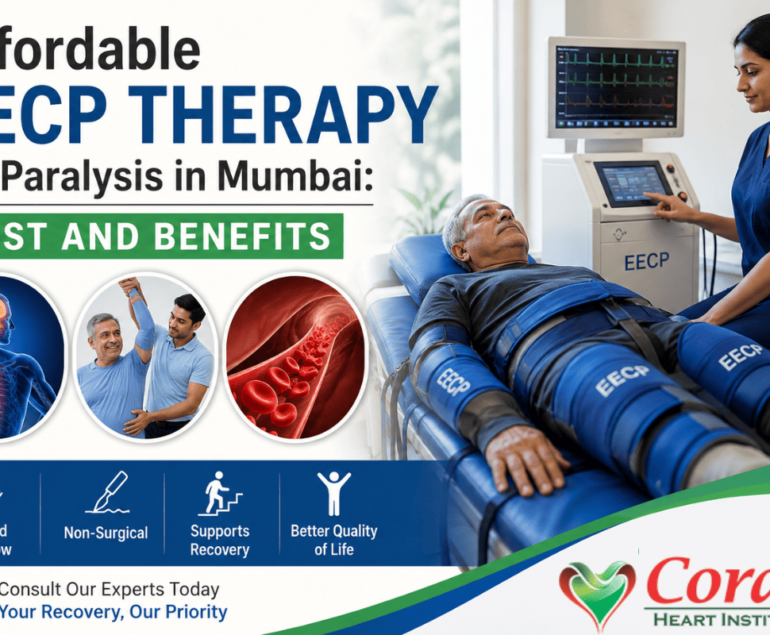
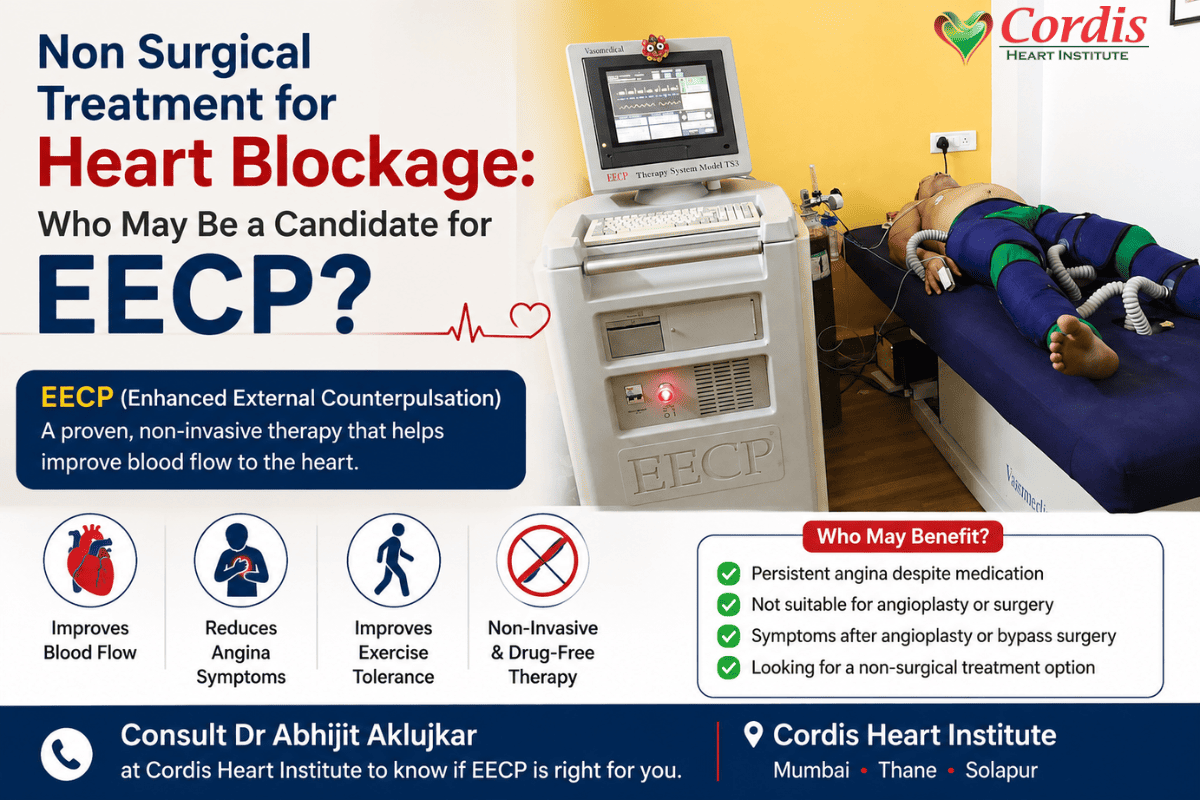
EECP stands for Enhanced External Counterpulsation. It is a non-invasive treatment in which inflatable cuffs are placed around the legs.
The cuffs inflate and deflate in coordination with the heartbeat. During the cardiac cycle, this produces changes in blood flow and pressure that can increase blood flow toward the heart. Modern external counterpulsation systems use timed compression of the legs to support coronary perfusion.
Unlike angioplasty, EECP does not involve inserting a catheter or stent. Unlike bypass surgery, it does not require an incision.
Treatment schedules vary according to the device, protocol and patient’s treatment plan. Some FDA-cleared systems describe sessions of about one hour, with treatment commonly delivered over multiple sessions under healthcare supervision.
Who May Be a Candidate for EECP for Heart Blockage?
Not everyone with coronary artery disease is a candidate. A cardiologist first needs to understand the patient’s symptoms, medical history and previous cardiac treatment.
- Patients With Chronic or Refractory Angina
EECP may be considered for patients who continue to experience angina despite appropriate medical treatment. AHA/ACC guidance specifically allows EECP to be considered for refractory angina when there are no other treatment options.
- Patients Who Are Not Suitable for Certain Procedures
Some patients may not be suitable candidates for angioplasty or bypass surgery because of their overall health, anatomy or other clinical factors. In such situations, a cardiologist may consider other approaches for symptom management.
Certain FDA-cleared external counterpulsation systems are specifically indicated for adults with chronic stable angina that remains symptomatic despite optimal anti-anginal therapy and who do not have revascularisation options.
- Patients With Persistent Symptoms After Angioplasty
Having undergone angioplasty does not necessarily mean that all future chest symptoms will disappear. Some patients may continue to experience angina and require further evaluation.
EECP may be considered in selected cases, but the reason for the continuing symptoms should first be identified.
- Patients With Symptoms After Bypass Surgery
Some patients experience recurrent angina after bypass surgery. Depending on the cause and their overall condition, additional treatment may be considered.
EECP should not be started simply because someone has previously undergone bypass surgery. A cardiologist needs to determine whether it is appropriate.
- Patients Looking for a Non-Invasive Treatment Option
For patients searching for heart blockage treatment without surgery, EECP may be worth discussing with a qualified cardiologist if they meet the appropriate criteria.
It does not require an incision or placement of a coronary stent.
Who May Not Be Suitable for EECP?
EECP is not suitable for everyone. Factors that may affect eligibility include certain cardiovascular conditions, uncontrolled blood pressure, some rhythm disorders, significant valve disease, vascular problems and other medical conditions.
Pregnancy and certain blood-clotting or circulation-related problems may also require special consideration.
The exact contraindications depend on the EECP system being used and the patient’s clinical condition. This is why an EECP assessment should be performed under medical supervision rather than treating EECP as a general home remedy or universal solution.
Can EECP Remove Heart Blockage?
No. EECP does not mechanically remove plaque from a coronary artery.
This is one of the most important points for patients searching for non-surgical heart blockage treatment.
Angioplasty uses a catheter and balloon, often followed by stent placement, to open a narrowed coronary artery. Bypass surgery creates another route for blood to flow around a blocked artery.
EECP works differently. It uses external compression of the legs, timed with the cardiac cycle, to support blood flow to the heart. Its main clinical role is symptom relief in selected patients rather than physically clearing an artery.
EECP vs Angioplasty vs Bypass Surgery
Treatment | Invasive? | Main purpose |
EECP | Non-invasive | Support blood flow and relieve symptoms in selected patients |
Angioplasty | Minimally invasive | Open a narrowed coronary artery, often with a stent |
Bypass surgery | Surgical | Create a new route around severely narrowed or blocked arteries |
There is no single “best” option for every patient. The choice depends on the patient’s coronary anatomy, symptoms, risk factors, previous treatment and overall health.
What Are the Potential Benefits of EECP?
For suitable patients, potential benefits may include:
- Non-invasive treatment
- No surgical incision
- No coronary stent placement
- Possible reduction in angina symptoms
- Possible improvement in exercise tolerance
- An option for selected patients with persistent symptoms
The goal should be realistic. EECP is not a guaranteed cure for coronary artery blockage. The AHA/ACC guideline gives EECP a limited recommendation for symptom relief in a specific group of patients with refractory angina and no other treatment options.
What Happens During an EECP Treatment Session?
A typical session involves several stages:
Step 1: Patient Assessment
The medical team reviews your symptoms, medical history and previous reports.
Step 2: Placement of EECP Cuffs
Inflatable cuffs are placed around the lower legs and thighs.
Step 3: Heartbeat Synchronisation
The equipment monitors the cardiac cycle so that cuff inflation and deflation are timed appropriately.
Step 4: Inflation and Deflation
The cuffs inflate sequentially around the legs and then release pressure according to the treatment cycle.
Step 5: Monitoring
The patient’s response is monitored during the session.
Step 6: Completion
The equipment is stopped and the patient can leave according to the treatment centre’s protocol.
How Is EECP Candidacy Decided?
A cardiologist may review:
- Medical history
- Current symptoms
- Blood pressure
- ECG
- Echocardiogram
- Stress-test results where appropriate
- Previous angiography reports
- History of angioplasty or bypass surgery
- Current medicines
- Overall cardiovascular risk
This assessment matters because the same treatment cannot be recommended to every person with a coronary artery blockage.
At Cordis Heart Institute, patients can discuss their cardiac condition and treatment options with Dr Abhijit Aklujkar, subject to the hospital’s current clinical services and individual assessment.
EECP Treatment at Cordis Heart Institute
If you are searching for EECP treatment in Mumbai or EECP therapy in Mumbai, the first step should be a medical consultation rather than deciding on treatment based only on an online article.
At Cordis Heart Institute, patients considering EECP can discuss their symptoms, previous cardiac procedures and medical reports with Dr Abhijit Aklujkar. The doctor can determine whether an EECP assessment is appropriate based on the patient’s individual condition.
Patients with persistent angina, previous angioplasty or bypass surgery, or those looking for a non-invasive treatment option may ask whether EECP is appropriate for them.
Frequently Asked Questions
Is there a non-surgical treatment for heart blockage?
There are several non-surgical approaches to managing coronary artery disease, including medicines, lifestyle changes and, for selected patients, EECP. The right approach depends on the patient’s condition.
Can heart blockage be treated without bypass surgery?
Some patients can be managed without bypass surgery, but this depends on the severity and location of the blockage and other clinical factors.
Can heart blockage be treated without angioplasty?
In selected cases, doctors may manage symptoms with medicines and other non-invasive approaches. EECP may be considered for certain patients with refractory angina.
Can EECP help with heart blockage?
EECP may help improve blood flow and reduce angina symptoms in selected patients. It does not physically remove the blockage.
Who is eligible for EECP treatment?
Eligibility depends on the patient’s symptoms, medical history, cardiac condition and previous treatment. A cardiologist should make the final decision.
Can EECP be done after angioplasty?
It may be considered for some patients who continue to experience symptoms after angioplasty, but medical assessment is required.
Can EECP be done after bypass surgery?
Some patients with recurrent symptoms after bypass may be considered for EECP. The underlying cause of symptoms must first be assessed.
Is EECP painful?
EECP uses inflatable cuffs around the legs. Patients can experience pressure from the cuffs, but the experience varies between individuals.
How many EECP sessions are required?
The number of sessions varies according to the treatment protocol and individual clinical plan. Your treating team can provide a schedule after assessment.
Final Takeaway: Is EECP Right for You?
If you are searching for non surgical treatment for heart blockage, it is important to look beyond the word “non-surgical.” The right treatment depends on what is causing your symptoms, how severe the coronary disease is and whether you have already received treatments such as medicines, angioplasty or bypass surgery.
EECP can be considered for selected patients, particularly those with persistent or refractory angina when other treatment options are limited. It does not remove plaque from a blocked artery, but it may help with blood flow and symptom relief in appropriate patients.
If you want to know whether EECP may be suitable for your condition, consult Dr Abhijit Aklujkar at Cordis Heart Institute and take your previous cardiac reports with you.
Looking for a Non-Surgical Treatment Option for Heart Blockage?
Speak with a cardiologist to understand whether EECP is appropriate for your heart condition. Do not start or stop any heart medication or treatment without medical advice.