Heart disease cases are growing quickly in India, and one of the most common reasons for individuals finding themselves in an emergency situation is due to the early signs of coronary artery blockages being missed. These signs often occur quietly, not noticed by the individual, and then develop into a more serious state such as a cardiac arrest.
A coronary artery blockage reduces oxygenated blood flow to the heart because of plaque build-up in arteries. Your body generally gives you signs of this occurring at an early stage; the issue is that most people do not recognize these signs when they are present.
At Cordis Heart Institute under the direction of Dr. Abhijit Aklujkar, numerous patients have avoided significant procedures by coming to the office once they recognized early signs of coronary artery blockage. You will learn about what to look for, when to seek help, and what you can do to keep your heart healthy.
What Is Heart Blockage?
Heart blockage occurs when arteries that supply blood to your heart become narrow or blocked due to plaque. This plaque is made up of cholesterol, fat, calcium, and other substances.
What causes heart blockage?
- High cholesterol levels
- Smoking
- Poor diet (high in processed or oily foods)
- Lack of physical activity
- Stress and genetics
Over time, these factors lead to narrowing of arteries, reducing oxygen supply to the heart.
Types of heart blockage
- Partial blockage: Blood flow is reduced but not completely stopped
- Complete blockage: Blood flow is blocked, leading to heart attack risk
- Single vs multiple artery blockage: Severity increases with more arteries involved
Early Signs of Heart Blockage You Should Never Ignore
These are the most common symptoms of heart blockage that people experience before a major cardiac event.
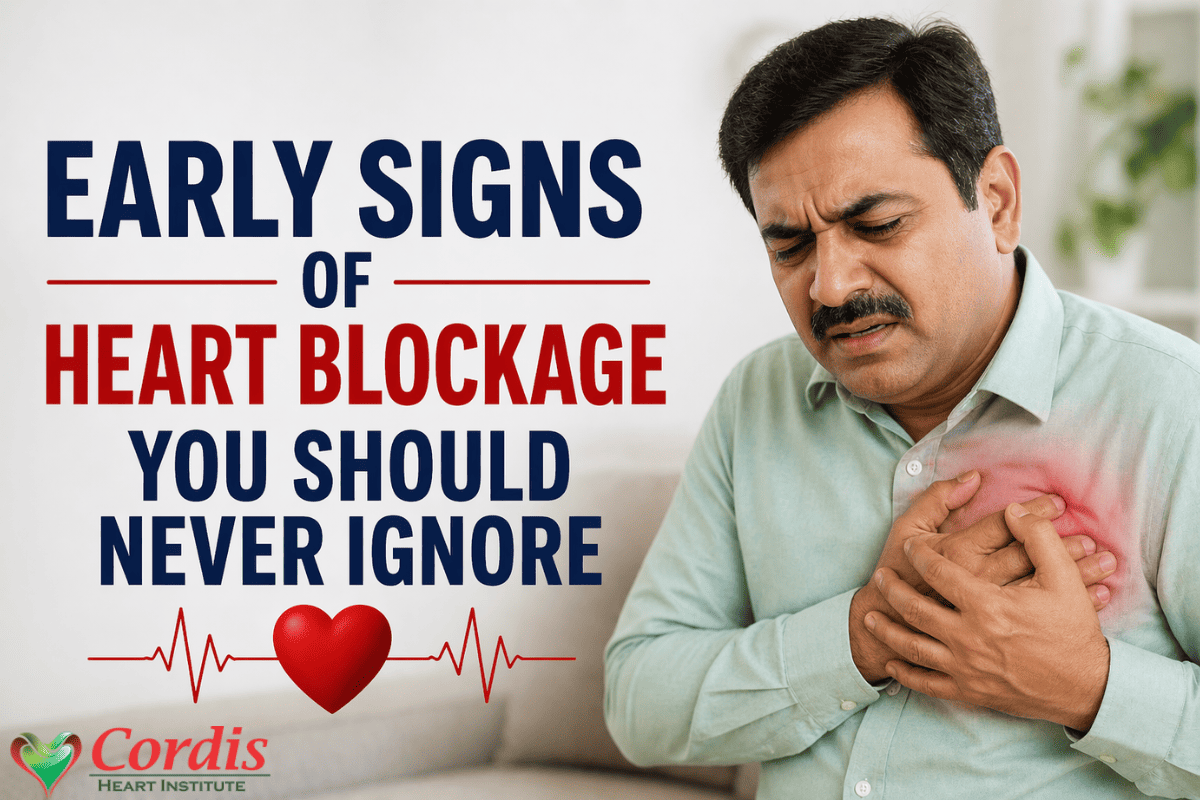
1. Chest Pain or Discomfort (Angina)
This is the most recognized symptom. It may feel like:
- Pressure or tightness in the chest
- Burning sensation
- Heaviness, especially during activity
It usually improves with rest but should never be ignored.
2. Shortness of Breath
If you feel breathless after mild activity like walking or climbing stairs, it could be due to reduced blood flow to the heart.
3. Unusual Fatigue
Feeling tired without a clear reason is often overlooked. Many patients report fatigue weeks before a diagnosis.
4. Pain in Neck, Jaw, Shoulder, or Arm
Pain doesn’t always stay in the chest. It can spread to:
- Left arm
- Jaw
- Neck
- Shoulders
This is a classic but often missed sign.
5. Dizziness or Lightheadedness
Reduced blood flow can affect your brain, leading to:
- Feeling faint
- Sudden dizziness
- Balance issues
6. Irregular Heartbeat (Palpitations)
You may feel:
- Skipped heartbeats
- Rapid or fluttering sensation
- Uneven pulse
Warning Signs That Need Immediate Medical Attention
Some symptoms signal an emergency. Do not wait.
- Severe chest pain lasting more than 5 minutes
- Sweating with nausea
- Sudden breathlessness
- Pain spreading to arm or jaw
These may indicate a heart attack. Immediate medical help can save your life.
Risk Factors That Increase Heart Blockage Chances
Understanding your risk helps you act early.
Lifestyle-related factors
- Smoking and alcohol
- Sedentary lifestyle
- High-stress levels
- Poor diet
Medical conditions
- Diabetes
- High blood pressure
- Obesity
- High cholesterol
Age and family history
If heart disease runs in your family, your risk is higher.
How Heart Blockage Is Diagnosed
Early diagnosis can prevent complications.
Common diagnostic tests
- ECG (Electrocardiogram): Detects heart rhythm issues
- Stress test: Checks heart performance under activity
- Angiography: Identifies exact blockages
- CT scan: Provides detailed heart imaging
Why early screening matters
Many people don’t show obvious symptoms until it’s too late. Regular checkups help catch problems early.
Treatment Options for Heart Blockage
Treatment depends on severity and patient condition.
- Lifestyle changes
- Healthy diet (low cholesterol, low salt)
- Regular exercise
- Stress control
- Medications
- Blood thinners
- Cholesterol-lowering drugs
- Blood pressure control medicines
- Non-surgical treatment: EECP
EECP (Enhanced External Counterpulsation) is a non-invasive therapy that improves blood flow to the heart.
Benefits:
- No surgery required
- Improves circulation
- Reduces chest pain
This treatment is available at Cordis Heart Institute, supervised by Dr Abhijit Aklujkar.
- Surgical options
- Angioplasty: Opens blocked arteries using a stent
- Bypass surgery: Creates a new path for blood flow
How to Prevent Heart Blockage Naturally
Prevention is always better than treatment.
- Eat a heart-friendly diet (more fruits, vegetables, whole grains)
- Exercise at least 30 minutes daily
- Avoid smoking
- Manage stress with meditation or yoga
- Get regular health checkups
When to Consult a Heart Specialist
You should consult a cardiologist if:
- Symptoms persist or worsen
- You have multiple risk factors
- You have a family history of heart disease
Early consultation with Dr Abhijit Aklujkar can help avoid serious complications.
FAQs: Early Signs of Heart Blockage
1. What are the first early signs of heart blockage?
Chest discomfort, fatigue, and shortness of breath are usually the first signs.
2. Can heart blockage symptoms come and go?
Yes, symptoms like chest pain can appear during activity and disappear with rest.
3. Is heart blockage painful in the early stages?
Not always. Some people experience mild discomfort or no pain at all.
4. How do I know if my arteries are blocked without tests?
You can’t confirm without tests, but symptoms like fatigue and breathlessness can be warning signs.
5. Can heart blockage be treated without surgery?
Yes, in many cases with lifestyle changes, medications, or EECP therapy.
6. What is the difference between heart blockage and heart attack?
Heart blockage is a condition; a heart attack happens when a blockage completely stops blood flow.
Conclusion: Don’t Ignore the Warning Signs
The early signs of heart blockage are often subtle, but they can save your life if you act on them in time. Chest discomfort, fatigue, breathlessness, or unusual pain should never be ignored.
If you or your loved ones are experiencing these symptoms, it’s time to take action.
Book a consultation at Cordis Heart Institute, Early detection can prevent major complications. Don’t wait for a serious event to take your heart health seriously.