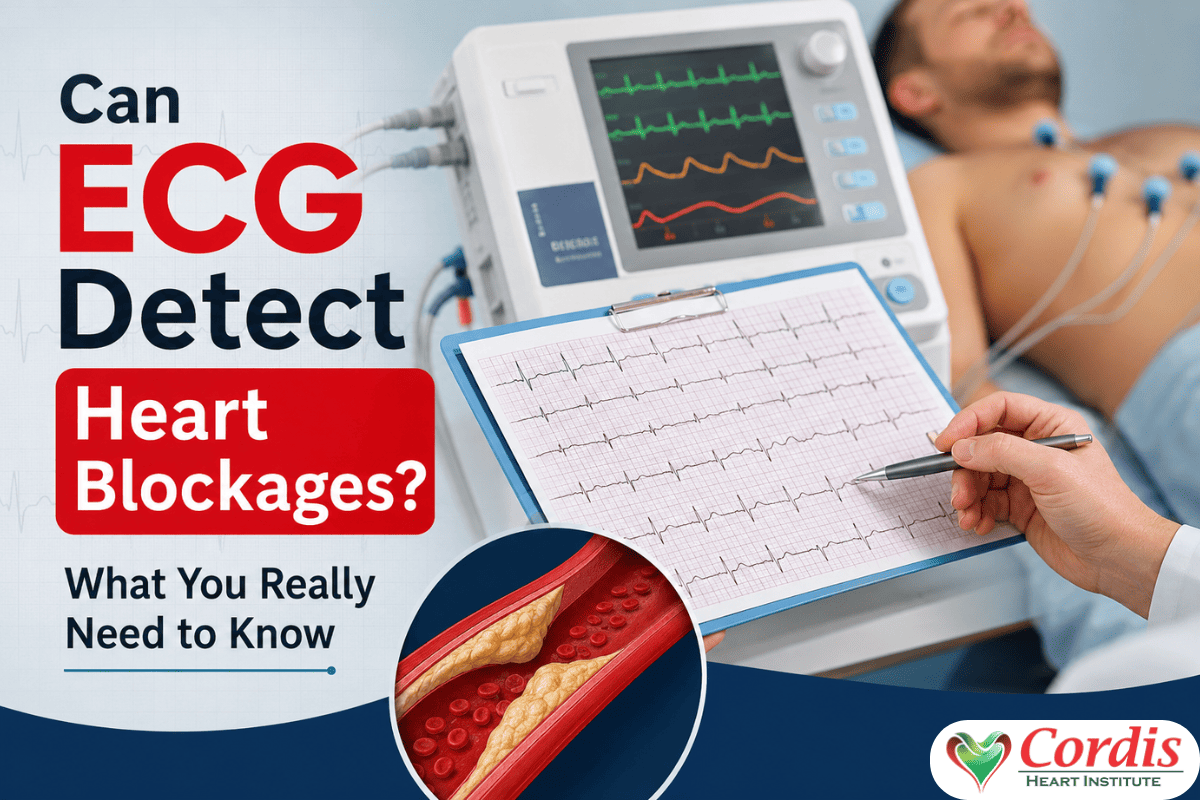
Heart disease remains one of the leading causes of death worldwide, and many people often wonder: Can ECG detect heart blockages? It’s a common question, especially when chest pain, breathlessness, or fatigue start becoming frequent. Many patients believe that if their ECG report is normal, their heart arteries must also be perfectly healthy. But that’s not always true.
An ECG, also known as an electrocardiogram, is one of the most commonly performed heart tests. It helps doctors evaluate the electrical activity of the heart and identify several heart-related conditions. However, when it comes to detecting blocked arteries or coronary artery disease, the answer is slightly more complicated.
In this detailed guide, Dr. Abhijit Aklujkar explains how ECG works, whether ECG can detect heart blockages, its limitations, and which tests are more accurate for diagnosing blocked arteries.
What Is an ECG Test and How Does It Work?
Understanding Electrocardiogram (ECG)
An ECG is a simple, painless, and non-invasive test that records the electrical signals generated by your heart. Small electrodes are placed on the chest, arms, and legs to monitor the heart’s rhythm and electrical activity.
Doctors commonly recommend ECG tests because they are:
- Quick
- Affordable
- Widely available
- Useful in emergency situations
The ECG machine produces a graph that helps doctors identify irregularities in heart function.
What Conditions Can an ECG Detect?
Although many people search for “ECG test for heart blockage,” ECG is primarily designed to detect electrical abnormalities rather than physically showing blocked arteries.
An ECG can help identify:
- Abnormal heart rhythms (arrhythmias)
- Signs of a previous heart attack
- Reduced blood supply to the heart
- Enlarged heart chambers
- Electrolyte imbalances
- Heart muscle strain
In some cases, ECG abnormalities may indirectly suggest coronary artery disease or reduced blood flow caused by narrowed arteries.
Types of ECG Tests
Resting ECG
Performed while the patient is lying down and relaxed.
Stress ECG or Treadmill Test
This test records ECG changes while walking or running on a treadmill. It helps detect reduced blood flow during physical exertion.
Holter Monitoring
A portable ECG device worn for 24–48 hours to monitor heart rhythm abnormalities that may not appear during a short ECG test.
Can ECG Detect Heart Blockages?
The simple answer is: ECG can sometimes suggest heart blockages, but it cannot directly detect or confirm blocked arteries.
An ECG does not create images of the heart arteries. Instead, it identifies electrical changes that may happen when the heart muscle is not receiving enough oxygen-rich blood.
This means ECG may:
- Indicate reduced blood flow
- Suggest previous heart damage
- Show signs of ongoing stress on the heart
But it cannot tell:
- Which artery is blocked
- How severe the blockage is
- Whether the artery is partially or fully blocked
How ECG May Indicate a Possible Heart Blockage
Certain ECG changes may raise suspicion of coronary artery disease or heart blockage.
These include:
ST-Segment Changes
Abnormal ST-segment elevation or depression can indicate reduced blood flow to the heart muscle.
T-Wave Abnormalities
Changes in T-wave patterns may suggest ischemia, which means insufficient blood supply.
Arrhythmias
Blocked arteries can sometimes trigger abnormal heart rhythms.
Signs of Previous Heart Damage
An ECG may reveal evidence of an old heart attack that occurred due to artery blockage.
However, these findings are not always specific. Similar ECG abnormalities may occur in conditions unrelated to blocked arteries.
Why a Normal ECG Does Not Rule Out Heart Blockages
One of the biggest misconceptions is assuming a normal ECG means there is no heart disease.
In reality:
- Many people with coronary artery disease have completely normal ECG results at rest.
- Mild or moderate blockages may not affect the heart’s electrical activity initially.
- Symptoms may appear only during exercise or stress.
This is why cardiologists often combine ECG with additional tests when symptoms strongly suggest heart disease.
According to experts at Cordis Heart Institute and American Heart Association, ECG alone is not enough to diagnose coronary artery blockages accurately.
Symptoms That Could Indicate Heart Blockages
Recognizing early warning signs can help prevent serious complications like heart attacks.
Common Symptoms of Heart Blockages
Chest Pain or Pressure
A squeezing or heavy sensation in the chest is one of the most common signs.
Shortness of Breath
Difficulty breathing during physical activity may suggest reduced blood flow.
Fatigue
Persistent tiredness without clear reason can sometimes signal poor heart function.
Pain Radiating to Arm, Jaw, or Back
Heart-related pain may spread to the left arm, shoulder, neck, jaw, or upper back.
Dizziness or Sweating
Sudden dizziness or cold sweats may occur during reduced blood supply episodes.
Silent Heart Disease: When There Are No Symptoms
Some people have severe artery blockages without noticeable symptoms. This is especially common in:
- Diabetic patients
- Older adults
- Smokers
This is why preventive heart screening becomes important for high-risk individuals.
Other Tests Used to Detect Heart Blockages
Because ECG has limitations, doctors often recommend additional tests.
Stress Test for Heart Blockage Detection
A stress test monitors how the heart performs during exercise.
If blood flow becomes restricted during activity, ECG changes may become more obvious.
Echocardiography
An echocardiogram uses ultrasound waves to assess:
- Heart pumping function
- Valve function
- Areas of weak heart muscle
It helps identify damage caused by reduced blood flow.
CT Coronary Angiography
This advanced imaging test provides detailed pictures of coronary arteries and can detect narrowing or plaque buildup.
It is non-invasive and increasingly used for early diagnosis.
Coronary Angiography: The Gold Standard
Coronary angiography remains the most accurate test for identifying blocked arteries.
A special dye is injected into the arteries, allowing doctors to clearly visualize:
- Exact blockage location
- Severity of narrowing
- Blood flow restriction
This test helps cardiologists decide whether treatments like angioplasty or bypass surgery are necessary.
Blood Tests and Cardiac Markers
Doctors may also order blood tests to detect:
- Troponin levels
- Cholesterol levels
- Inflammation markers
These tests help assess heart attack risk and overall cardiovascular health.
ECG vs Angiography – What’s the Difference?
Test | Purpose | Detects Actual Blockages? | Invasive? |
ECG | Electrical activity | No | No |
Stress ECG | Exercise-related blood flow issues | Indirectly | No |
CT Angiography | Coronary artery imaging | Yes | Minimally |
Coronary Angiography | Direct artery visualization | Yes | Yes |
An ECG is excellent for quick screening and identifying abnormal heart activity. But angiography is far more accurate for detecting artery blockages.
Who Should Get Tested for Heart Blockages?
High-Risk Groups
You may require heart screening if you have:
- Diabetes
- High blood pressure
- High cholesterol
- Obesity
- Smoking habits
- Family history of heart disease
- Sedentary lifestyle
When to See a Cardiologist
You should consult a heart specialist if you experience:
- Chest discomfort
- Breathlessness
- Unexplained fatigue
- Dizziness
- Irregular heartbeat
Dr. Abhijit Aklujkar advises patients not to ignore persistent symptoms, even when initial ECG reports appear normal.
For heart consultations and preventive screening, patients can also visit Cordis Heart Institute.
Can Lifestyle Changes Prevent Heart Blockages?
The good news is that many heart diseases are preventable.
Heart-Healthy Diet Tips
Focus on:
- Fruits and vegetables
- Whole grains
- Lean proteins
- Healthy fats
- Reduced salt and sugar intake
Exercise and Weight Management
At least 30 minutes of moderate exercise most days can help improve heart health and blood circulation.
Managing Stress and Sleep
Chronic stress and poor sleep can negatively impact heart health. Meditation, yoga, and proper sleep routines can help lower risk.
Importance of Regular Heart Checkups
Routine health screenings help detect heart disease early before symptoms become severe.
FAQs About ECG and Heart Blockages
Can an ECG detect blocked arteries?
ECG may suggest reduced blood flow or heart damage, but it cannot directly visualize blocked arteries.
Can ECG detect 100% heart blockage?
A severe blockage may produce ECG abnormalities, especially during a heart attack, but ECG alone cannot confirm complete blockage.
Is a normal ECG enough to rule out heart disease?
No. Many people with coronary artery disease may still have normal ECG results.
Which test is best for detecting heart blockages?
Coronary angiography is considered the most accurate test for detecting blocked arteries.
Can stress ECG detect coronary artery disease?
Yes, stress ECG can sometimes reveal blood flow problems that are not visible on resting ECG.
What are early warning signs of blocked arteries?
Chest pain, shortness of breath, fatigue, dizziness, and pain radiating to the arm or jaw are common warning signs.
Final Thoughts – Should You Rely Only on an ECG?
So, can ECG detect heart blockages? The answer is partially yes, but not completely.
ECG is a highly useful first-line test that helps doctors evaluate heart rhythm and identify warning signs of reduced blood flow or previous heart damage. However, it cannot directly show blocked arteries.
If symptoms strongly suggest heart disease, additional investigations such as stress testing, CT angiography, or coronary angiography may be necessary.
Ignoring symptoms simply because an ECG appears normal can delay diagnosis and treatment.
Concerned About Heart Blockages? Don’t Ignore the Signs
If you are experiencing chest discomfort, breathlessness, fatigue, or irregular heartbeat, timely evaluation is essential.
Consult Dr. Abhijit Aklujkar for:
- ECG testing
- Preventive heart screening
- Heart blockage evaluation
- Personalized cardiac care
Visit Cordis Heart Institute to schedule your heart checkup today.