Being told that you have a heart blockage can be worrying, especially when you hear words such as angioplasty or bypass surgery. But does every patient with coronary artery disease need a surgical or catheter-based procedure?
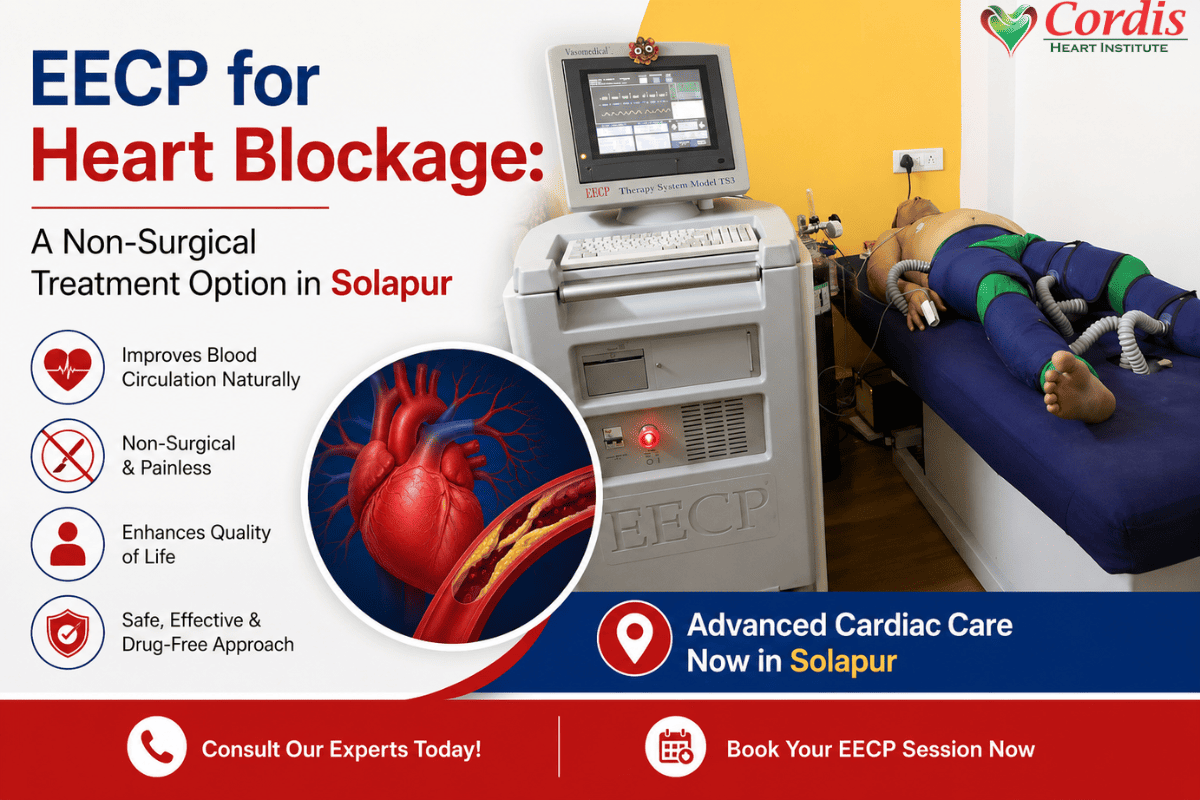
EECP for heart blockage is a non-surgical treatment option that may be considered for selected patients, particularly those who have persistent angina despite medical treatment and do not have another suitable treatment option. The 2023 AHA/ACC guideline states that EECP may be considered for symptom relief in patients with chronic coronary disease and refractory angina when other treatment options are unavailable.
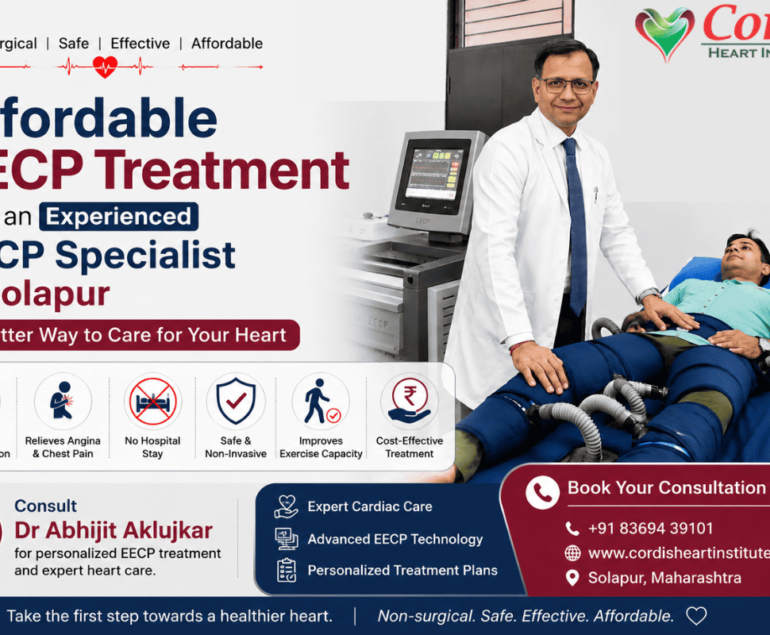
At Cordis Heart Institute in Solapur, patients can undergo cardiac assessment to determine whether EECP may be suitable for their condition. Dr Abhijit Aklujkar can assess symptoms, previous cardiac procedures, medical reports, and overall health before recommending a treatment approach. The treatment plan should always be based on individual medical findings.
What Is Heart Blockage?
“Heart blockage” commonly refers to narrowing or obstruction in the coronary arteries, the blood vessels that supply oxygen-rich blood to the heart muscle.
Plaque buildup inside these arteries can reduce blood flow. Depending on the severity and location of the narrowing, a person may experience:
- Chest pain or pressure
- Breathlessness during activity
- Fatigue
- Reduced exercise tolerance
- Discomfort that appears during physical exertion
Not everyone with coronary artery disease has the same symptoms or requires the same treatment. A cardiologist may use medical history, ECG, echocardiography, stress testing, angiography, and other investigations to understand the condition before deciding on treatment.
What Is EECP Treatment?
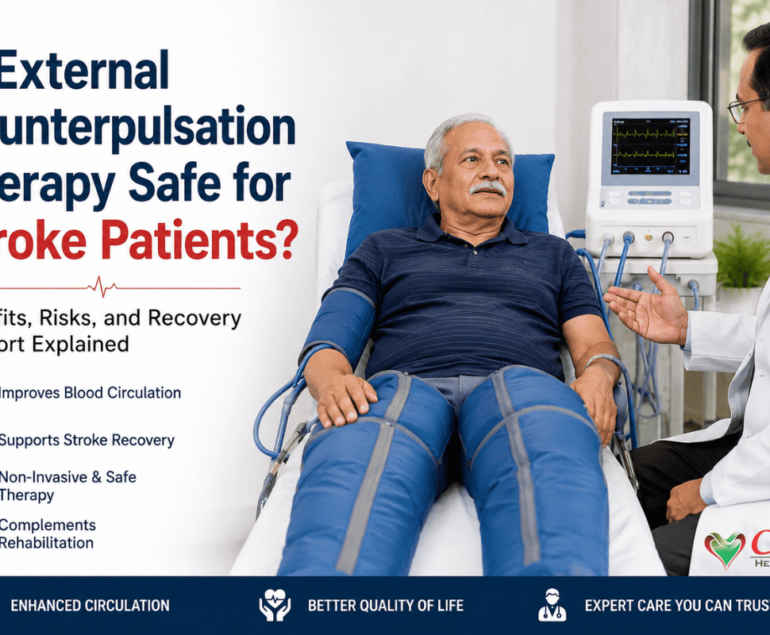
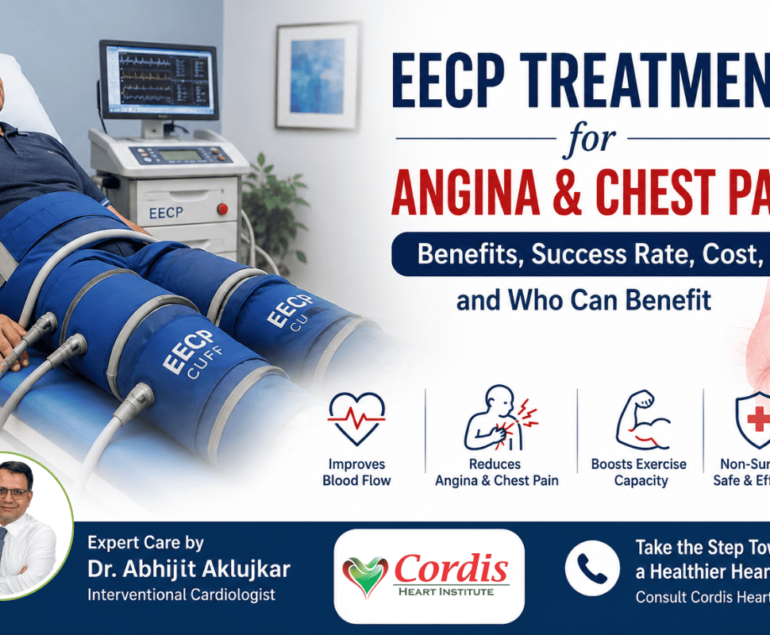
EECP stands for Enhanced External Counterpulsation. It is a non-invasive treatment that uses pneumatic cuffs placed around the lower legs, thighs, and hips.
The cuffs inflate and deflate in coordination with the heartbeat. During diastole, the cuffs inflate sequentially, helping increase blood flow toward the heart. They then deflate before the heart pumps, reducing resistance against which the heart has to pump.
EECP has been studied mainly in patients with chronic stable or refractory angina. In the MUST-EECP trial, patients receiving EECP experienced improvements in exercise duration and a reduction in weekly angina episodes, although the study had limitations.
Important: EECP does not physically remove plaque or mechanically open a blocked coronary artery.
How Can EECP Help Patients With Heart Blockage?
- It May Support Blood Flow to the Heart
The sequential inflation of the cuffs can increase blood flow during the relaxation phase of the heart. EECP may also affect vascular function and circulation.
- It May Reduce Angina Symptoms
For appropriately selected patients, EECP may help reduce the frequency or severity of angina and improve exercise tolerance. Clinical research has reported improvements in exercise duration and angina symptoms.
- It May Support Collateral Circulation
Collateral blood vessels are alternative small blood-vessel pathways that can help supply blood to areas of the heart when normal circulation is reduced. EECP has been studied for its potential effects on vascular function and collateral circulation.
However, this should not be interpreted as EECP “removing” a blockage.
- It May Help With Physical Activity
Some patients may experience better exercise tolerance and fewer activity-limiting symptoms after treatment. The response varies from person to person.
Is EECP an Alternative to Angioplasty or Bypass Surgery?
EECP, angioplasty, and bypass surgery are not interchangeable treatments.
Treatment | What it does | Invasive? |
EECP | Uses external cuffs to support circulation and may relieve angina symptoms | No |
Angioplasty/PCI | Uses a catheter-based procedure to restore blood flow through a narrowed coronary artery | Yes |
Bypass surgery | Creates a new route for blood to flow around blocked coronary arteries | Yes |
For some patients, angioplasty or bypass surgery may be the appropriate treatment. Others may be managed with medication and lifestyle changes. EECP is generally considered in specific situations, particularly refractory angina when other treatment options are not available.
So, heart blockage treatment without surgery should not mean avoiding a procedure at all costs. The safest treatment depends on the patient’s symptoms, test results, anatomy, disease severity, and overall health.
Who May Be Suitable for EECP Treatment?
EECP may be considered for selected patients who have:
- Chronic stable or refractory angina
- Persistent symptoms despite appropriate medical treatment
- Previous angioplasty or bypass surgery with ongoing symptoms
- Coronary disease where another treatment option may not be suitable
The 2023 AHA/ACC chronic coronary disease guideline specifically places EECP in the context of refractory angina when there are no other treatment options.
A cardiologist should decide whether EECP is appropriate after reviewing the patient’s complete medical history.
Who May Not Be Suitable for EECP?
EECP is not appropriate for everyone. Certain cardiovascular, vascular, rhythm, blood-pressure, bleeding, or other medical conditions may require special consideration.
This is why patients should not start EECP based only on an online article or a previous diagnosis. A medical assessment is needed before treatment.
What Happens During an EECP Session?
Step 1: Patient Assessment
The medical team reviews symptoms, medical history, medications, previous angioplasty or bypass procedures, and available cardiac reports.
Step 2: EECP Cuffs Are Placed
Pneumatic cuffs are fitted around the calves, thighs, and lower hip area.
Step 3: The System Synchronizes With the Heartbeat
An ECG helps coordinate cuff inflation and deflation with the cardiac cycle.
Step 4: Treatment Begins
The cuffs inflate sequentially during the appropriate phase of the heartbeat and then release.
Step 5: The Patient Is Monitored
The medical team monitors the patient’s response and can adjust the treatment if needed.
How Long Does EECP Treatment Take?
EECP is generally delivered as a course of multiple treatment sessions, rather than as a one-time procedure.
A commonly studied regimen is around 35 hours of treatment delivered over approximately 4 to 7 weeks.
The exact schedule can vary depending on the patient’s condition and the treatment plan recommended by the treating team.
Is EECP Treatment Painful?
EECP is non-invasive, but the pressure from the cuffs can feel unusual or uncomfortable for some patients.
Possible treatment-related issues can include muscle soreness, skin irritation, or pressure-related discomfort. A clinical-practice study found that adverse events were generally manageable, with device-related issues such as muscle soreness and skin lesions reported in some patients.
Patients should tell the medical team if they experience significant pain, numbness, skin problems, or other discomfort during treatment.
Benefits of EECP for Selected Heart Patients
For appropriately selected patients, possible benefits include:
- Non-surgical treatment approach
- No incision
- No coronary catheterization
- Potential reduction in angina symptoms
- Potential improvement in exercise tolerance
- Outpatient treatment in many settings
However, EECP should not be presented as a guaranteed cure for coronary artery blockage. Its main established role is symptom relief in selected patients with refractory angina.
EECP Treatment in Solapur at Cordis Heart Institute
If you are searching for EECP treatment in Solapur, Cordis Heart Institute provides EECP therapy along with cardiac assessment.
Dr Abhijit Aklujkar can evaluate your symptoms, previous cardiac procedures, medical reports, and relevant investigations to determine whether EECP is suitable.
The aim is not simply to offer a non-surgical treatment. The first step is to understand the patient’s heart condition and select the appropriate treatment.
This is especially important for patients searching for:
- EECP center in Solapur
- EECP therapy in Solapur
- Heart blockage treatment in Solapur
- Non-surgical heart treatment in Solapur
EECP After Angioplasty or Bypass Surgery
Some patients continue to experience angina or reduced exercise tolerance even after previous coronary procedures.
In selected cases, EECP may be considered for persistent symptoms. Research has included patients who had previously undergone revascularization, and EECP has been studied as a treatment for refractory angina.
However, recurring chest pain after angioplasty or bypass should first be evaluated by a cardiologist. EECP should not replace appropriate follow-up or investigation of a possible new or recurrent coronary problem.
How Much Does EECP Treatment Cost in Solapur?
The EECP treatment cost in Solapur can vary from patient to patient.
Factors may include:
- Number of treatment sessions
- Initial cardiac assessment
- Required investigations
- Individual treatment plan
- Follow-up requirements
For an accurate current price, patients should contact Cordis Heart Institute directly rather than relying on a generic online estimate.
What Tests May Be Needed Before EECP?
Depending on the patient’s symptoms and medical history, the cardiologist may recommend tests such as:
- ECG
- Echocardiogram
- Stress testing where appropriate
- Blood tests
- Coronary angiography or review of previous angiography reports
- Other cardiac investigations when required
Not every patient needs every test. The doctor decides which investigations are appropriate.
Frequently Asked Questions About EECP for Heart Blockage
Can EECP remove heart blockage?
No. EECP does not physically remove plaque from a coronary artery. It is used primarily to help relieve symptoms in selected patients with refractory angina.
Is EECP a non-surgical treatment for heart blockage?
Yes. EECP is a non-invasive therapy. However, it is not a replacement for angioplasty or bypass surgery in every patient.
Is EECP better than angioplasty?
Neither treatment is universally better. They have different roles. A cardiologist should decide based on the patient’s coronary anatomy, symptoms, test results, and overall health.
Can EECP be done after angioplasty?
Selected patients with persistent symptoms after angioplasty may be considered for EECP. A cardiac assessment is needed first.
How many EECP sessions are needed?
A commonly studied EECP course consists of about 35 treatment hours over 4 to 7 weeks, although the exact treatment plan may differ between patients.
Is EECP safe?
EECP can be well tolerated in appropriately selected patients, but it is not suitable for everyone. Medical screening before treatment is important.
What is the cost of EECP treatment in Solapur?
The cost depends on the number of sessions, assessment, investigations, and individual treatment plan. Contact Cordis Heart Institute for the current cost.
Where can I get EECP treatment in Solapur?
Patients can contact Cordis Heart Institute, Solapur for cardiac assessment and information about EECP treatment.
Can EECP reduce chest pain caused by heart disease?
EECP may help reduce angina symptoms in selected patients, particularly those with refractory angina. Clinical studies have reported reductions in angina episodes and improvements in exercise duration.
When Should You See a Cardiologist for Heart Blockage?
Do not ignore recurring symptoms such as:
- Chest pain or pressure during activity
- Breathlessness during exertion
- Unusual fatigue
- Reduced ability to walk or exercise
- Increasing frequency or severity of symptoms
- Recurring symptoms after angioplasty or bypass
If you develop new or severe chest pain, especially with breathlessness, sweating, fainting, or pain spreading to the arm, jaw, or back, seek urgent medical care rather than waiting for an EECP consultation.
Is EECP Right for Your Heart Blockage?
EECP for heart blockage can be a non-surgical treatment option for selected patients, especially those dealing with persistent angina despite medical treatment and who have no other suitable treatment option.
It is important to understand what EECP can and cannot do. It does not physically remove a coronary blockage. Instead, it may help improve circulation and relieve symptoms in appropriately selected patients.
If you are looking for heart blockage treatment without surgery in Solapur, speak with Dr Abhijit Aklujkar at Cordis Heart Institute to find out whether EECP may be suitable for your condition.