Heart bypass surgery helps restore blood flow to the heart, but some patients may continue to experience chest discomfort, breathlessness, or reduced exercise tolerance after the procedure. These symptoms can be worrying, especially when a patient has already undergone major cardiac surgery.
Can EECP therapy after bypass surgery in Thane help manage recurring chest pain? In selected patients, Enhanced External Counterpulsation (EECP) therapy may help reduce chronic angina symptoms and improve the ability to carry out daily activities. However, its suitability depends on the patient’s heart condition, previous surgery, and current medical assessment.
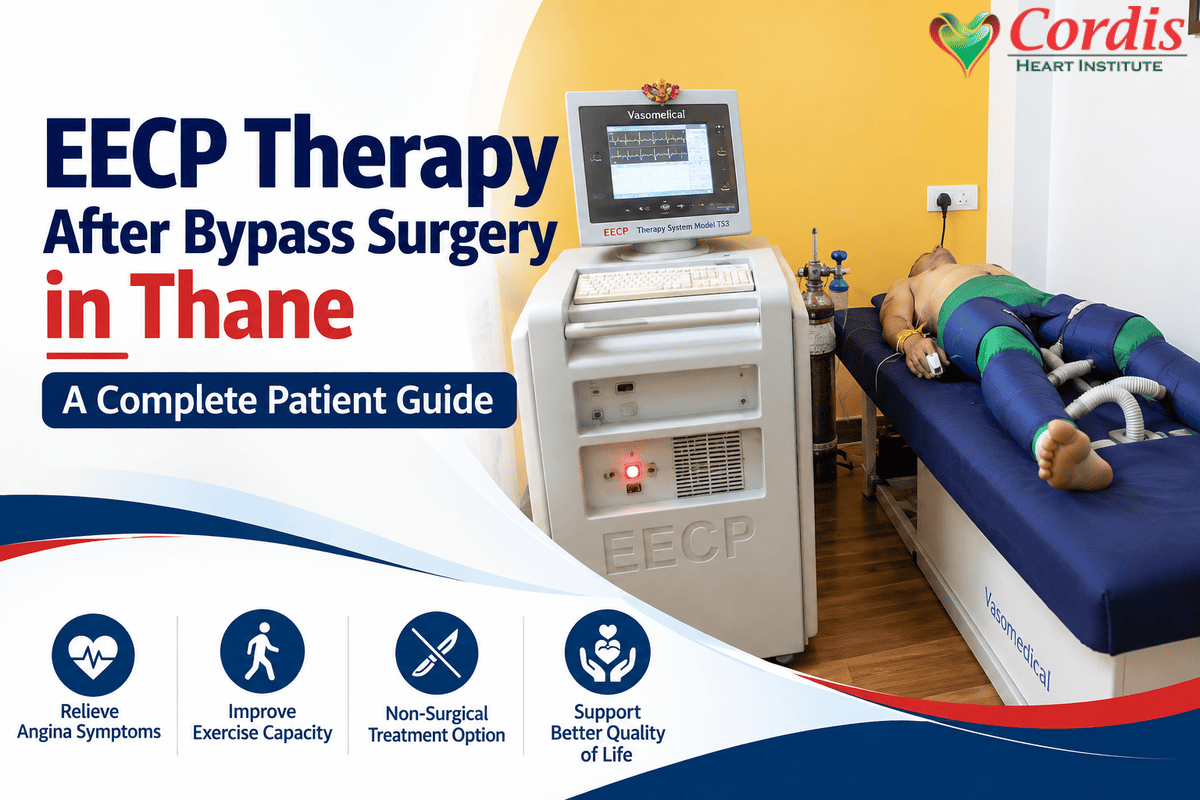
EECP is a non-invasive treatment that uses pressure cuffs around the legs to support blood circulation during the cardiac cycle. It does not involve surgery, and it does not directly remove arterial blockages or repair bypass grafts.
At Cordis Heart Institute in Thane, patients can enquire about cardiac evaluation and available treatment options with Dr Abhijit Aklujkar. Understanding how EECP works, who may benefit, and when further investigation is necessary can help patients discuss the next steps with their cardiologist.
What Is EECP Therapy and How Does It Work?
Enhanced External Counterpulsation, commonly known as EECP, is a non-invasive treatment used mainly to help manage chronic angina in appropriately selected patients.
Angina is chest discomfort that occurs when the heart muscle does not receive enough oxygen-rich blood. Patients with coronary artery disease may experience pressure, tightness, or discomfort in the chest, sometimes during physical activity.
During EECP treatment, inflatable cuffs are wrapped around the calves, thighs, and buttocks. The equipment synchronises the inflation and deflation of these cuffs with the patient’s heartbeat.
The cuffs inflate in sequence during the heart’s resting phase and deflate before the heart pumps again. This timing may support blood flow towards the heart and reduce the heart’s workload under certain conditions.
Who May Benefit From EECP Treatment?
A cardiologist may consider EECP for patients who:
- Continue to experience chronic angina despite prescribed medication.
- Have persistent symptoms after bypass surgery.
- Have coronary artery disease and require additional symptom management.
- Are not suitable candidates for further revascularisation procedures, or have limited options after specialist evaluation.
EECP is not appropriate for every patient with heart disease. A medical assessment is necessary before treatment begins.
Why Might Patients Need EECP Therapy After Bypass Surgery?
Coronary artery bypass grafting (CABG) creates a new route for blood to flow around narrowed or blocked coronary arteries. Although bypass surgery can improve blood supply, it does not eliminate the underlying process of coronary artery disease.
Over time, some patients may develop new symptoms or experience a return of angina.
Can Chest Pain Return After Bypass Surgery?
Yes. Chest pain can return for several reasons, including:
- Narrowing or blockage of a bypass graft.
- Progression of coronary artery disease in other blood vessels.
- Residual narrowing in coronary arteries that were not treated during surgery.
- Other cardiac conditions or non-cardiac causes of chest discomfort.
Not every episode of chest pain means that a bypass graft has failed. However, new or recurring symptoms should never be ignored.
A cardiologist may review the patient’s medical history, symptoms, medication, and previous investigation reports. Further tests may be needed to determine the cause and decide whether additional treatment is required.
When Should Patients Consider EECP After Bypass Surgery?
EECP may be considered when a patient has persistent chronic angina and the cardiologist determines that the treatment is suitable.
Before recommending EECP, the doctor needs to assess whether the patient requires further investigation or a procedure to restore blood flow. EECP should not delay urgent treatment when a serious cardiac problem is suspected.
Benefits of EECP Therapy After Bypass Surgery
EECP may offer symptom relief to selected patients who continue to experience chronic angina after bypass surgery. The results vary depending on the patient’s condition, and the treatment does not guarantee that symptoms will disappear.
- A Non-Surgical Option for Angina Management
EECP does not require an incision or the insertion of a catheter. It may be considered for patients who need additional angina management but are not suitable for another invasive procedure.
- Potential Improvement in Exercise Tolerance
Some patients report that they can walk or perform routine activities more comfortably after completing treatment. The extent of improvement depends on individual circumstances.
- Possible Reduction in Angina Episodes
EECP may reduce the frequency of chronic angina episodes in selected patients. However, persistent or worsening symptoms still require medical review.
- Support for Long-Term Cardiac Care
EECP may form part of a wider cardiac care plan that includes prescribed medicines, management of blood pressure and cholesterol, a heart-healthy diet, and medically approved physical activity.
Important: EECP does not remove plaque from coronary arteries, reopen a blocked bypass graft, or replace bypass surgery when surgery is medically necessary.
EECP Therapy vs Angioplasty vs Repeat Bypass Surgery
Patients with recurring chest pain after bypass surgery may have several treatment options. The appropriate choice depends on the cause of symptoms, coronary artery anatomy, overall health, and previous treatment.
Treatment | Main purpose | Key consideration |
EECP therapy | May help reduce chronic angina symptoms | Does not directly open blocked arteries |
Angioplasty | Restores blood flow through selected narrowed arteries | Uses a catheter and may involve a stent |
Repeat bypass surgery | Creates a new route for blood to reach the heart muscle | Requires a detailed surgical assessment |
Is EECP an Alternative to Angioplasty After Bypass Surgery?
EECP may be an option for selected patients who continue to experience chronic angina and do not have an appropriate or necessary target for another revascularisation procedure.
However, EECP is not a direct replacement for angioplasty when a cardiologist determines that opening a narrowed artery is necessary. Some patients may need further investigation before the doctor can recommend a treatment.
A cardiologist considers symptoms, existing medical conditions, previous bypass surgery, and investigation results before deciding which option is appropriate.
What Happens During EECP Treatment at Cordis Heart Institute in Thane?
Patients considering EECP therapy should first undergo a medical assessment to determine whether the treatment is suitable for them.
Initial Cardiac Evaluation With Dr Abhijit Aklujkar
During the consultation, patients should discuss their current symptoms, the date of their bypass surgery, previous cardiac procedures, and existing medication.
It is helpful to bring previous hospital discharge summaries, angiography reports, investigation results, and a current medication list.
Dr Abhijit Aklujkar can assess the information provided during the consultation and advise on appropriate next steps, subject to clinical evaluation.
How Is an EECP Session Performed?
A typical EECP session follows these steps:
- The patient lies on a treatment bed.
- Cuffs are positioned around the calves, thighs, and buttocks.
- Sensors monitor the heartbeat so the equipment can synchronise cuff inflation and deflation.
- The equipment applies pressure in a timed sequence during the cardiac cycle.
- The treatment team monitors the session and the patient’s comfort.
The treatment is non-invasive. Patients should tell the clinical team if they experience discomfort, unusual symptoms, or excessive pressure during a session.
How Many EECP Sessions Are Usually Required?
A commonly used EECP course consists of approximately 35 sessions, usually lasting about one hour each, often scheduled over seven weeks.
The exact schedule may vary depending on the treatment protocol, the patient’s clinical condition, and the treating team’s recommendations. Patients should confirm their expected treatment duration during the consultation.
Is EECP Therapy Painful?
EECP is generally performed without surgery or anaesthesia. Patients may feel pressure from the cuffs as they inflate and deflate. Some may experience skin irritation, leg discomfort, or bruising.
The treatment team should be informed about discomfort so that the equipment and treatment plan can be assessed appropriately.
Is EECP Therapy Safe After Bypass Surgery?
EECP may be suitable for certain patients after bypass surgery, but the fact that a treatment is non-invasive does not mean it is appropriate for everyone.
What Should Patients Tell Their Cardiologist?
Before starting EECP, inform the doctor about:
- The date and details of your bypass surgery.
- Any recent or recurring chest pain.
- Breathlessness, dizziness, or reduced exercise tolerance.
- Current medicines and other diagnosed heart conditions.
- A history of blood clots, vascular disease, or other relevant medical problems.
Who May Not Be Suitable for EECP?
Certain heart rhythm disorders, some heart valve conditions, uncontrolled high blood pressure, particular vascular problems, and active blood clots may affect suitability.
The doctor must assess the patient’s condition and relevant contraindications before recommending treatment.
When Should You Seek Emergency Medical Care?
Seek emergency medical attention for new, severe, persistent, or worsening chest pain, particularly if it occurs with breathlessness, sweating, nausea, or faintness.
Do not wait for an EECP appointment to address symptoms that could indicate a heart attack.
Recovery and Lifestyle Tips After Bypass Surgery and EECP Therapy
EECP is only one possible part of cardiac care. Patients should continue following their cardiologist’s advice to manage coronary artery disease and reduce the risk of future cardiac problems.
Follow Your Prescribed Medication Plan
Take prescribed medicines as directed. These may include medication for cholesterol, blood pressure, angina, or prevention of blood clots, depending on your condition. Do not stop or change medicines without medical advice.
Follow a Heart-Healthy Diet
Include vegetables, fruits, whole grains, pulses, and appropriate sources of protein in your daily meals. Limit excess salt, saturated fat, and highly processed foods. Your dietary requirements may differ depending on other medical conditions.
Exercise Only as Advised by Your Doctor
Walking and cardiac rehabilitation may help patients recover and improve physical fitness. The type and intensity of exercise should be based on the patient’s recovery stage and medical assessment.
Attend Regular Cardiology Follow-Ups
Regular appointments allow the doctor to review symptoms, medication, blood pressure, cholesterol levels, and treatment progress. Report any new or worsening symptoms rather than waiting until the next scheduled visit.
How to Choose an EECP Treatment Centre in Thane
When looking for EECP treatment in Thane, consider the following points before making a decision.
- Medical assessment: The centre should review your previous bypass surgery, current symptoms, and relevant cardiac reports.
- Qualified clinical team: Ask who will assess your suitability and supervise your treatment.
- Equipment and monitoring: Confirm that the centre uses appropriate EECP equipment and monitors patients during sessions.
- Clear treatment plan: Ask about the number of sessions, expected duration, possible side effects, and follow-up appointments.
- Transparent costs: Request the current treatment price and ask whether consultation, tests, and follow-up visits are charged separately.
Consult Cordis Heart Institute in Thane
Patients seeking information about EECP therapy after bypass surgery in Thane can contact Cordis Heart Institute to enquire about cardiac evaluation and available treatment options.
Dr Abhijit Aklujkar can assess a patient’s medical history and help determine whether EECP or another treatment option may be appropriate, based on clinical findings.
Before booking, confirm the availability of EECP treatment, the consultation process, and the current appointment details directly with the hospital.
Frequently Asked Questions About EECP Therapy After Bypass Surgery
1. Can I Take EECP Therapy After Bypass Surgery?
Yes, some patients may be considered for EECP after bypass surgery, particularly if they continue to experience chronic angina. A cardiologist must first assess their symptoms, recovery, and overall cardiac condition.
2. How Long After Bypass Surgery Can EECP Therapy Be Started?
There is no single waiting period suitable for every patient. The timing depends on surgical recovery, current symptoms, and whether the patient has any conditions that make EECP unsuitable. Follow your cardiologist’s advice before starting treatment.
3. Can EECP Therapy Help With Chest Pain After Bypass Surgery?
EECP may help reduce chronic angina symptoms in selected patients. However, chest pain can have several causes, including problems with bypass grafts or other coronary arteries. New or worsening pain requires prompt medical evaluation.
4. Does EECP Therapy Remove Heart Blockages?
No. EECP does not physically remove plaque or directly open a blocked artery. It may help manage chronic angina symptoms in selected patients, but it does not repair bypass grafts.
5. How Many EECP Sessions Are Needed After Bypass Surgery?
A commonly used treatment course consists of approximately 35 sessions of around one hour each, often delivered over seven weeks. The prescribed schedule depends on the patient’s condition and the treatment protocol.
6. Is EECP Better Than Angioplasty After Bypass Surgery?
Neither treatment is universally better. EECP may help manage chronic angina in selected patients, while angioplasty can restore blood flow through certain narrowed arteries. The cardiologist’s assessment determines which treatment is appropriate.
7. What Is the Cost of EECP Therapy in Thane?
The cost can vary by treatment centre, the prescribed course, and any additional consultations or investigations. Contact Cordis Heart Institute directly for current pricing rather than relying on an unverified estimate.
8. Where Can I Get EECP Therapy After Bypass Surgery in Thane?
You can contact Cordis Heart Institute in Thane to ask about EECP treatment availability and a cardiac assessment with Dr Abhijit Aklujkar. Confirm the hospital’s current service details before scheduling an appointment.
Conclusion
EECP therapy after bypass surgery in Thane may be an option for selected patients who continue to experience chronic angina despite previous surgery and appropriate medical treatment. It is a non-invasive treatment that may reduce symptoms and improve daily activity for some patients.
However, EECP does not remove heart blockages, repair bypass grafts, or replace angioplasty or repeat bypass surgery when those procedures are necessary. A proper cardiac assessment is the first step towards choosing an appropriate treatment.
If you continue to experience chest discomfort after bypass surgery, consult a cardiologist rather than ignoring the symptoms or choosing a treatment without medical advice.
Contact Cordis Heart Institute in Thane to enquire about a cardiac evaluation with Dr Abhijit Aklujkar and discuss whether EECP therapy may be suitable for your condition.