Recurring chest pain, breathlessness during physical activity and reduced stamina can make everyday life difficult for people living with heart disease. For some patients, these symptoms continue even after taking prescribed medicines or undergoing a heart procedure. This raises an important question: are there other treatment options worth discussing with a cardiologist?
EECP treatment for heart patients in Thane is one option that may help selected patients manage chronic angina symptoms without surgery. EECP stands for Enhanced External Counterpulsation. It is a non-invasive treatment that uses pressure cuffs around the legs to support blood circulation in coordination with the heartbeat.
However, EECP is not suitable for everyone, and it does not physically remove a coronary artery blockage. A proper cardiac assessment is necessary before starting treatment.
At Cordis Heart Institute, patients can enquire about cardiac care and an assessment with Dr Abhijit Aklujkar to determine which treatment options may suit their condition.
This guide explains how EECP works, its potential benefits, the treatment procedure, recovery, possible side effects and questions to ask before choosing an EECP centre in Thane.
What Is EECP Treatment for Heart Patients?
EECP, or Enhanced External Counterpulsation, is a non-surgical treatment generally used to help manage symptoms of chronic stable angina in selected patients.
Angina refers to chest discomfort or pain that occurs when the heart muscle does not receive enough oxygen-rich blood for its needs. It can be associated with coronary artery disease, in which the arteries supplying the heart become narrowed.
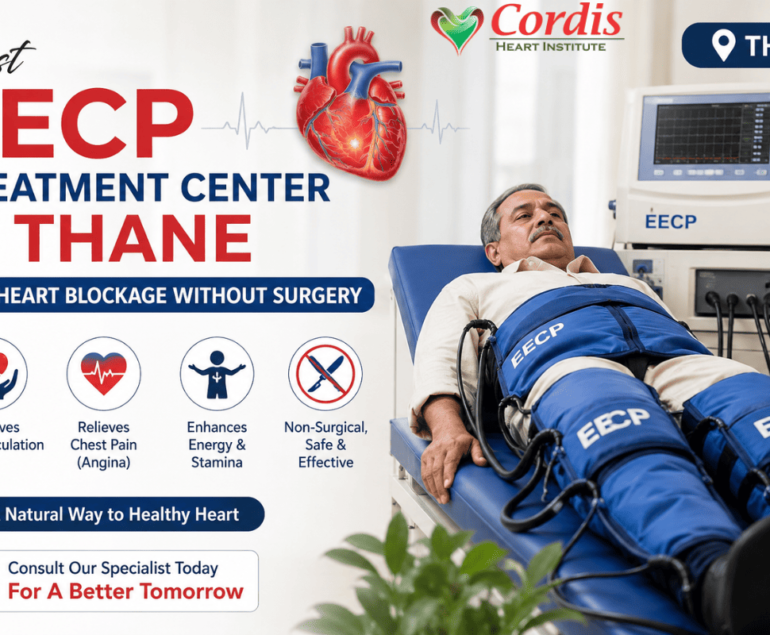
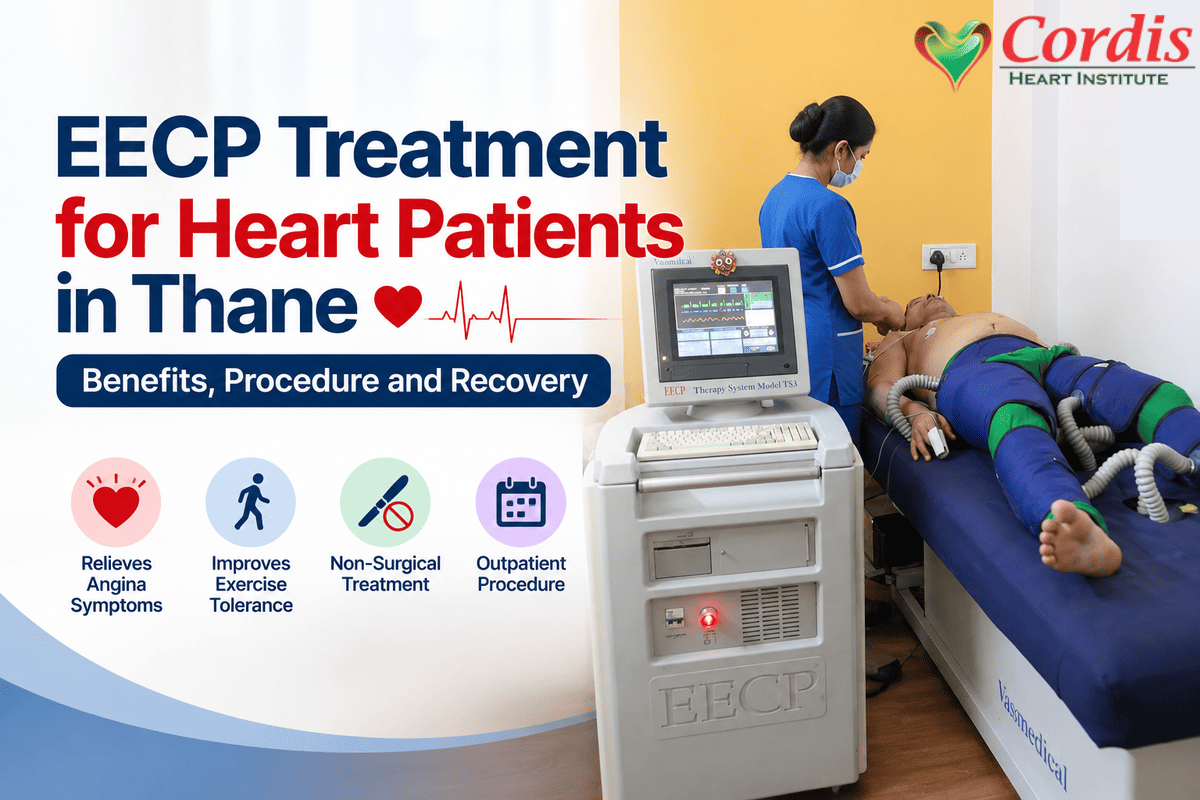
During EECP therapy, specially designed cuffs are wrapped around the patient’s calves, thighs and buttocks. These cuffs inflate and deflate in coordination with the heartbeat.
The pressure applied during the resting phase of the heartbeat helps move blood towards the heart. The cuffs release pressure as the heart begins pumping, reducing resistance to the heart’s pumping action.
The treatment may support circulation and help some patients experience fewer angina symptoms.
Is EECP a Non-Surgical Alternative to Angioplasty?
EECP does not involve inserting a catheter into an artery or making surgical incisions. This makes it different from angioplasty and coronary artery bypass surgery.
However, EECP is not a direct replacement for angioplasty or bypass surgery. Those procedures may be necessary for certain patients depending on the location and severity of coronary artery disease, symptoms and overall cardiac condition.
A cardiologist can determine whether EECP, medication, angioplasty, surgery or another treatment approach is appropriate.
Who Can Benefit From EECP Therapy in Thane?
EECP therapy may be considered for certain patients with chronic coronary artery disease who continue to experience angina despite prescribed medication or who have limited options for further invasive treatment.
A cardiologist may assess whether EECP is appropriate in the following situations.
1. Patients With Chronic Stable Angina
Chronic stable angina causes recurring chest discomfort, often during physical activity or emotional stress. Some patients may be considered for EECP when symptoms continue despite appropriate medical treatment.
2. Patients With Persistent Symptoms After Angioplasty
Some people continue to experience chest discomfort even after angioplasty or bypass surgery. A detailed medical assessment is necessary to identify the cause. EECP may be discussed in selected cases if other treatment options are limited.
3. Patients Who Are Not Suitable for Certain Heart Procedures
Patients who face a high risk from surgery or are not suitable candidates for further revascularisation may ask their cardiologist about EECP.
However, eligibility depends on the individual’s condition, and EECP is not appropriate for every patient with coronary artery disease. The evidence supporting its use also has limitations, so treatment decisions should follow a careful discussion of potential benefits and alternatives.
Benefits of EECP Treatment for Heart Patients
The potential benefits of EECP treatment depend on the patient’s heart condition, symptoms and response to therapy. It is important to understand what the treatment may achieve and what it cannot do.
May Help Reduce Angina Symptoms
Some patients report less frequent chest discomfort after completing an EECP course. This may help them carry out daily activities with greater comfort. However, symptom relief is not guaranteed.
May Improve Exercise Tolerance
For selected patients, a reduction in angina symptoms may make activities such as walking or performing routine household tasks easier. Any change in exercise levels should follow medical advice.
Non-Invasive Treatment
EECP uses external pressure cuffs rather than a catheter or surgical incision. It is generally provided in an outpatient setting, so patients do not need the type of surgical recovery associated with bypass surgery.
May Support Quality of Life
Living with recurring chest pain can affect sleep, confidence and daily routines. If EECP reduces symptoms, some patients may find everyday activities easier to manage.
What Happens During an EECP Procedure?
Understanding the EECP procedure can help patients feel more prepared before attending their first session.
Step 1: Initial Cardiac Assessment
The doctor reviews symptoms, medical history, current medicines and previous cardiac procedures. Depending on the case, tests such as an ECG, echocardiogram or other investigations may be required.
Step 2: Preparing for Treatment
The patient lies on a treatment bed. Staff position the cuffs around the lower limbs and connect monitoring equipment.
Step 3: Synchronising the Cuffs With the Heartbeat
ECG monitoring helps the machine time the inflation and deflation cycles. The cuffs inflate in sequence during the heart’s relaxation phase and release pressure as the heart contracts.
Step 4: Receiving EECP Therapy
The patient remains lying down while the machine operates. Staff monitor comfort and the treatment process throughout the session.
Step 5: Post-Session Review
The team checks how the patient feels and advises them about the next appointment and any symptoms that need medical attention.
Most sessions last around one hour. The exact treatment plan and monitoring requirements depend on the patient’s condition and the treating team’s assessment.
EECP Treatment Duration and Recovery
How Many EECP Sessions Are Required?
A commonly used EECP course consists of 35 one-hour sessions, five days a week, over approximately seven weeks. The cardiologist determines whether this schedule is appropriate for the patient.
Patients should discuss travel arrangements, work schedules and the expected treatment duration before starting, since regular attendance may be needed.
What Is Recovery Like After EECP?
EECP does not involve a surgical incision, so it generally does not require surgical wound recovery. Many patients can return to their usual daily activities after a session, depending on how they feel and their doctor’s advice.
Some people may experience temporary leg discomfort, bruising, skin irritation or tiredness. Report persistent discomfort or any new symptoms to the treating team.
How Can Patients Prepare for Treatment?
- Follow the clinic’s instructions about clothing and preparation.
- Bring a current list of medicines and relevant medical reports.
- Tell the treating team about leg swelling, skin problems, circulation issues or recent procedures.
- Attend follow-up appointments and continue prescribed medicines unless the doctor changes them.
EECP Treatment Risks, Side Effects and Precautions
Although EECP is non-invasive, it is not risk-free. Pressure from the cuffs may cause bruising, skin irritation or discomfort in the legs.
Certain medical conditions may make EECP unsuitable or require additional assessment. These include severe peripheral artery disease, decompensated heart failure, significant aortic valve leakage, some heart rhythm disorders and active blood clots in the legs. Recent cardiac events or procedures may also affect eligibility.
Before beginning treatment, ask the cardiologist:
- Is EECP appropriate for my specific heart condition?
- What benefits can reasonably be expected in my case?
- What other treatment options should I consider?
- Are any of my current medicines or medical conditions relevant to treatment safety?
- How will my symptoms and progress be monitored?
Never stop heart medication or delay a recommended procedure because EECP is available. Treatment choices should be made with the cardiologist after reviewing the risks, expected benefits and alternatives.
Where to Get EECP Treatment in Thane?
Choosing an EECP centre involves more than finding a nearby clinic. Patients should look for a centre that provides appropriate cardiac assessment, trained clinical supervision, suitable monitoring equipment and clear guidance about treatment options.
At Cordis Heart Institute, patients can enquire about cardiac evaluation and an appointment with Dr Abhijit Aklujkar to discuss their symptoms and available treatment options.
Before booking, confirm whether EECP therapy is available at the location, what investigations may be required, how much the treatment costs and how follow-up care is arranged.
A consultation can help determine whether EECP is suitable or whether medication, further investigations or another heart treatment would be more appropriate.
Frequently Asked Questions About EECP Treatment in Thane
1. What is the cost of EECP treatment in Thane?
The cost depends on the treatment centre, number of sessions, initial assessment and individual treatment plan. Contact Cordis Heart Institute for current pricing rather than relying on a general estimate.
2. Is EECP treatment effective for heart blockage?
EECP may help relieve angina symptoms in selected patients with coronary artery disease. However, it does not physically remove plaque or directly open a blocked coronary artery. A cardiologist should assess the severity of the blockage and recommend an appropriate treatment plan.
3. How many sessions of EECP treatment are required?
A commonly used course includes 35 sessions of approximately one hour each, usually five days a week for seven weeks. The schedule may vary according to the patient’s condition and the treating team’s advice.
4. Is EECP treatment painful?
Most patients tolerate the treatment, although the pressure from the cuffs may feel tight or uncomfortable. Some people experience bruising or skin irritation. Inform the treatment team if you experience pain or unusual discomfort.
5. Can EECP replace angioplasty or bypass surgery?
No. EECP is not a universal replacement for angioplasty or bypass surgery. It may be considered for selected patients with persistent angina when other options are limited. The appropriate approach depends on the patient’s condition and clinical assessment.
6. Is EECP treatment suitable for senior citizens?
Some older adults may be suitable candidates, but age alone does not determine eligibility. Heart function, circulation, existing medical conditions and overall health must be assessed by a cardiologist.
7. Can I continue my heart medicines during EECP therapy?
Patients should continue taking their prescribed medicines unless their doctor advises otherwise. EECP should be considered as part of an appropriate cardiac care plan, not as a reason to stop medication.
8. How can I book an EECP consultation in Thane?
Contact Cordis Heart Institute to confirm EECP availability, appointment details and the assessment process with Dr Abhijit Aklujkar.
Conclusion: Consult a Cardiologist About EECP Treatment in Thane
EECP treatment for heart patients in Thane may be an option for selected people experiencing chronic angina, particularly when symptoms continue despite medication or other treatment options are limited.
The treatment uses external pressure cuffs synchronised with the heartbeat and does not require surgery. However, its benefits vary between patients, and it does not remove coronary artery blockages.
If you are considering EECP therapy, speak with a cardiologist about its suitability, possible risks, expected benefits and alternatives.
Contact Cordis Heart Institute to enquire about a cardiac assessment with Dr Abhijit Aklujkar. Discuss your symptoms and medical history before deciding on a treatment plan.