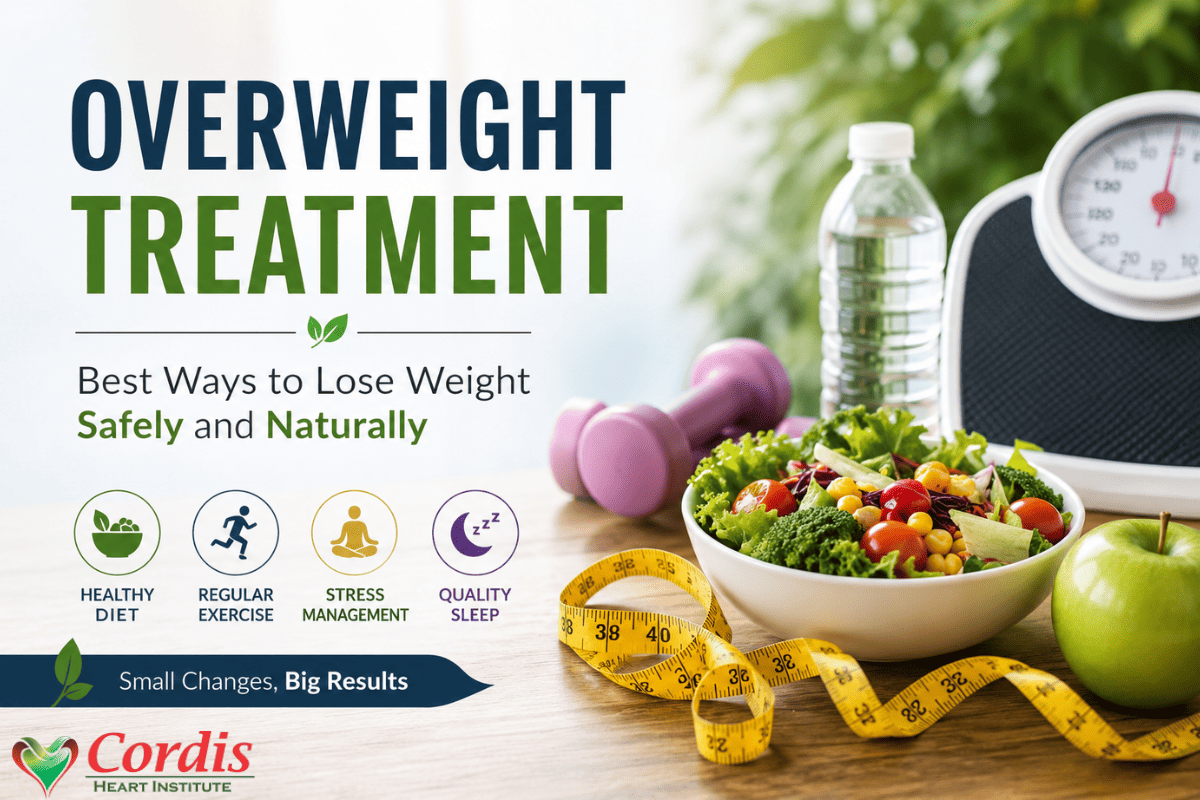
Being overweight is no longer just about appearance. It affects energy levels, confidence, heart health, sleep, mobility, and overall quality of life. Many adults struggle with weight gain despite trying different diets, workouts, and home remedies. Some lose weight quickly but gain it back within months. Others feel confused by conflicting advice online.
The truth is simple. Safe and long-term weight loss needs the right balance of nutrition, physical activity, medical guidance, and healthy habits.
If you are searching for effective overweight treatment, this guide explains the best ways to lose weight safely and naturally. You’ll also learn how expert care from Cordis Heart Institute can support your weight management journey while protecting your heart health.
What Is Considered Overweight?
A person is generally considered overweight when their Body Mass Index (BMI) is between 25 and 29.9. BMI is calculated using height and weight. While BMI is not perfect, it is commonly used by doctors to assess whether a person has unhealthy weight gain.
Difference Between Overweight and Obesity
- Overweight: BMI between 25 and 29.9
- Obesity: BMI above 30
Obesity carries higher risks for serious health conditions such as diabetes, stroke, and heart disease.
Common Causes of Weight Gain
Weight gain usually happens because of multiple factors working together:
- Poor eating habits
- Lack of physical activity
- High stress levels
- Sleep deprivation
- Hormonal imbalance
- Family history and genetics
- Certain medications
Many overweight adults also spend long hours sitting at desks or using mobile devices, which reduces daily calorie burning.
Why Overweight Treatment Is Important
Ignoring excess weight can slowly damage your health. Early overweight treatment helps reduce long-term medical complications and improves overall well-being.
Health Risks of Being Overweight
Excess body fat increases the risk of:
- High blood pressure
- Type 2 diabetes
- Heart disease
- High cholesterol
- Fatty liver disease
- Knee and joint pain
- Sleep apnea
According to World Health Organization (WHO), obesity and overweight are among the leading causes of preventable health problems worldwide.
Emotional Effects of Weight Gain
Weight struggles can also affect mental health. Many people experience:
- Low confidence
- Social anxiety
- Stress eating
- Depression
- Lack of motivation
That’s why the best treatment for overweight adults should focus on both physical and emotional health.
Best Treatment for Overweight Adults
There is no one-size-fits-all solution for weight loss. The best treatment depends on age, medical history, lifestyle, and fitness level.
Personalized Diet Plans
A personalized diet works far better than extreme dieting.
Healthy weight loss diets should include:
- Lean proteins
- Whole grains
- Fruits and vegetables
- Healthy fats
- Fiber-rich foods
Avoid diets that completely remove carbs or promise instant results. Rapid weight loss often leads to muscle loss and nutritional deficiencies.
Exercise and Physical Activity
Regular movement is one of the safest weight loss methods.
Good beginner exercises include:
- Walking
- Cycling
- Swimming
- Yoga
- Light strength training
Even 30 minutes of daily activity can improve metabolism and heart health.
Lifestyle Modification
Small daily habits make a huge difference over time.
Examples include:
- Eating meals on time
- Reducing late-night snacking
- Limiting sugary drinks
- Sleeping 7–8 hours
- Managing stress levels
Medical Weight Management Programs
Some adults may need supervised medical treatment for overweight issues, especially if they have:
- Diabetes
- High blood pressure
- Heart disease
- Severe obesity
- Hormonal conditions
At Cordis Heart Institute, medical professionals can assess overall health and create personalized treatment plans designed for safe weight reduction.
Natural Ways to Lose Weight Safely
Natural weight loss focuses on building healthy habits instead of depending on shortcuts.
Healthy Eating Habits
Try these simple changes:
- Eat slowly
- Avoid overeating
- Use smaller plates
- Increase protein intake
- Reduce processed foods
Protein helps control hunger and supports muscle health during weight loss.
Foods That Support Weight Loss
Some foods help keep you full longer:
- Eggs
- Oats
- Lentils
- Nuts
- Green vegetables
- Fruits like apples and berries
Importance of Hydration
Many people confuse thirst with hunger. Drinking enough water can reduce unnecessary snacking and improve digestion.
Aim for 2–3 liters daily unless your doctor advises otherwise.
Best Morning Routine for Weight Management
A healthy morning routine may include:
- Drinking warm water
- Light stretching or walking
- Protein-rich breakfast
- Avoiding sugary tea or packaged juices
Quick Weight Loss Habits
- Eat protein-rich meals
- Walk daily
- Avoid sugary drinks
- Sleep properly
- Manage stress naturally
Medical Treatments for Overweight Adults
Sometimes lifestyle changes alone are not enough. Medical support may help improve results safely.
When Should You See a Doctor?
Consult a specialist if:
- You are unable to lose weight despite effort
- Your BMI is above 30
- You have diabetes or hypertension
- You feel tired constantly
- Weight affects your daily activities
Searching for the best doctor for overweight treatment is important because proper medical guidance prevents unsafe methods and health complications.
Non-Surgical Weight Loss Treatment
Non-surgical treatments may include:
- Diet counseling
- Exercise planning
- Behavioral therapy
- Medical monitoring
- Prescription medication
Prescription Weight Loss Medicines
Some medicines help control appetite or fat absorption. These should only be used under medical supervision.
Never take over-the-counter weight loss pills without consulting a doctor.
How to Choose the Best Doctor for Overweight Treatment
Choosing the right doctor can improve long-term success.
Look for Experience and Specialization
A good weight management doctor should understand:
- Nutrition
- Metabolism
- Heart health
- Lifestyle medicine
Personalized Care Matters
Avoid clinics that offer the same diet chart to every patient. Each person’s body responds differently.
Ask These Questions During Consultation
- What is causing my weight gain?
- How much weight should I lose safely?
- Do I need medical tests?
- What diet and exercise plan suits me?
At Cordis Heart Institute, patients receive individualized support based on their health profile and medical needs.
Diet Plan for Overweight Adults
Healthy eating does not mean starving yourself.
Foods to Eat
Include:
- Dal and legumes
- Paneer and tofu
- Fresh fruits
- Whole wheat roti
- Brown rice
- Green vegetables
- Healthy seeds
Foods to Avoid
Limit:
- Sugary drinks
- Deep-fried foods
- Bakery products
- Processed snacks
- Excess alcohol
Indian Diet Tips for Weight Loss
Indian food can be healthy when prepared properly.
Tips include:
- Use less oil
- Add more vegetables
- Avoid frequent sweets
- Replace fried snacks with roasted options
Sample One-Day Meal Plan
Breakfast
Oats with nuts and fruit
Mid-Morning
Coconut water or fruit
Lunch
Roti, dal, sabzi, salad
Evening Snack
Roasted chana or green tea
Dinner
Soup, grilled paneer, vegetables
Exercise Tips for Safe Weight Loss
Exercise improves fat loss, stamina, and mental health.
Best Exercises for Beginners
- Brisk walking
- Yoga
- Light jogging
- Cycling
- Bodyweight workouts
Walking vs Gym Workouts
Walking is simple and sustainable for most adults. Gym workouts may help faster muscle building and calorie burning.
The best workout is the one you can continue consistently.
Yoga and Meditation
Yoga improves flexibility, reduces stress, and supports hormonal balance. Stress reduction is important because emotional eating is common among overweight adults.
Common Weight Loss Mistakes to Avoid
Crash Dieting
Extreme calorie restriction slows metabolism and causes muscle loss.
Skipping Meals
Skipping meals often leads to overeating later in the day.
Over-Exercising
Too much exercise without recovery can increase fatigue and injury risk.
Depending Only on Supplements
No supplement can replace healthy eating and exercise.
Success Tips for Long-Term Weight Management
Sustainable weight loss takes patience.
Set Realistic Goals
Aim for gradual progress instead of dramatic transformation.
Track Your Progress
Monitor:
- Weight
- Waist size
- Energy levels
- Sleep quality
Stay Consistent
Healthy habits repeated daily produce lasting results.
Build a Support System
Family support, medical guidance, and accountability improve success rates.
Why Choose Cordis Heart Institute for Overweight Treatment?
Finding the right medical support matters when dealing with long-term weight issues.
Experienced Medical Team
The hospital focuses on patient-centered healthcare and safe treatment planning.
Personalized Weight Management
Every patient receives customized recommendations based on:
- Lifestyle
- Medical history
- Heart health
- Weight goals
Heart-Safe Weight Loss Guidance
Rapid or unsafe weight loss methods can affect cardiovascular health. Medical supervision helps ensure safer progress.
Holistic Care Approach
The focus is not just weight reduction, but improving overall health and quality of life.
FAQs About Overweight Treatment
What is the best treatment for overweight adults?
The best treatment usually combines healthy eating, regular exercise, lifestyle changes, and medical supervision when needed.
Can overweight people lose weight naturally?
Yes. Many adults successfully lose weight naturally through consistent diet and activity changes.
How long does healthy weight loss take?
Safe weight loss is generally around 0.5 to 1 kg per week.
Which doctor is best for overweight treatment?
Doctors specializing in weight management, nutrition, endocrinology, or lifestyle medicine are often recommended.
Is exercise alone enough for weight loss?
Exercise helps, but diet and lifestyle habits are equally important.
Are weight loss medicines safe?
They can be safe under proper medical supervision. Self-medication should be avoided.
Conclusion
Losing weight safely is not about starving yourself or following unrealistic internet trends. Real progress comes from consistent healthy habits, proper nutrition, physical activity, and expert medical guidance.
The right overweight treatment can improve energy, confidence, heart health, and long-term wellness. Whether you are beginning your journey or struggling with repeated weight gain, taking the first step today can make a big difference in your future health.
If you are looking for the best treatment for overweight adults, connect with the specialists at Cordis Heart Institute for personalized support and safe weight management guidance.