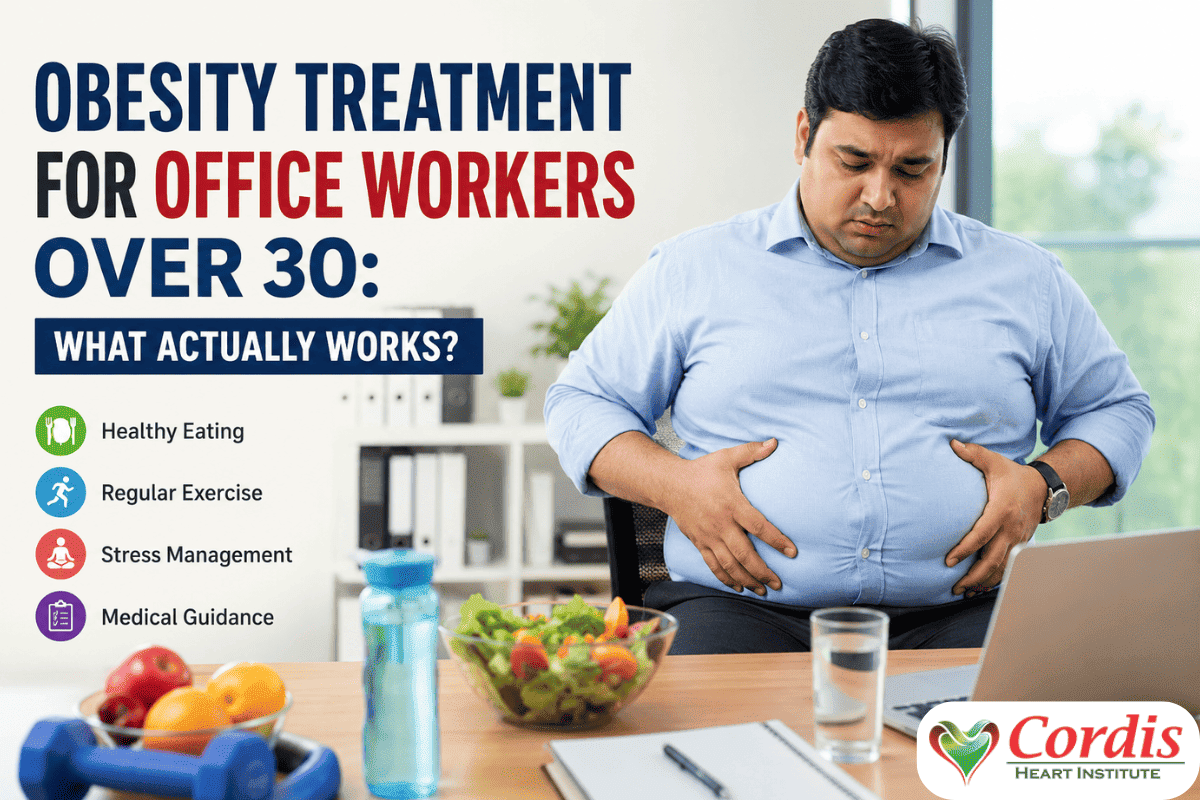
If you spend most of your day sitting in front of a laptop, attending meetings, replying to emails, and surviving on chai, coffee, and quick snacks, you’re not alone. Many office workers over 30 notice the same thing: weight starts increasing even when their eating habits haven’t changed much.
The reality is simple. After 30, the body changes. Metabolism slows down, stress levels rise, sleep quality drops, and long sitting hours become part of daily life. Over time, this combination leads to obesity, fatigue, poor stamina, high cholesterol, diabetes, and heart problems.
The good news? You do not need extreme diets or impossible workout plans to fix it.
The best obesity treatment for office workers focuses on practical lifestyle changes that actually fit into a busy routine. At Cordis Heart Institute, doctors often see working professionals struggling with weight gain caused by sedentary lifestyles. The solution is not about starving yourself. It is about consistency, smarter habits, and proper medical guidance.
In this guide, we’ll break down what truly works for weight loss after 30 and how office workers can improve both their weight and heart health without turning their life upside down.
Why Office Workers Over 30 Gain Weight Faster
Slower Metabolism After 30
As age increases, the body burns fewer calories at rest. Muscle mass gradually decreases while fat accumulation becomes easier. This is one of the biggest reasons why many people suddenly notice stubborn belly fat after crossing 30.
A person who could once eat anything without gaining weight may now struggle despite eating the same meals.
Sedentary Lifestyle and Long Sitting Hours
Most office workers spend 8–10 hours sitting daily. Lack of movement reduces calorie burning and affects blood circulation. Sitting for prolonged periods is also linked with obesity, diabetes, and cardiovascular disease.
Even people who exercise for one hour daily can still face “sedentary lifestyle obesity” if the rest of the day involves very little movement.
Quick Tip:
Stand up every 45–60 minutes and walk for 2–3 minutes.
Stress Eating and Emotional Eating
Deadlines, work pressure, and mental stress often push people toward unhealthy foods. Sugary snacks, fast food, and late-night cravings become coping mechanisms.
Stress also increases cortisol levels, which can encourage fat storage around the abdomen.
Poor Sleep and Hormonal Imbalance
Sleep deprivation affects hunger hormones like ghrelin and leptin. Poor sleep increases cravings for junk food and reduces energy levels, making workouts harder.
Adults over 30 should aim for at least 7 hours of quality sleep daily.
Health Risks of Obesity in Working Professionals
Obesity is not only about appearance. It directly affects overall health and quality of life.
Increased Risk of Heart Disease
Excess body fat increases pressure on the heart and blood vessels. Obesity is strongly connected to heart attacks, blocked arteries, and hypertension.
For office workers with stressful jobs, the risk becomes even higher.
You can learn more about heart-related preventive care at Cordis Heart Institute.
Type 2 Diabetes and Insulin Resistance
Weight gain around the belly area is closely linked with insulin resistance. Over time, this can lead to Type 2 diabetes.
Symptoms often include:
- fatigue
- constant hunger
- increased thirst
- low energy levels
High Blood Pressure and Cholesterol
Many office workers discover high BP and cholesterol during routine health checkups. Obesity makes the heart work harder, increasing cardiovascular risk.
Joint Pain and Back Problems
Sitting for long hours combined with excess body weight places stress on the spine, knees, and joints. This often causes:
- lower back pain
- stiffness
- poor posture
- reduced mobility
What Actually Works for Obesity Treatment?
There is no magic shortcut. Effective obesity treatment combines nutrition, movement, sleep, and medical supervision.
Sustainable Diet Changes Instead of Crash Diets
Crash diets may help people lose weight temporarily, but most regain it quickly. Sustainable eating habits work much better in the long run.
Focus on High-Protein Meals
Protein keeps you full for longer and supports muscle maintenance.
Good options include:
- eggs
- paneer
- chicken
- fish
- Greek yogurt
- dal and sprouts
Increase Fiber Intake
Fiber improves digestion and reduces overeating.
Add:
- fruits
- vegetables
- oats
- salads
- whole grains
Control Portion Sizes
You do not need to stop eating your favorite foods completely. Portion control matters more than strict restrictions.
Simple Rule:
Fill half your plate with vegetables before adding carbs.
Avoid Liquid Calories
Sugary coffee, soft drinks, packaged juices, and energy drinks silently add hundreds of calories daily.
Switch to:
- black coffee
- green tea
- lemon water
- plain water
Best Foods for Office Workers Trying to Lose Weight
Recommended Foods
- boiled eggs
- roasted makhana
- nuts in moderation
- grilled chicken
- salads
- khichdi
- oats
- fruit bowls
- homemade lunch
Foods to Limit
- fried snacks
- sugary biscuits
- pastries
- instant noodles
- processed foods
- soft drinks
Exercise Plans That Fit Busy Work Schedules
One major mistake office workers make is assuming they need 2-hour gym sessions to lose weight.
That’s not true.
Consistency matters more than intensity.
15–20 Minute Home Workouts
Short workouts done regularly are effective for fat loss.
Include:
- squats
- pushups
- jumping jacks
- lunges
- planks
Even 20 minutes daily can improve metabolism.
Walking During Office Breaks
Walking is underrated for weight loss.
Easy Targets:
- Walk during calls
- Take stairs instead of lifts
- Walk after lunch
- Park farther away
Aim for 7,000–10,000 steps daily.
Strength Training for Fat Loss
Strength training builds muscle, which helps burn more calories even at rest.
Beginners can start with:
- resistance bands
- bodyweight exercises
- light dumbbells
Stretching Exercises for Desk Workers
Stretching reduces stiffness and improves posture.
Recommended stretches:
- neck rolls
- shoulder stretches
- hamstring stretches
- spinal twists
Medical Obesity Treatment Options
Sometimes lifestyle changes alone are not enough. Medical guidance becomes important when obesity affects health conditions.
At Cordis Heart Institute, doctors evaluate:
- BMI
- cholesterol
- blood pressure
- heart health
- diabetes risk
before suggesting treatment plans.
Doctor-Supervised Weight Loss Programs
These programs include:
- nutrition planning
- exercise recommendations
- regular monitoring
- lifestyle counseling
This approach is safer than following random internet advice.
Prescription Weight Loss Medications
Certain medications may help eligible patients manage appetite and weight. However, these should only be used under medical supervision.
Self-medication can be dangerous.
When Bariatric Surgery Becomes Necessary
For severe obesity cases, bariatric surgery may be recommended, especially if obesity is linked with diabetes or heart disease.
Doctors usually consider surgery when:
- BMI is very high
- other methods fail
- obesity affects daily functioning
Best Daily Habits for Office Workers to Prevent Obesity
Small habits repeated daily create long-term results.
Stand and Move Every Hour
Set reminders to get up regularly. Even small movement breaks help improve circulation and calorie burning.
Keep Healthy Snacks Nearby
Instead of chips and cookies, keep:
- fruits
- nuts
- protein snacks
- yogurt
within easy reach.
Drink More Water
Many people confuse thirst with hunger.
A simple hydration goal:
- 2.5 to 3 liters daily
Manage Stress Properly
Stress management is part of obesity treatment.
Helpful activities:
- meditation
- walking
- journaling
- spending time outdoors
- reducing screen time before bed
Sample Weight Loss Routine for Office Workers Over 30
Morning Routine
- Wake up early
- Drink water
- 20-minute workout
- Protein-rich breakfast
Office-Time Eating Strategy
- Avoid skipping meals
- Carry homemade lunch
- Avoid excessive tea and sugary coffee
Evening Routine
- Walk after work
- Light dinner
- Avoid heavy late-night eating
Sleep Routine
- Sleep before midnight
- Avoid screens before bed
- Maintain consistent sleep timing
Common Weight Loss Mistakes Office Workers Make
Skipping Meals
Skipping meals slows metabolism and increases overeating later.
Sitting for Too Long Without Movement
Even active gym-goers can gain weight if they remain inactive throughout the workday.
Overdependence on Supplements
Fat burners and random supplements rarely solve the root problem.
Lifestyle habits matter more.
Following Social Media Diet Trends
Extreme internet diets are often unrealistic and unsafe.
What works for one person may not work for another.
When Should You See a Doctor for Obesity Treatment?
You should consult a healthcare professional if:
- your BMI is high
- you gain weight rapidly
- you feel constantly tired
- obesity is linked with diabetes or BP
- diets are not working
The experts at Cordis Heart Institute can help identify underlying health issues and create a personalized treatment plan.
FAQs About Obesity Treatment for Office Workers Over 30
Can office workers lose weight without going to the gym?
Yes. Walking, home workouts, better eating habits, and daily movement can produce excellent results.
How many steps should I walk daily?
Most experts recommend 7,000–10,000 daily steps for better health and weight management.
Is obesity after 30 reversible?
Absolutely. With consistency and proper guidance, healthy weight loss is achievable at any age.
Which diet works best for sedentary professionals?
A balanced diet with high protein, fiber, healthy fats, and controlled portions usually works best.
Can stress from work cause obesity?
Yes. Stress increases cortisol levels, emotional eating, and poor sleep patterns, all of which contribute to weight gain.
Conclusion
Obesity treatment for office workers over 30 does not require extreme diets or impossible routines. The most effective approach is a combination of healthy eating, regular movement, proper sleep, stress management, and medical guidance when needed.
Small changes done consistently create lasting results.
If you have been struggling with weight gain, fatigue, high BP, or lifestyle-related health issues, now is the right time to act. Your future health depends on the habits you build today.
For expert guidance and personalized obesity treatment plans, connect with the specialists at Cordis Heart Institute and take the first step toward a healthier life.