Chest pain is one of those symptoms that should never be ignored. While not every episode of chest discomfort signals a heart attack, recurring chest pain can indicate an underlying heart condition that requires medical attention.
Many people living with angina or coronary artery disease experience persistent chest pain that affects their daily lives. Walking short distances, climbing stairs, or even performing routine household activities can become difficult. In some cases, patients continue to experience symptoms despite taking medications or undergoing procedures.
The good news is that treatment options have expanded beyond surgery and angioplasty. One option that has gained attention in recent years is EECP Therapy (Enhanced External Counterpulsation), a non-invasive treatment designed to improve blood flow to the heart.
At Cordis Heart Institute, Dr Abhijit Aklujkar and his team help patients explore advanced treatment options, including EECP therapy for suitable candidates.
In this article, we’ll discuss five common types of chest pain that may respond to EECP therapy and how this treatment may help improve quality of life.
What Is EECP Therapy?
EECP stands for Enhanced External Counterpulsation. It is a non-surgical treatment used primarily for patients experiencing chronic angina or reduced blood flow to the heart.
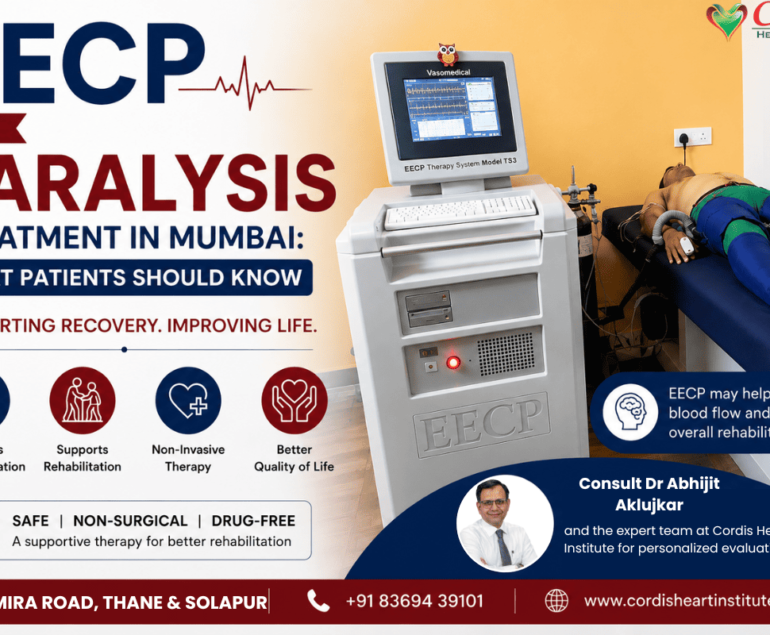
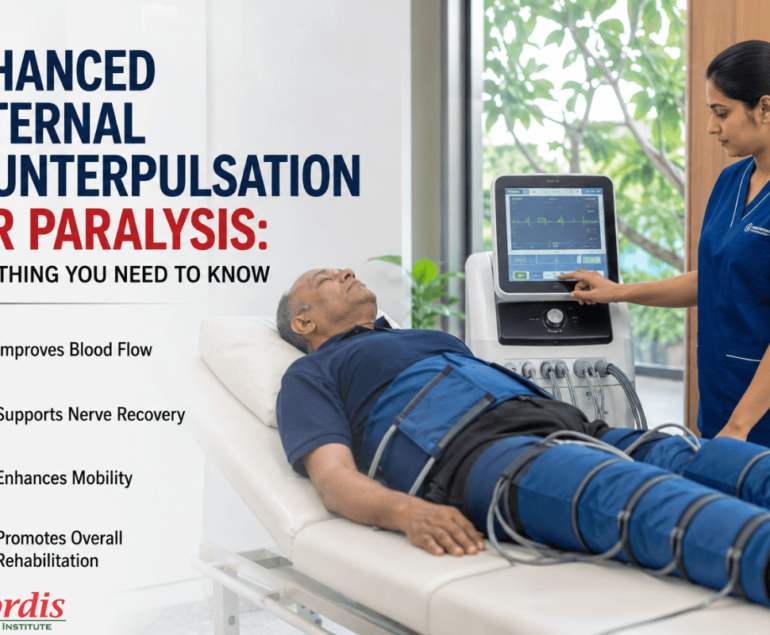
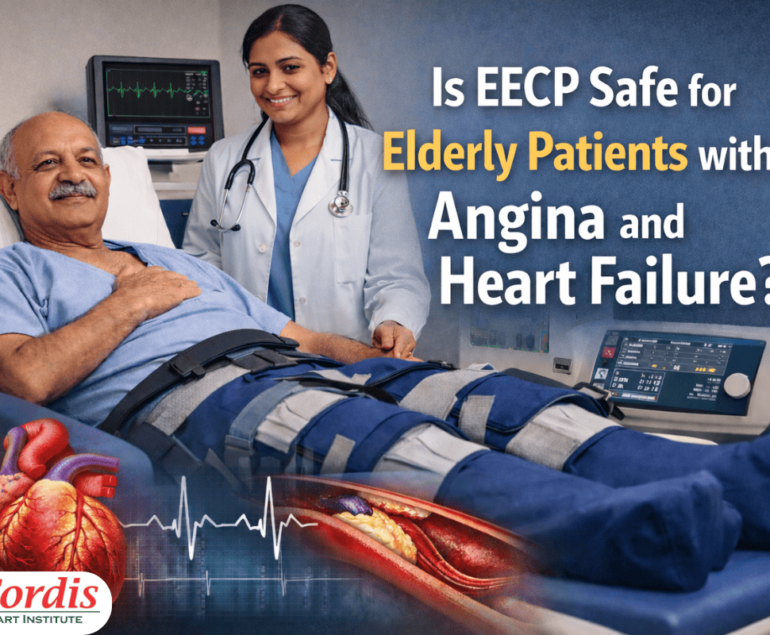
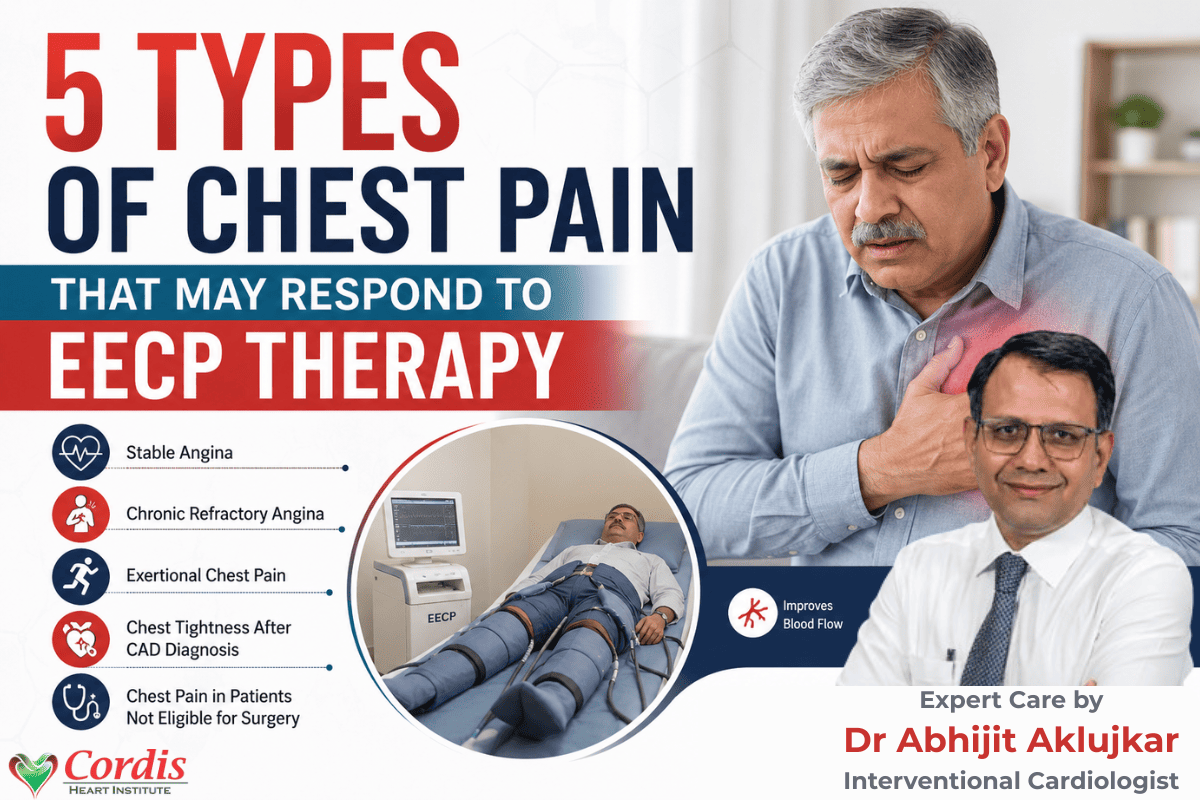
During an EECP session, inflatable cuffs are wrapped around the legs and buttocks. These cuffs inflate and deflate in sync with the heartbeat. The process helps increase blood flow back to the heart while reducing the workload on the heart muscle.
How EECP Therapy Works
The treatment encourages the development of small natural blood vessels known as collateral circulation. These vessels can help improve blood supply to areas of the heart that may not be receiving enough oxygen-rich blood.
Benefits of EECP Therapy
- Non-invasive treatment
- No surgery required
- No hospital admission needed
- Improved blood circulation
- Reduced frequency of angina episodes
- Better exercise tolerance
- Enhanced quality of life
Patients who are looking for a heart blockage treatment without surgery often discuss EECP with their cardiologist as part of a broader treatment plan.
Why Does Chest Pain Occur?
Chest pain can develop for many reasons. Some causes are related to the heart, while others may involve the lungs, digestive system, or muscles.
When the heart doesn’t receive enough blood and oxygen, chest pain known as angina can occur.
Common heart-related causes include:
- Coronary artery disease
- Blocked or narrowed arteries
- Reduced blood supply to the heart muscle
- Previous heart attacks
- Chronic angina
Identifying the source of chest pain is essential because treatment depends on the underlying cause.
1. Stable Angina Chest Pain
Stable angina is one of the most common forms of chest pain seen in patients with coronary artery disease.
What Does Stable Angina Feel Like?
Patients often describe it as:
- Pressure in the chest
- Tightness
- Squeezing sensation
- Burning discomfort
- Heaviness across the chest
The pain usually occurs during physical activity or emotional stress and improves with rest.
How EECP May Help
EECP therapy may improve blood circulation to areas of the heart affected by reduced blood flow. As circulation improves, many patients report fewer angina episodes and improved ability to perform daily activities.
For individuals dealing with chronic stable angina, EECP can become an important part of long-term symptom management.
2. Chronic Refractory Angina
Some patients continue to experience chest pain even after taking medications, undergoing angioplasty, or having bypass surgery.
This condition is known as refractory angina.
Signs of Refractory Angina
- Frequent chest discomfort
- Pain despite medications
- Reduced physical activity due to symptoms
- Ongoing episodes affecting quality of life
Why It Happens
In some cases, coronary arteries remain severely diseased, making complete restoration of blood flow difficult.
How EECP Can Help
Research has shown that EECP may help reduce symptoms in patients with refractory angina by improving circulation and increasing oxygen delivery to heart tissues.
Many patients report:
- Reduced chest pain frequency
- Better stamina
- Improved exercise capacity
- Enhanced daily functioning
3. Exertional Chest Pain Due to Reduced Blood Flow
Exertional chest pain occurs when symptoms appear during physical activity.
Walking uphill, climbing stairs, lifting objects, or even brisk walking can trigger discomfort.
Why Exercise Causes Chest Pain
Physical activity increases the heart’s oxygen demand. If narrowed arteries cannot supply enough blood, chest pain may develop.
Common symptoms include:
- Chest pressure
- Breathlessness
- Fatigue
- Discomfort during exertion
Potential Benefits of EECP
By improving blood flow and encouraging collateral circulation, EECP therapy may help patients tolerate physical activity more comfortably.
Many individuals notice they can walk longer distances and perform routine tasks with less discomfort after completing treatment.
4. Chest Tightness After a Coronary Artery Disease Diagnosis
Being diagnosed with coronary artery disease (CAD) can be overwhelming.
Even after starting treatment, some patients continue experiencing occasional chest tightness or discomfort.
Common CAD Symptoms
- Chest pain
- Shortness of breath
- Fatigue
- Reduced exercise tolerance
- Pressure or heaviness in the chest
Why Symptoms May Continue
Coronary artery disease is often a progressive condition. While medications help manage symptoms and reduce risk, some patients continue experiencing reduced blood flow.
EECP as a Complementary Treatment
EECP does not replace medications prescribed by a cardiologist. Instead, it may be used alongside standard treatment to help improve circulation and symptom control.
Patients often consider EECP when looking for additional ways to manage chronic CAD-related symptoms.
5. Chest Pain in Patients Not Eligible for Surgery
Not every patient is a candidate for bypass surgery or angioplasty.
Factors such as age, medical history, multiple blockages, or other health conditions may limit treatment options.
When Surgery May Not Be Suitable
Some patients may have:
- Diffuse coronary artery disease
- High surgical risk
- Multiple previous procedures
- Other serious medical conditions
A Non-Surgical Alternative
EECP offers a non-invasive option that does not involve incisions, anesthesia, or recovery from surgery.
For carefully selected patients, it can provide symptom relief and help improve daily functioning.
This makes EECP particularly appealing for individuals seeking alternatives to bypass surgery.
Benefits of EECP Therapy for Chest Pain Patients
EECP therapy has become increasingly popular among patients looking for non-invasive heart treatment options.
Improved Blood Flow
The treatment supports circulation and may increase oxygen delivery to heart tissue.
Reduced Angina Episodes
Many patients experience fewer episodes of chest pain after completing therapy.
Better Exercise Capacity
Activities that once triggered symptoms may become easier.
Enhanced Quality of Life
Reduced discomfort often leads to greater independence and confidence in daily activities.
Drug-Free Support
EECP complements medical therapy without introducing additional medications.
When Should You Consult a Cardiologist for Chest Pain?
Never ignore recurring chest pain.
Seek immediate medical attention if chest discomfort is accompanied by:
- Shortness of breath
- Sweating
- Nausea
- Dizziness
- Pain spreading to the arm, shoulder, neck, or jaw
Even mild chest discomfort deserves evaluation when it occurs repeatedly.
Early diagnosis can help identify underlying heart conditions before they become more serious.
Why Choose Cordis Heart Institute for EECP Therapy?
At Cordis Heart Institute, patients receive personalized cardiac care focused on both symptom relief and long-term heart health.
Experienced Cardiology Team
The institute provides advanced evaluation and treatment for coronary artery disease and angina.
Patient-Centered Approach
Every patient receives a treatment plan tailored to their specific condition and goals.
Advanced Diagnostic Support
Accurate diagnosis helps determine whether EECP therapy is appropriate.
Expert Care from Dr Abhijit Aklujkar
Dr Abhijit Aklujkar has extensive experience managing patients with coronary artery disease, angina, and other cardiovascular conditions. His approach focuses on helping patients understand all available treatment options and making informed decisions about their care.
Frequently Asked Questions
Can EECP therapy cure chest pain permanently?
EECP is not considered a cure. However, many patients experience long-term symptom relief and improved quality of life.
Is EECP therapy safe?
For properly selected patients, EECP is generally considered safe and well tolerated.
How many sessions are required?
Most treatment programs involve approximately 35 sessions spread over several weeks.
Can EECP help patients with blocked arteries?
EECP may improve blood flow and reduce symptoms in some patients with coronary artery disease.
Is EECP better than angioplasty?
These treatments serve different purposes. The best option depends on the patient’s condition and should be determined by a cardiologist.
Who should avoid EECP?
Certain medical conditions may make EECP unsuitable. A detailed cardiac evaluation is necessary before treatment.
Conclusion
Chest pain can have many causes, but when it is related to reduced blood flow to the heart, finding the right treatment is essential. Stable angina, refractory angina, exertional chest pain, CAD-related chest tightness, and symptoms in patients who cannot undergo surgery are all situations where EECP therapy may offer meaningful benefits.
As a non-invasive treatment, EECP provides an additional option for patients seeking symptom relief without surgery. By helping improve circulation and supporting heart function, it may allow many individuals to return to a more active and comfortable lifestyle.
If you’re experiencing recurring chest pain or angina symptoms, consulting an experienced cardiologist is the first step toward finding the most appropriate treatment.
Schedule a Consultation Today
At Cordis Heart Institute, Dr Abhijit Aklujkar and his team are committed to helping patients find effective solutions for managing chest pain and improving heart health.
Book an appointment today to learn whether EECP therapy may be right for you.
Your heart deserves expert care. Don’t ignore the warning signs.