Paralysis changes every part of daily life. Simple activities like walking, holding objects, or getting out of bed can become difficult. Along with reduced movement, many people with paralysis also experience poor blood circulation. Limited circulation can affect muscle health, slow rehabilitation, increase discomfort, and reduce overall quality of life.
This is where EECP Therapy for Paralysis has gained attention. While EECP is not a cure for paralysis and is not a standard neurological treatment, it may help improve blood circulation in selected patients. Better circulation means more oxygen and nutrients reach the body’s tissues, which may support rehabilitation alongside physiotherapy and medical care.
At Cordis Heart Institute, Dr Abhijit Aklujkar evaluates every patient individually to determine whether EECP therapy may be a suitable supportive option based on their medical condition and recovery goals.
What Is EECP Therapy?
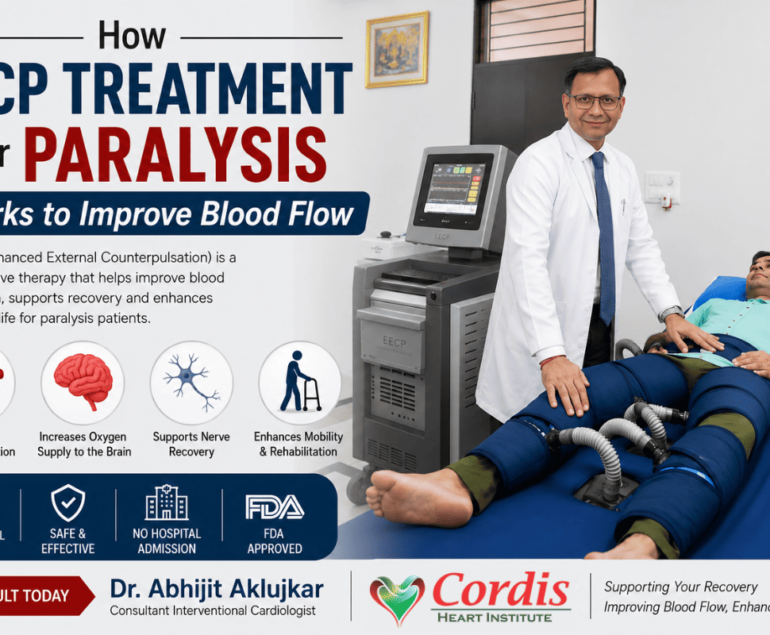
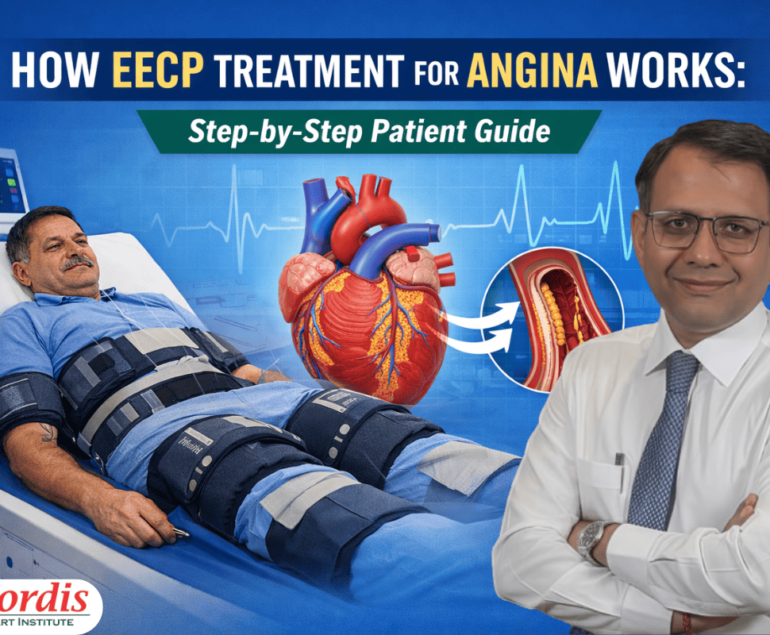
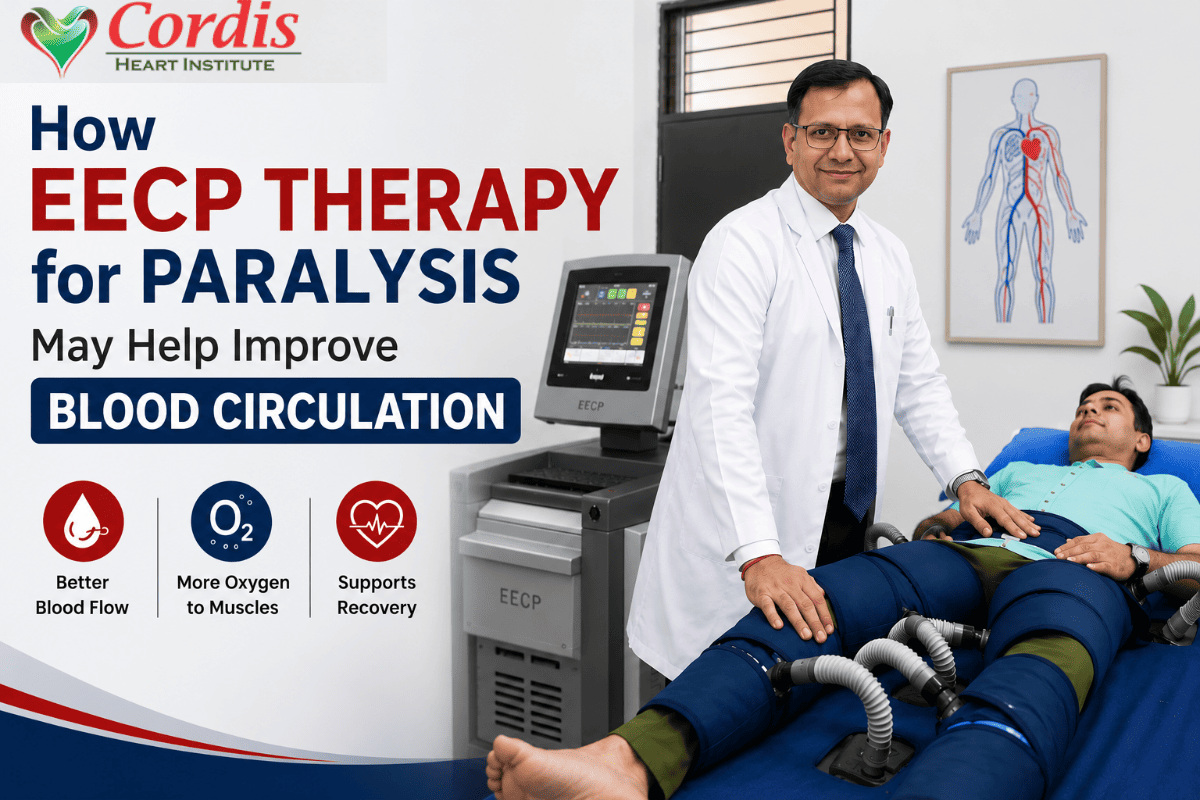
Enhanced External Counterpulsation (EECP) is a completely non-invasive treatment that improves blood circulation using inflatable cuffs wrapped around the legs.
These cuffs inflate and deflate in sync with the heartbeat. The timing helps push oxygen-rich blood back toward the heart and throughout the body.
Unlike surgery, EECP does not require:
- Hospital admission
- General anesthesia
- Needles
- Incisions
- Recovery from an operation
EECP is FDA-approved for treating certain heart conditions such as chronic stable angina and selected patients with heart failure. Researchers are also studying whether its circulation-enhancing effects may benefit other medical conditions where blood flow plays a role.
How Does EECP Improve Blood Circulation?
During treatment:
- Air cuffs gently compress the calves, thighs, and buttocks.
- Compression occurs during the heart’s resting phase (diastole).
- Blood is pushed toward the heart.
- Compression releases just before the heart pumps again.
This process may help:
- Increase blood flow throughout the body
- Improve oxygen delivery
- Support healthier blood vessel function
- Reduce the workload on the heart
- Encourage the formation of collateral blood vessels over time
Understanding Paralysis and Blood Circulation
Paralysis refers to the loss of muscle movement in part or all of the body. It may occur because of damage to the brain, spinal cord, or nerves.
Common causes include:
- Stroke
- Spinal cord injury
- Brain injury
- Multiple sclerosis
- Neurological disorders
- Traumatic accidents
The severity varies from person to person. Some individuals experience weakness, while others lose complete movement.
Why Does Blood Circulation Become a Problem?
Movement naturally helps blood flow.
When muscles contract during walking or exercise, they help pump blood back toward the heart. People with paralysis often lose this natural muscle pump, leading to reduced circulation.
Poor circulation may contribute to:
- Cold hands and feet
- Swelling
- Muscle stiffness
- Delayed tissue healing
- Increased discomfort
- Reduced oxygen supply to muscles
Maintaining healthy circulation is an important part of long-term rehabilitation.
How EECP Therapy for Paralysis May Help Improve Blood Circulation
It is important to understand that EECP therapy is not a treatment for paralysis itself. Instead, it may support recovery by improving circulation.
1. May Increase Blood Flow Throughout the Body
The primary purpose of EECP is to improve circulation.
Better circulation means oxygen-rich blood reaches muscles, tissues, and organs more efficiently.
Improved blood flow may support healthier tissue function during rehabilitation.
2. May Improve Oxygen Delivery
Every cell in the body depends on oxygen.
When circulation improves, muscles and tissues receive better oxygen delivery, which may support overall recovery and physical therapy sessions.
3. May Support Collateral Blood Vessel Development
One of the interesting effects of EECP is its potential to encourage collateral circulation.
Collateral blood vessels are small natural pathways that may develop over time to improve blood supply around narrowed or damaged vessels.
Most evidence for this comes from cardiovascular research. Scientists continue to study whether similar circulation benefits may support rehabilitation in selected neurological conditions.
4. May Improve Vascular Health
Healthy blood vessels respond better to changing oxygen demands.
Some studies suggest EECP may improve endothelial function, which is the health of the inner lining of blood vessels.
Better vascular function supports overall circulation.
5. May Complement Rehabilitation
Physical therapy remains one of the most important treatments after paralysis.
EECP may be used alongside:
- Physiotherapy
- Occupational therapy
- Lifestyle changes
- Nutritional support
- Medical treatment
It should never replace these treatments.
Potential Benefits of EECP Therapy for Paralysis Patients
Although more research is needed, some patients may experience supportive benefits such as:
Better Peripheral Blood Circulation
Improved circulation may reduce feelings of coldness in the hands and feet and support healthier tissues.
Reduced Fatigue During Rehabilitation
Better oxygen delivery may help some patients tolerate rehabilitation exercises more comfortably.
Improved Comfort During Physiotherapy
Patients participating in structured rehabilitation may find movement sessions more manageable when circulation improves.
Better Muscle Nutrition
Muscles need oxygen and nutrients to stay healthy.
Improved blood flow may support muscle maintenance during recovery.
Enhanced Overall Well-being
Some individuals report:
- Better energy
- Improved comfort
- Better sleep
- Greater confidence during rehabilitation
Individual results vary depending on the underlying condition.
What Does Current Research Say?
Current evidence is encouraging but still limited.
Most published studies focus on:
- Coronary artery disease
- Angina
- Heart failure
- Endothelial function
- Blood circulation
A few smaller studies have explored whether improved circulation from EECP could support neurological recovery after stroke.
Researchers have observed improvements in cerebral blood flow in some patients. However, larger clinical trials are still needed before EECP can be recommended as a standard treatment for paralysis.
Patients should understand that existing evidence does not show EECP cures paralysis.
Instead, it may serve as a supportive therapy under appropriate medical supervision.
Who May Be a Suitable Candidate?
A doctor may consider EECP for patients who have:
- Reduced blood circulation
- A history of stroke with stable medical status
- Ongoing rehabilitation
- Poor peripheral circulation
- Cardiovascular conditions where EECP is already indicated
Every patient requires a complete medical assessment before treatment begins.
At Cordis Heart Institute, Dr Abhijit Aklujkar carefully reviews medical history, current medications, cardiovascular health, and rehabilitation goals before recommending EECP therapy.
Who Should Avoid EECP Therapy?
EECP is not suitable for everyone.
Treatment may not be recommended in people with:
- Severe aortic valve disease
- Active deep vein thrombosis
- Severe peripheral artery disease
- Uncontrolled high blood pressure
- Certain irregular heart rhythms
- Active bleeding disorders
Always consult an experienced physician before starting treatment.
What Happens During an EECP Session?
Most patients find the procedure comfortable.
A typical session includes:
Step 1
The patient lies comfortably on a treatment bed.
Step 2
Large inflatable cuffs are wrapped around the legs.
Step 3
An ECG monitors the heartbeat.
Step 4
The cuffs inflate and deflate automatically according to the heart rhythm.
Step 5
After treatment, patients can usually return to normal daily activities.
A session generally lasts about one hour.
Many treatment plans involve 35 sessions, although the exact number depends on individual needs.
EECP Therapy vs Conventional Rehabilitation
EECP Therapy | Conventional Rehabilitation |
Improves circulation | Restores movement and function |
Non-invasive | Exercise and training based |
Supports oxygen delivery | Improves muscle strength |
Complements rehabilitation | Primary treatment approach |
May improve vascular health | Improves coordination and mobility |
The best results usually come from combining medical care, rehabilitation, healthy nutrition, and appropriate supportive therapies.
Why Choose Cordis Heart Institute?
Choosing the right healthcare provider matters.
At Cordis Heart Institute, patients receive individualized treatment plans based on their overall health rather than a one-size-fits-all approach.
Experienced Medical Team
Our experienced team evaluates each patient thoroughly before recommending treatment.
Advanced EECP Technology
We use modern EECP systems designed for patient comfort and precise treatment delivery.
Personalized Care
Every rehabilitation journey is different.
Treatment recommendations are based on:
- Medical history
- Current health
- Rehabilitation goals
- Individual response
Guidance from Dr Abhijit Aklujkar
Under the supervision of Dr Abhijit Aklujkar, patients receive evidence-based recommendations to determine whether EECP therapy may be an appropriate supportive option.
Frequently Asked Questions
Can EECP therapy cure paralysis?
No. EECP does not cure paralysis. It may help improve blood circulation and support rehabilitation when recommended by a doctor.
Can EECP therapy improve blood circulation?
Yes. Improving circulation is the primary purpose of EECP therapy.
Is EECP safe for stroke patients?
Some medically stable stroke patients may be suitable candidates. A complete medical evaluation is necessary before treatment.
Is EECP painful?
No. Most patients describe the treatment as comfortable, although they may feel firm pressure from the cuffs.
How many EECP sessions are required?
Many treatment plans include around 35 one-hour sessions. The exact number depends on the patient’s condition.
Can EECP be combined with physiotherapy?
Yes. EECP is generally considered a complementary therapy and may be used alongside physiotherapy and rehabilitation under medical guidance.
Are there any side effects?
Most patients tolerate EECP well. Temporary skin irritation or mild muscle soreness can occur in some cases.
Who should consult a doctor before starting EECP?
Anyone considering EECP should undergo a medical assessment, especially those with heart disease, vascular disease, uncontrolled blood pressure, or neurological conditions.
Conclusion
Recovering from paralysis often requires a combination of medical treatment, rehabilitation, patience, and ongoing support. While EECP Therapy for Paralysis is not a cure, it may help improve blood circulation, support oxygen delivery, and complement rehabilitation in selected patients.
Current research continues to explore its role in neurological recovery, but the strongest evidence today relates to its ability to improve circulation. That is why EECP should always be viewed as part of a broader rehabilitation plan rather than a replacement for physiotherapy or neurological care.
If you or a loved one is recovering from paralysis and would like to learn whether EECP may be appropriate, consult an experienced medical professional for an individualized evaluation.
Schedule a Consultation at Cordis Heart Institute
At Cordis Heart Institute, Dr Abhijit Aklujkar carefully evaluates each patient’s condition to determine whether EECP therapy may be a suitable supportive option. Our goal is to provide personalized care based on current medical evidence and your individual recovery needs.
Book a consultation today to discuss your treatment options and rehabilitation plan.