
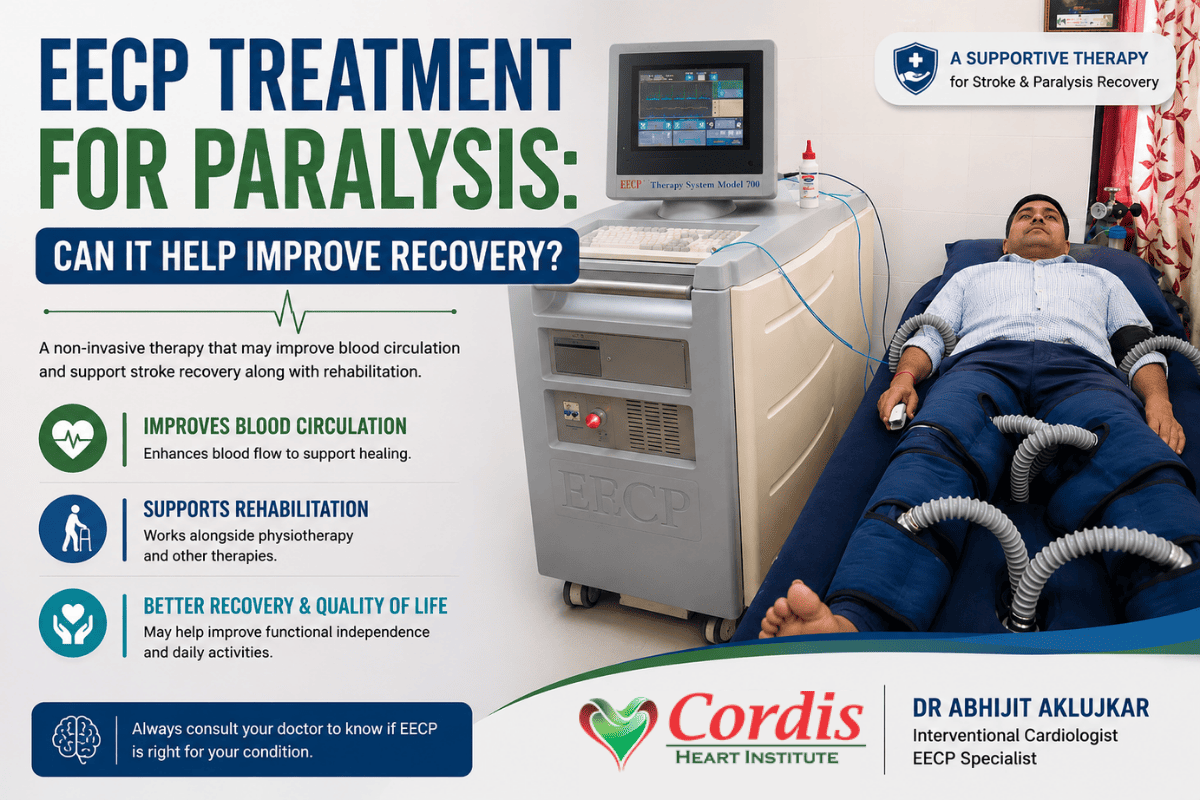
Can EECP treatment help with paralysis recovery? EECP, or Enhanced External Counterpulsation, is a non-invasive therapy designed to support blood circulation and is primarily used in cardiovascular care. Its possible role in stroke recovery and paralysis rehabilitation is still being studied, so it should not be considered a cure or replacement for physiotherapy and other rehabilitation therapies. In this article, learn how EECP works, who may be considered for treatment, its possible benefits and limitations, and what patients should know before considering EECP treatment at Cordis Heart Institute under the care of Dr Abhijit Aklujkar.
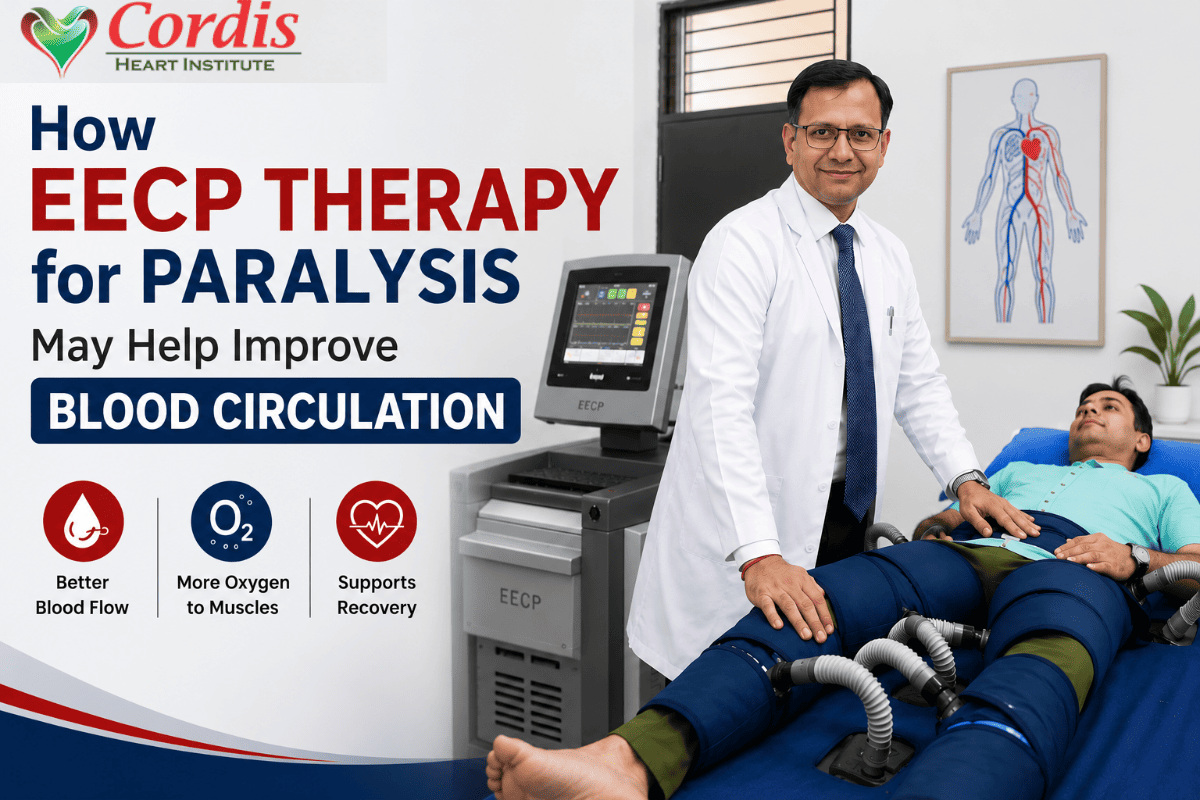
How EECP Therapy for Paralysis May Help Improve Blood Circulation
Paralysis can affect blood circulation, making recovery more challenging. Learn how EECP therapy for paralysis may help improve blood flow, support oxygen delivery to tissues, and complement rehabilitation. Discover the potential benefits, current research, and who may be a suitable candidate for this non-invasive supportive therapy.
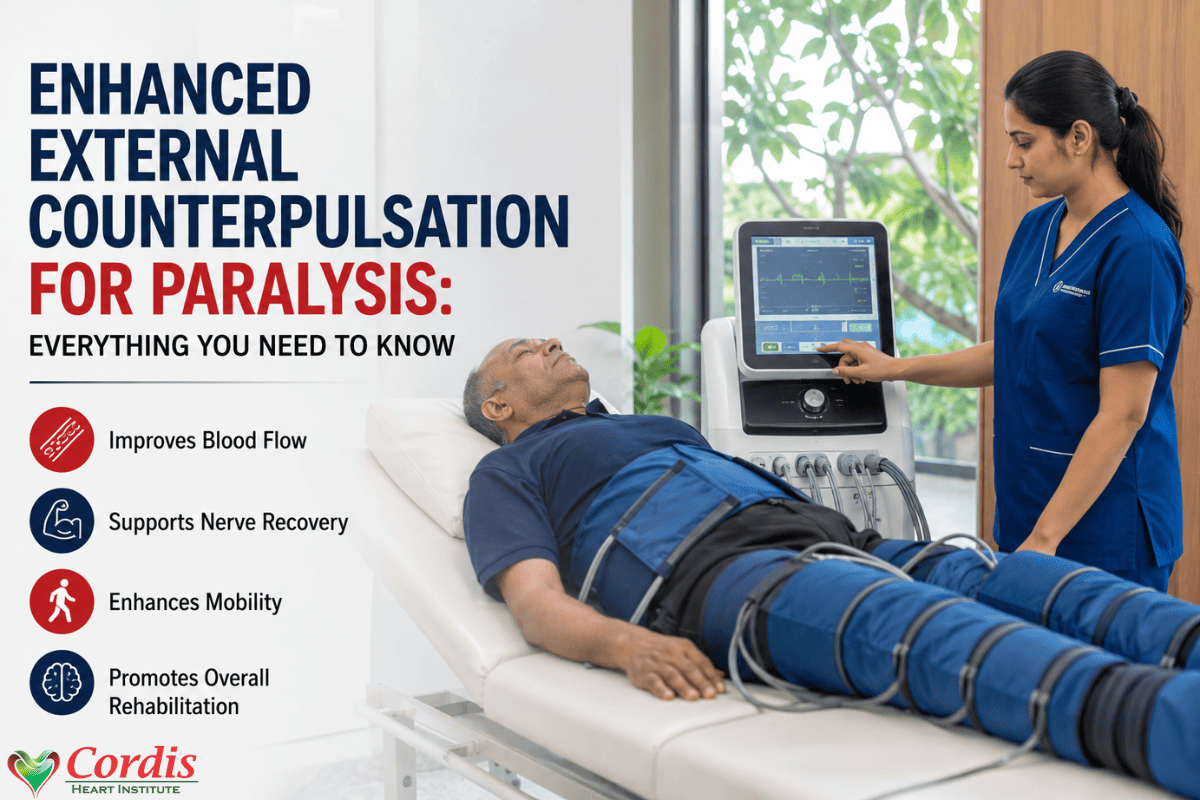
Enhanced External Counterpulsation for Paralysis: Everything You Need to Know
Enhanced External Counterpulsation (EECP) is a non-invasive therapy that may support recovery in selected patients with paralysis, especially after a stroke. This guide explains how EECP works, its potential benefits, current research, eligibility, possible risks, and how it complements rehabilitation. Find out whether EECP therapy could be a suitable addition to your recovery plan at Cordis Heart Institute under the guidance of Dr Abhijit Aklujkar.
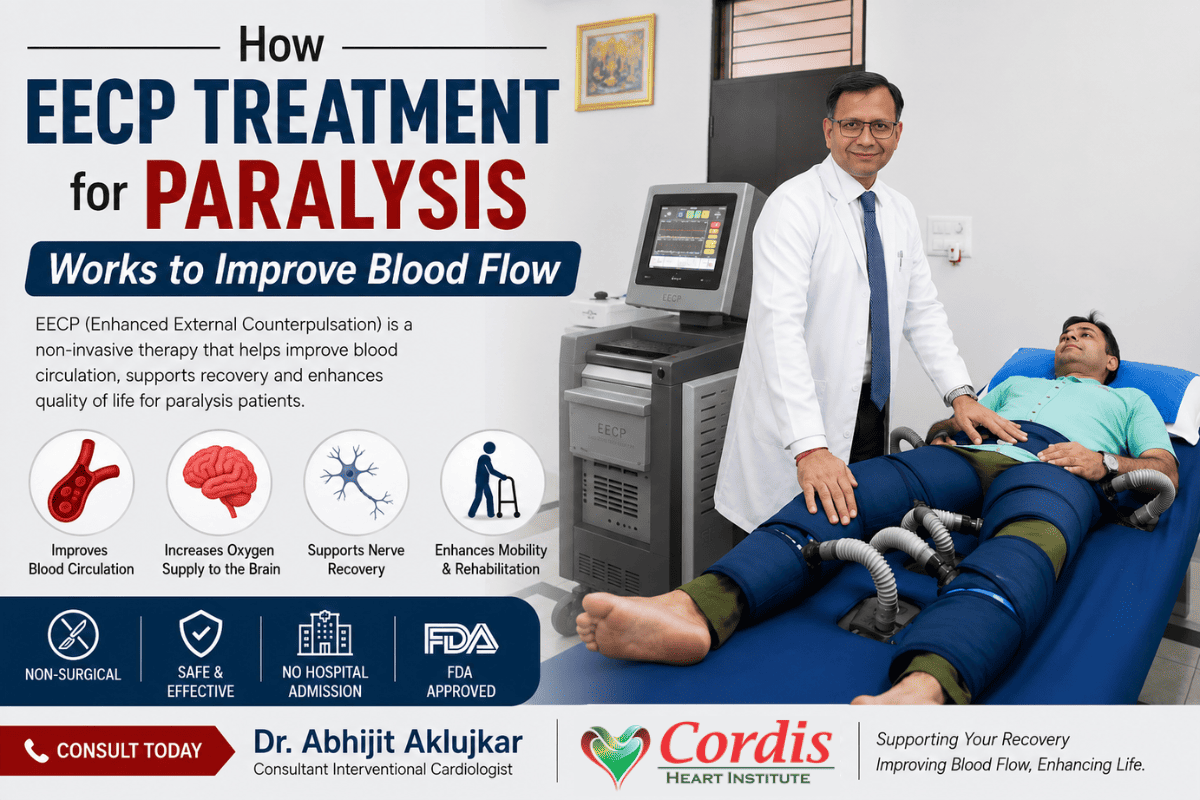
How EECP Treatment for Paralysis Works to Improve Blood Flow
Wondering how EECP treatment for paralysis works to improve blood flow? This guide explains how Enhanced External Counterpulsation (EECP) therapy may support stroke and paralysis rehabilitation by improving circulation, increasing oxygen delivery, and complementing physiotherapy. Learn about its benefits, treatment process, safety, and who may be a suitable candidate. Discover expert insights from Dr. Abhijit Aklujkar at Cordis Heart Institute and find out how EECP can become part of a personalized recovery plan.