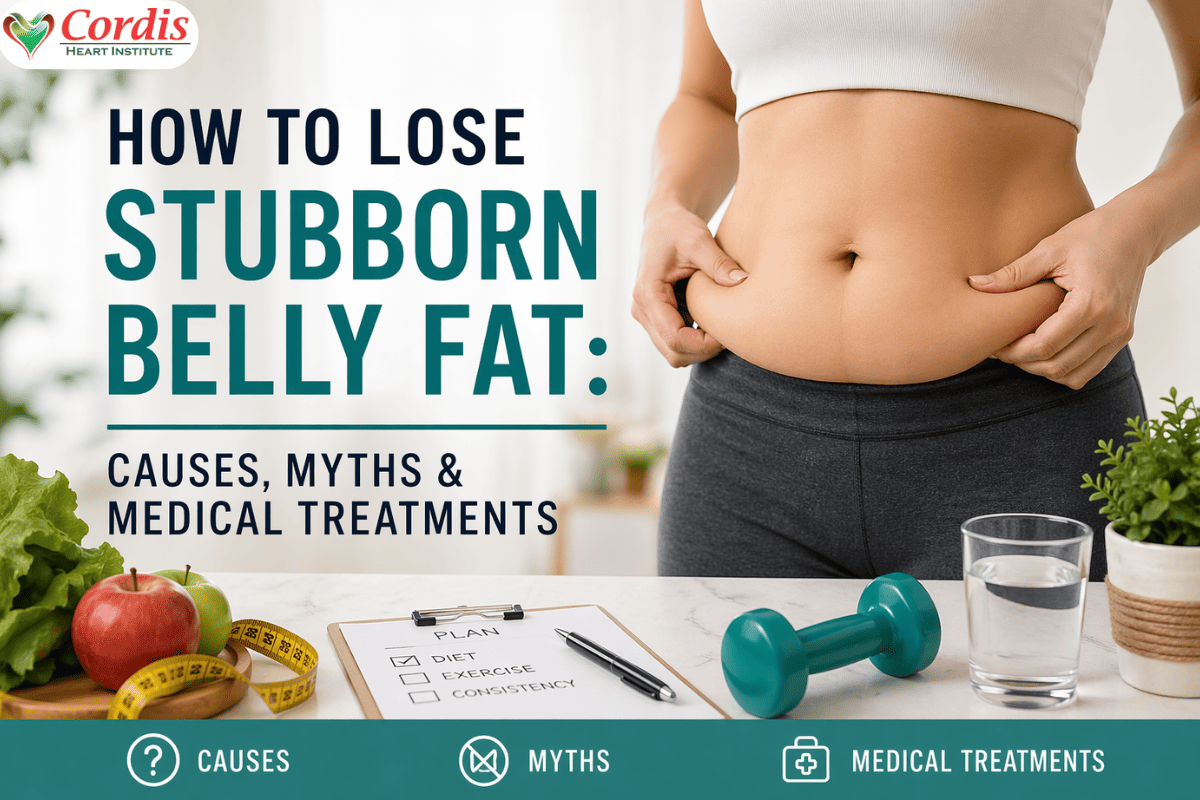
If you’ve ever tried to lose weight, you already know one thing: belly fat is the last to go.
No matter how much you diet or exercise, that stubborn fat around your abdomen tends to stick around. And it’s not just about appearance. Excess belly fat is closely linked to serious health risks like heart disease, diabetes, and high blood pressure.
In this guide, you’ll learn how to lose stubborn belly fat, what actually causes it, which myths are holding you back, and when medical treatments may be the right step. If you’re looking for expert care, Cordis Heart Institute offers medically guided weight loss solutions tailored to your health needs.
What Is Stubborn Belly Fat?
Types of Belly Fat: Visceral vs Subcutaneous
There are two main types of belly fat:
- Subcutaneous fat: The soft fat just under your skin
- Visceral fat: The deeper fat surrounding your organs
Visceral fat is the real concern. It increases your risk of heart disease and metabolic disorders, making it more dangerous than it looks.
Why Belly Fat Is Hard to Lose
Belly fat doesn’t behave like fat in other areas because of:
- Hormonal imbalance (especially cortisol and insulin)
- Slower metabolism with age
- Genetics and lifestyle habits
This is why a generic diet plan often fails to reduce abdominal fat effectively.
Top Causes of Stubborn Belly Fat
- Poor Diet & Processed Foods
Diets high in sugar, refined carbs, and processed foods lead to fat accumulation around the abdomen.
- Lack of Physical Activity
A sedentary lifestyle reduces calorie burn and promotes fat storage.
- Hormonal Imbalances
High stress increases cortisol levels, which directly contribute to belly fat. Insulin resistance also plays a key role.
- Sleep Deprivation & Stress
Poor sleep affects hunger hormones, making you eat more and gain weight.
- Medical Conditions
Conditions like thyroid disorders, PCOS, and obesity-related issues can make fat loss difficult without medical help.
Common Belly Fat Myths You Should Stop Believing
Myth 1: Spot Reduction Works
Doing endless crunches won’t burn belly fat alone. Fat loss happens across the whole body.
Myth 2: Skipping Meals Helps
Skipping meals slows your metabolism and often leads to overeating later.
Myth 3: Only Cardio Is Enough
Cardio helps, but strength training is essential for fat loss and metabolism improvement.
Myth 4: Fat-Burning Supplements Work
Most supplements have little to no scientific backing and can even be harmful.
How to Lose Stubborn Belly Fat Naturally
- Diet Strategies That Work
- Increase protein intake (helps control hunger)
- Add fiber-rich foods like vegetables and whole grains
- Cut down on sugar and refined carbs
Tip: Follow a sustainable Indian diet with balanced meals rather than extreme dieting.
- Effective Exercise Plan
- Combine strength training + cardio
- Include HIIT workouts for faster fat burning
- Stay consistent rather than intense for short periods
- Lifestyle Changes That Matter
- Get 7–8 hours of sleep daily
- Practice stress management (yoga, meditation)
- Stay hydrated
Medical Treatments for Belly Fat Loss
Sometimes, lifestyle changes alone are not enough. That’s where medical guidance comes in.
When Should You See a Doctor?
- You’re not losing fat despite diet and exercise
- You have underlying health conditions
- Your BMI falls in the overweight or obese range
Non-Surgical Treatments
- Medically supervised weight loss programs
- Advanced fat reduction therapies
- Hormonal and metabolic assessments
Surgical Options
- Bariatric surgery: Recommended for severe obesity
- Liposuction: For body contouring, not weight loss
Personalized Care at Cordis Heart Institute
At Cordis Heart Institute, patients receive:
- Customized weight loss plans
- Expert cardiology support
- Safe, medically supervised treatments
This ensures not just fat loss, but long-term health improvement.
Risks of Excess Belly Fat
Ignoring belly fat can lead to serious health issues:
- Heart disease
- Type 2 diabetes
- High blood pressure
- Stroke risk
This is why reducing abdominal fat is not just cosmetic, but critical for your overall health.
Sample Diet Plan for Reducing Belly Fat (Indian-Friendly)
- Morning: Warm water + lemon, soaked almonds
- Breakfast: Oats or vegetable poha + protein source
- Lunch: Roti + dal + sabzi + salad
- Snack: Fruit or buttermilk
- Dinner: Light meal with protein and veggies
Quick Tips:
- Avoid late-night eating
- Control portion sizes
- Stay consistent
FAQs: How to Lose Stubborn Belly Fat
How long does it take to lose belly fat?
It depends on your body type and routine, but visible changes usually take 4–8 weeks with consistency.
What is the fastest way to lose belly fat safely?
A mix of diet, exercise, and medical guidance if needed.
Can belly fat be reduced without exercise?
Diet helps, but exercise speeds up results and improves health.
Which doctor should I consult?
A cardiologist or obesity specialist, especially if you have underlying conditions.
Are medical treatments safe?
Yes, when done under professional supervision.
Is belly fat linked to heart disease?
Yes, especially visceral fat, which increases cardiovascular risk.
Conclusion: Take Control of Your Health Today
Losing stubborn belly fat isn’t about quick fixes. It requires the right mix of diet, exercise, lifestyle changes, and sometimes medical support.
If you’ve tried everything and still struggle, it might be time to take a more guided approach.
Book a consultation with Cordis Heart Institute and get a personalized plan designed for your body and health goals.