If you’ve ever searched for the “best fat loss doctor near me”, chances are you’re tired of trying random diets, workout plans, or weight loss tips that simply don’t work long term. Many people struggle with weight gain even after exercising regularly or eating less. That’s because fat loss is not always just about calories. Hormones, metabolism, stress, sleep, medical conditions, and lifestyle habits all play a major role.
This is where a fat loss doctor can help.
A fat loss doctor is a medical expert who helps people lose weight safely and sustainably through personalized treatment plans. Instead of promoting crash diets or unrealistic fitness trends, they focus on improving overall health while reducing excess body fat.
At Cordis Heart Institute, patients receive medically guided support for healthy fat loss, heart health improvement, and long-term wellness. Whether someone is dealing with obesity, belly fat, diabetes-related weight gain, or slow metabolism, professional medical support can make a huge difference.
Who Is a Fat Loss Doctor?
A fat loss doctor is a healthcare professional trained to identify the root causes of weight gain and create customized treatment strategies for long-term results.
Unlike generic weight loss advice online, medical fat loss programs are based on your body type, health condition, lifestyle, and metabolism.
Difference Between a Fat Loss Doctor and a Regular Dietitian
A dietitian mainly focuses on nutrition and meal planning. A fat loss doctor goes much deeper by checking:
- Hormonal imbalances
- Thyroid function
- Blood sugar levels
- Metabolism
- Lifestyle disorders
- Obesity-related complications
They can also prescribe medical treatments if needed.
For example, someone with PCOS or insulin resistance may not lose weight with standard diets alone. A fat loss doctor identifies these hidden issues and treats them medically.
Qualifications of a Fat Loss Specialist
A fat loss specialist may include:
- Bariatric physicians
- Endocrinologists
- Obesity medicine experts
- Lifestyle medicine doctors
- Preventive healthcare specialists
Many patients searching for the best fat loss doctor near me usually benefit from doctors who combine nutrition, exercise, heart health, and medical science together.
When Should You Visit a Fat Loss Doctor?
You should consider visiting a specialist if you experience:
- Constant weight gain
- Difficulty losing belly fat
- Emotional eating
- Weight regain after dieting
- PCOS-related obesity
- Thyroid-related weight issues
- Fatigue and low metabolism
- Diabetes and obesity together
Ignoring these signs may increase the risk of heart disease, high blood pressure, and metabolic disorders later.
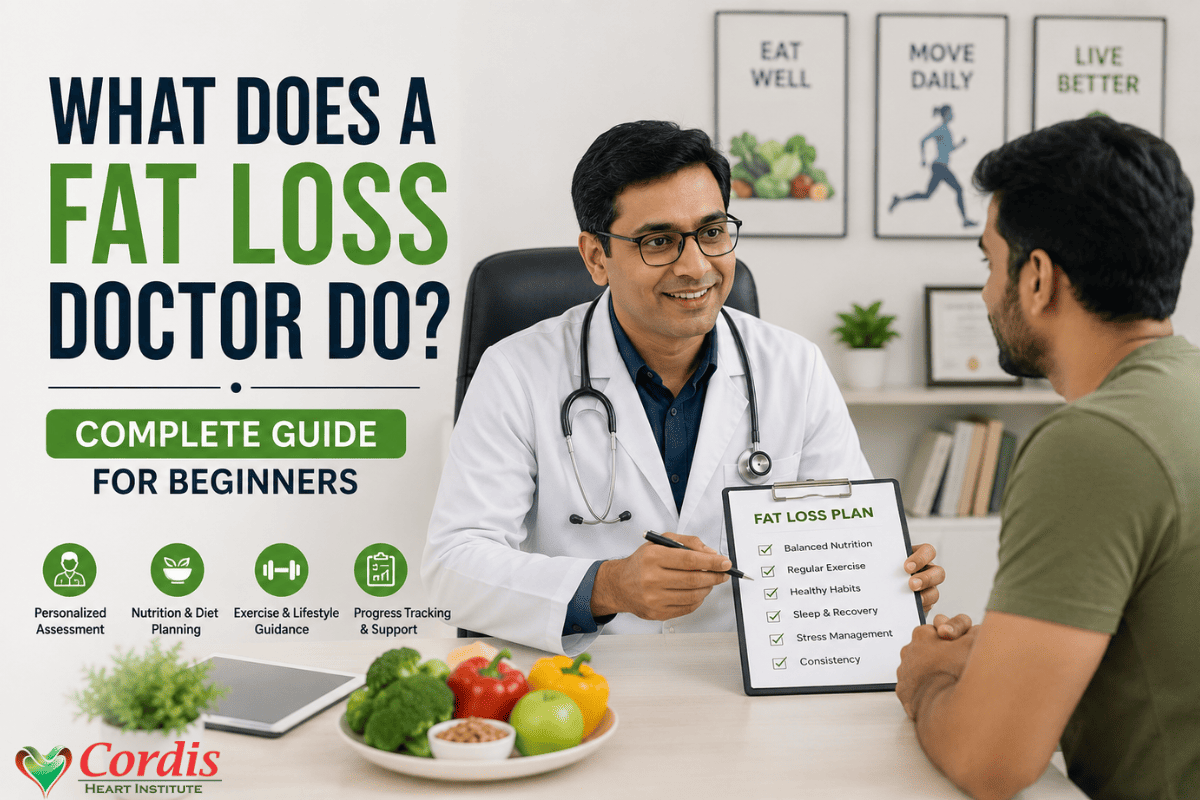
What Does a Fat Loss Doctor Actually Do?
Many people think weight loss doctors only prescribe diets. In reality, their role is much broader.
Complete Body and Metabolism Assessment
The first step usually involves understanding your body in detail.
This may include:
- BMI analysis
- Body fat percentage
- Blood tests
- Hormonal screening
- Metabolic evaluation
- Lifestyle assessment
These tests help doctors understand why your body is storing fat and what is preventing healthy weight loss.
Personalized Medical Weight Loss Plans
No two bodies work the same way. That’s why personalized plans are important.
A medical fat loss plan may include:
- Customized nutrition plans
- Portion control guidance
- Exercise recommendations
- Sleep improvement
- Stress management
- Heart-healthy lifestyle changes
At Cordis Heart Institute, treatment plans are designed based on individual health goals instead of one-size-fits-all dieting methods.
Prescription-Based Weight Loss Treatments
Some patients may qualify for medically supervised fat loss medications.
These treatments may help with:
- Appetite control
- Insulin management
- Fat metabolism
- Craving reduction
However, medications are usually recommended only after proper medical evaluation.
This is why choosing the best fat loss doctor near me matters. Self-medication or random supplements can sometimes cause more harm than good.
Monitoring Progress Safely
One of the biggest mistakes people make is focusing only on body weight.
A fat loss doctor monitors:
- Fat percentage
- Muscle retention
- Energy levels
- Blood pressure
- Cholesterol
- Blood sugar
This approach helps patients lose fat safely without damaging overall health.
Managing Obesity-Related Health Problems
Obesity is linked with several health conditions, including:
- Heart disease
- Diabetes
- High cholesterol
- Sleep apnea
- Fatty liver disease
- Joint pain
Medical weight loss programs help reduce these risks while improving quality of life.
According to World Health Organization (WHO), obesity has become one of the leading global health concerns due to its connection with chronic diseases.
Benefits of Consulting the Best Fat Loss Doctor Near Me
Faster and Safer Results
Professional medical guidance reduces trial-and-error dieting.
Instead of following internet trends, patients receive science-based support tailored to their body.
Long-Term Weight Management
Crash diets may reduce weight temporarily, but most people regain it quickly.
Fat loss doctors focus on:
- Sustainable eating habits
- Lifestyle improvement
- Consistency
- Metabolism support
This improves long-term success rates.
Better Heart Health and Energy Levels
Healthy fat loss improves:
- Blood circulation
- Heart function
- Stamina
- Mobility
- Sleep quality
This is especially important for people struggling with obesity-related heart concerns.
Medical Support for Stubborn Fat
Sometimes belly fat is connected with hormonal or metabolic issues.
Medical professionals can identify whether your fat loss resistance is linked to:
- Insulin resistance
- PCOS
- Cortisol imbalance
- Thyroid disorders
Treatments Offered at Cordis Heart Institute for Fat Loss Support
Cordis Heart Institute provides medically guided support for people looking to improve their health through sustainable weight management.
Personalized Weight Management Programs
Programs are designed according to:
- Age
- Medical history
- Activity level
- Lifestyle habits
- Weight loss goals
Heart-Healthy Fat Loss Plans
Extreme dieting can negatively affect heart health.
A medically supervised approach focuses on reducing fat while protecting cardiovascular health.
Diet and Lifestyle Counseling
Lifestyle counseling helps patients understand:
- Emotional eating triggers
- Meal timing
- Healthy food habits
- Stress-related cravings
Non-Surgical Weight Loss Guidance
Not everyone requires surgery.
Many patients achieve results through:
- Nutrition correction
- Exercise support
- Medical monitoring
- Lifestyle modification
Ongoing Medical Monitoring and Support
Regular follow-ups help maintain consistency and prevent weight regain.
How to Choose the Right Fat Loss Doctor
Check Medical Credentials
Look for doctors with experience in:
- Obesity management
- Lifestyle diseases
- Metabolic health
- Preventive medicine
Read Patient Reviews
Reviews often reveal:
- Patient satisfaction
- Treatment quality
- Doctor communication
- Long-term results
Look for Personalized Plans
Avoid clinics that promote the same diet for everyone.
Effective fat loss treatment should be customized.
Ask About Long-Term Support
Weight maintenance matters just as much as weight loss.
Choose clinics that provide:
- Follow-ups
- Nutritional guidance
- Lifestyle coaching
- Medical monitoring
Common Mistakes People Make During Fat Loss
Following Crash Diets
Extreme dieting may slow metabolism and increase fatigue.
Ignoring Medical Conditions
Conditions like thyroid disorders or PCOS can make weight loss difficult without medical help.
Overusing Supplements
Many over-the-counter fat burners are poorly regulated.
Always consult a healthcare professional before using supplements.
Expecting Instant Results
Healthy fat loss takes time and consistency.
Sustainable progress is usually more effective than rapid weight loss.
Signs You Need Medical Help for Weight Loss
You may need professional support if you experience:
- Sudden unexplained weight gain
- Severe belly fat
- Emotional eating
- Constant fatigue
- Weight loss resistance
- Obesity affecting daily life
Early intervention often prevents serious health complications later.
FAQs About Fat Loss Doctors
What is the difference between a nutritionist and a fat loss doctor?
A nutritionist mainly focuses on food planning, while a fat loss doctor diagnoses and treats medical causes of obesity and weight gain.
Can a fat loss doctor help without surgery?
Yes. Most patients start with non-surgical weight loss methods such as nutrition planning, exercise guidance, and lifestyle correction.
Are fat loss medications safe?
When prescribed by qualified professionals, approved medications can be safe under medical supervision.
How often should I visit a weight loss doctor?
This depends on your health condition and treatment plan. Many patients schedule monthly follow-ups.
How do I find the best fat loss doctor near me?
Look for:
- Medical experience
- Positive patient reviews
- Personalized treatment plans
- Lifestyle-focused care
- Ongoing support
Final Thoughts
Losing weight is not just about appearance. Excess fat can affect heart health, metabolism, energy levels, sleep, and overall quality of life.
That’s why medically guided fat loss is often more effective than random dieting methods.
If you’ve been searching for the best fat loss doctor near me, professional support from Cordis Heart Institute can help you achieve healthy, long-term results safely.
Instead of chasing quick fixes, focus on sustainable lifestyle improvements that support both your physical and mental well-being.