Recovering from a stroke is rarely a quick process. Some people regain movement and independence within weeks, while others continue working on speech, balance, walking, or daily activities for months or longer. This often leads patients and families to look for additional treatment options.
One option that has received growing research attention is EECP for stroke recovery.
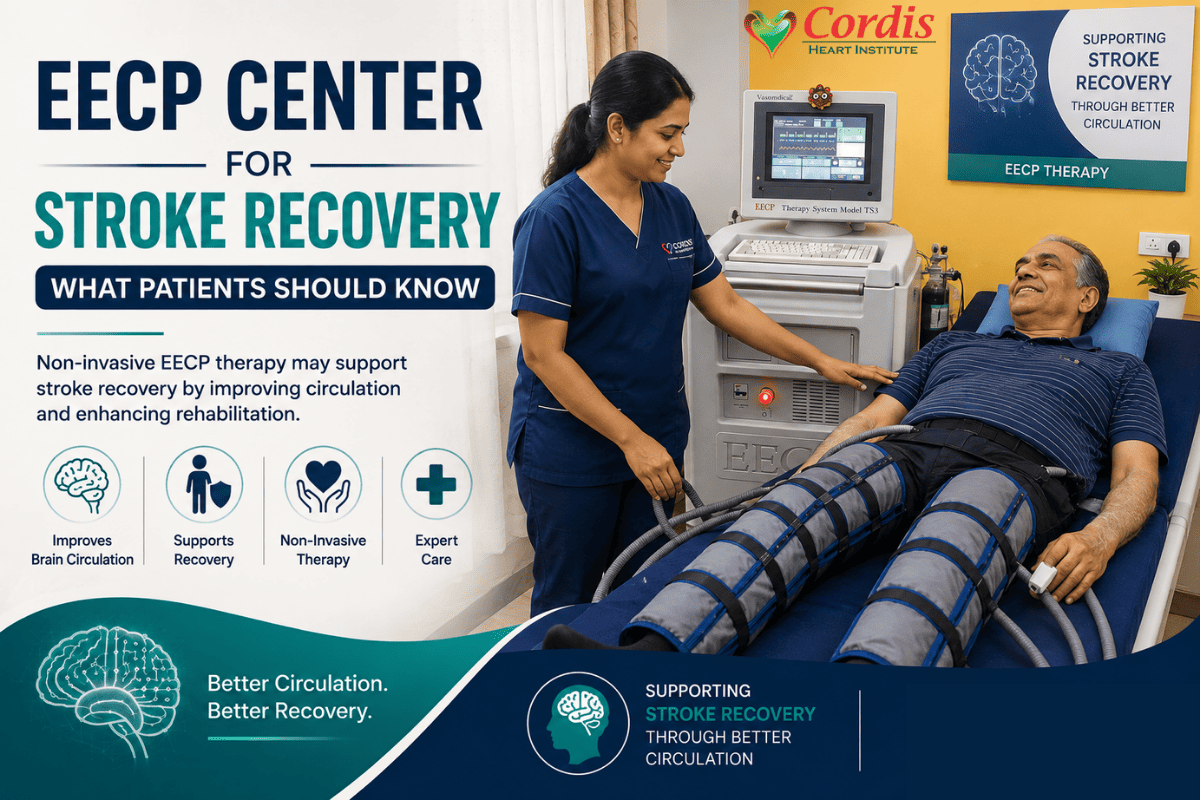
EECP, or Enhanced External Counterpulsation, is a non-invasive therapy that uses inflatable cuffs around the legs. The cuffs inflate and deflate in coordination with the heartbeat, changing blood-flow patterns during treatment.
But can EECP actually help after a stroke? Who may be suitable for it? And what should you look for when choosing an EECP center for stroke recovery?
The answers are not as simple as saying that EECP “treats” stroke. Current research suggests that EECP may have a role as an additional rehabilitation therapy for some patients with ischemic stroke, but the evidence is still developing. It should not replace emergency stroke care, medicines, physiotherapy, occupational therapy, speech therapy, or other prescribed rehabilitation.
What Is EECP Therapy?
What Does EECP Stand For?
EECP stands for Enhanced External Counterpulsation. It is a non-invasive circulatory support therapy in which inflatable cuffs are placed around the patient’s calves, thighs, and hips.
Unlike procedures such as angioplasty, EECP does not require a catheter to be inserted into a blood vessel.
How Does EECP Treatment Work?
During an EECP session, the patient lies comfortably on a treatment bed while the cuffs are positioned around the lower body.
The cuffs inflate and deflate in time with the heartbeat. This coordinated pressure creates changes in blood-flow dynamics.
Researchers have studied whether these changes could also influence circulation to the brain after an ischemic stroke. However, the proposed mechanism should not be confused with proven clinical benefit.
A 2026 systematic review and meta-analysis looked at 15 studies involving 506 people with ischemic stroke. The researchers assessed cerebral blood flow as well as measures such as daily living activities, disability, and neurological function.
Is EECP a Non-Invasive Treatment?
Yes. EECP is non-invasive because it does not involve surgery or insertion of a catheter.
However, non-invasive does not mean that everyone can safely receive the treatment. A patient’s medical history and current condition need to be reviewed before EECP is considered.
Can EECP Help With Stroke Recovery?
This is one of the most common questions patients ask.
The latest evidence is encouraging in some areas, but it is not strong enough to say that EECP is a proven stroke treatment.
The 2026 systematic review found improvements in measures of daily living activities, disability, and neurological function across the included studies. However, there was substantial variation between studies. When the researchers used a more conservative statistical method, the effect on cerebral blood flow was no longer statistically significant.
In simple terms, EECP may have potential as an additional therapy during ischemic stroke rehabilitation, but more high-quality research is needed.
What Does Research Say About EECP and Cerebral Blood Flow?
One reason EECP has attracted interest in stroke rehabilitation is its effect on circulation.
Researchers have investigated whether the pressure changes created during EECP can affect blood flow to the brain. However, the latest review found that the evidence for a definite improvement in cerebral blood flow remains uncertain.
That distinction matters. A responsible EECP center for stroke recovery should explain what is known, what is still being studied, and what cannot be promised.
Can EECP Improve Functional Recovery After Stroke?
Some studies included in the 2026 review reported improvements in areas such as activities of daily living, disability, and neurological function. The authors described EECP as having promising potential as an adjunct rehabilitation therapy, while also noting limitations in the available research.
Individual results can be different.
Age, stroke type, severity, time since stroke, existing medical conditions, rehabilitation participation, and many other factors can affect recovery.
Is EECP a Replacement for Stroke Rehabilitation?
No.
EECP should not be presented as a replacement for established stroke rehabilitation.
Depending on the patient’s needs, rehabilitation may include physiotherapy, occupational therapy, speech and language therapy, medication management, neurological follow-up, and support with everyday activities.
If EECP is considered, it should be discussed as a possible additional therapy within the patient’s wider care plan.
Who May Consider EECP After a Stroke?
Not every stroke survivor is automatically suitable for EECP.
A doctor may need to review the patient’s stroke history, cardiovascular health, blood pressure, blood vessels, medications, mobility, and other medical conditions before making a decision.
EECP for Patients Recovering From Ischemic Stroke
An ischemic stroke occurs when a blood vessel supplying part of the brain becomes blocked. Much of the recent research on EECP therapy for stroke has focused on ischemic stroke.
This does not mean that every patient with an ischemic stroke should receive EECP. Suitability needs to be assessed individually.
Can Patients With Long-Term Stroke Symptoms Consider EECP?
Patients who continue to experience mobility problems, weakness, or difficulty with daily activities may ask whether additional therapies could support their rehabilitation.
The right approach is to discuss the patient’s current condition with their treating medical team. There is no universal timeline that makes EECP appropriate for every stroke survivor.
Why Medical Assessment Is Needed Before EECP
Before treatment, patients should discuss:
- Their type and history of stroke
- Heart conditions
- Blood pressure
- Blood-vessel conditions
- Current medicines
- Recent procedures
- Mobility and physical limitations
- Other medical conditions
This assessment helps determine whether EECP is appropriate and how it may fit alongside existing care.
What Should Patients Look for in an EECP Center for Stroke Recovery?
Searching for the “best EECP center for stroke recovery” should not simply mean choosing the center with the biggest claim on its website.
Instead, look at how the center approaches patient safety and medical assessment.
Qualified Medical Supervision
EECP should be provided with appropriate medical supervision. Patients should have an opportunity to discuss their medical history and ask questions before beginning treatment.
Individual Patient Assessment
A good treatment plan should be based on the individual patient rather than using exactly the same approach for everyone.
Coordination With Stroke and Cardiovascular Care
Stroke recovery can involve several healthcare professionals. If EECP is being considered, patients should tell their neurologist and other treating doctors.
Clear Expectations
Be cautious of claims such as “EECP cures stroke” or “EECP guarantees recovery.”
Current research does not support such promises.
Follow-Up and Progress Monitoring
Recovery should be monitored over time. Functional changes, symptoms, mobility, and everyday activities can provide useful information about how a patient’s rehabilitation is progressing.
EECP at Cordis Heart Institute
For patients researching an EECP center in Mumbai, Cordis Heart Institute can be a point of contact for discussing whether EECP may be appropriate for their individual situation.
An initial evaluation can help review the patient’s medical history, stroke history, cardiovascular condition, current treatment, and rehabilitation goals.
Role of Dr Abhijit Aklujkar
Dr Abhijit Aklujkar at Cordis Heart Institute can be mentioned as the treating doctor for patients seeking a medical discussion about their condition and possible EECP evaluation.
The goal should be to determine whether EECP is medically appropriate rather than assuming that every stroke survivor will benefit from it.
Patients should bring previous medical reports, brain scans, medication details, and rehabilitation records when attending an evaluation.
What Happens During an EECP Treatment Session?
Before the Session
The medical team may review your medical history, medicines, vital signs, and current condition.
This is also the right time to mention any new symptoms or concerns.
During EECP
The patient lies on the treatment bed while cuffs are placed around the calves, thighs, and hips.
The cuffs inflate and deflate in coordination with the heartbeat. Staff monitor the patient during treatment.
After the Session
The medical team may monitor the patient before they leave. The number and frequency of sessions should be decided by the treating medical team rather than following a fixed schedule found online.
What Are the Possible Benefits of EECP After Stroke?
Researchers are studying several possible benefits of EECP for ischemic stroke patients.
These include:
- Possible circulatory effects
- Potential changes in cerebral blood flow
- Activities of daily living
- Functional recovery
- Neurological function
The 2026 meta-analysis reported improvements in several functional measures, but also found substantial variation between studies. The researchers concluded that more well-designed studies are needed before the role of EECP can be defined with greater certainty.
For patients, the practical message is simple: potential does not mean guaranteed recovery.
Are There Risks or Reasons Someone Should Not Have EECP?
EECP is not suitable for everyone.
Certain heart, blood-vessel, blood-pressure, or other medical conditions may affect whether treatment is appropriate. This is why patients should have a medical evaluation before starting therapy.
Why Patients Should Disclose Their Complete Medical History
Tell the medical team about:
- Previous stroke or transient ischemic attack
- Heart disease
- Blood-pressure problems
- Blood-vessel conditions
- Current medicines
- Recent surgeries or procedures
- Any other major medical condition
Do not leave out information because a condition seems unrelated to EECP.
EECP Is Not an Emergency Treatment for a New Stroke
This point is extremely important.
If someone suddenly develops facial weakness, weakness or numbness in an arm or leg, difficulty speaking, vision problems, loss of balance, or another sudden neurological symptom, they need emergency stroke evaluation.
EECP should never delay emergency treatment.
The 2026 American Heart Association/American Stroke Association guideline states that mechanical hemodynamic augmentation with counterpulsation devices is not recommended for improving functional clinical outcomes in acute ischemic stroke.
EECP vs Conventional Stroke Rehabilitation
Approach | Main Purpose | Role After Stroke |
EECP | Investigated as an additional circulatory therapy | Possible adjunct in selected patients |
Physiotherapy | Movement and physical function | Core rehabilitation |
Occupational therapy | Everyday activities and independence | Used according to patient needs |
Speech therapy | Speech, language and swallowing | Used when required |
Medicines | Stroke prevention and medical management | Based on the patient’s condition |
Neurological follow-up | Medical assessment and monitoring | Important during recovery |
EECP should therefore be viewed in the context of the patient’s complete rehabilitation plan, not as a replacement for standard stroke care.
Frequently Asked Questions About EECP for Stroke Recovery
What is the best EECP center for stroke recovery?
There is no single center that is automatically best for every patient. Look for appropriate medical supervision, individual assessment, clear communication, patient monitoring, and realistic information about what EECP can and cannot do.
Can EECP help with stroke recovery?
Research suggests that EECP may have potential as an additional rehabilitation therapy for ischemic stroke, particularly in some functional outcomes. However, the evidence is still developing and does not establish EECP as a guaranteed stroke treatment.
Can EECP improve blood flow to the brain after a stroke?
EECP has been studied for its possible effects on cerebral blood flow. However, the latest systematic review found that the evidence for a definite improvement in cerebral blood flow remains uncertain.
Is EECP safe after a stroke?
Safety and suitability depend on the individual patient’s medical condition. A doctor should assess the patient before treatment.
How soon after a stroke can EECP be started?
There is no single answer for every patient. Timing depends on the stroke, current health, rehabilitation stage, and medical assessment.
Can EECP replace physiotherapy after stroke?
No. EECP should not replace physiotherapy or other standard stroke rehabilitation.
Is EECP useful for ischemic stroke recovery?
Ischemic stroke has been the main focus of recent EECP research. Current evidence suggests possible functional benefits, but more high-quality research is required.
How does EECP work after a stroke?
EECP uses inflatable cuffs around the legs that inflate and deflate in coordination with the heartbeat. Researchers are studying whether the resulting blood-flow changes may support cerebral circulation and functional recovery.
How many EECP sessions are needed after a stroke?
There is no universal number that applies to every patient. The treatment schedule should be determined by the treating medical team.
Where can I find an EECP center in Mumbai?
Patients looking for EECP treatment in Mumbai can contact Cordis Heart Institute to discuss their medical history and whether an EECP evaluation may be appropriate.
Why Choose Cordis Heart Institute for EECP Evaluation?
When considering an EECP center for stroke recovery, the first question should be whether the treatment is appropriate for you.
At Cordis Heart Institute, patients can discuss their medical history and current condition with the medical team and understand whether EECP may fit into their overall care plan.
Patients considering an evaluation with Dr Abhijit Aklujkar should bring previous reports, scans, medicine lists, and details of their current rehabilitation program.
The aim is not to promise a particular outcome. It is to help patients make an informed decision based on their individual medical situation.
Conclusion: Choosing the Right EECP Center for Stroke Recovery
Stroke recovery takes time, and it is understandable that patients and families want to know whether additional therapies could help.
EECP is one area being studied in ischemic stroke rehabilitation. Recent research has reported possible improvements in functional outcomes, including activities of daily living, disability, and neurological function. At the same time, the evidence has limitations, and the effect on cerebral blood flow is not yet definitive.
That means patients should approach EECP for stroke recovery with realistic expectations.
EECP should not replace emergency stroke treatment, medicines, physiotherapy, occupational therapy, speech therapy, or neurological care. If you are considering EECP, speak with a qualified medical professional who can review your medical history and determine whether the therapy is appropriate for you.
Considering EECP After a Stroke?
Speak with the medical team at Cordis Heart Institute to discuss your condition, current treatment, and rehabilitation goals.
Schedule an EECP evaluation with Dr Abhijit Aklujkar and discuss whether EECP may be suitable for you.